The worksheet
About this worksheet
Students learn to describe materials by color, texture, hardness, and flexibility. They sort the same cubes three ways and share the patterns they found. This Grade 2 Science worksheet gives students (ages 7–8) five pages of practice on sorting materials by their properties, part of the matter and its interactions unit. It goes with our free Sorting materials by their properties lesson, which has the slides and a timed lesson plan.
What it covers
By the end, students should be able to:
- Students will describe materials by color, texture, hardness, and flexibility.
- Students will sort objects by one observable property and explain groupings.
- Students will plan and test three sorting rules for the same set.
How to use it
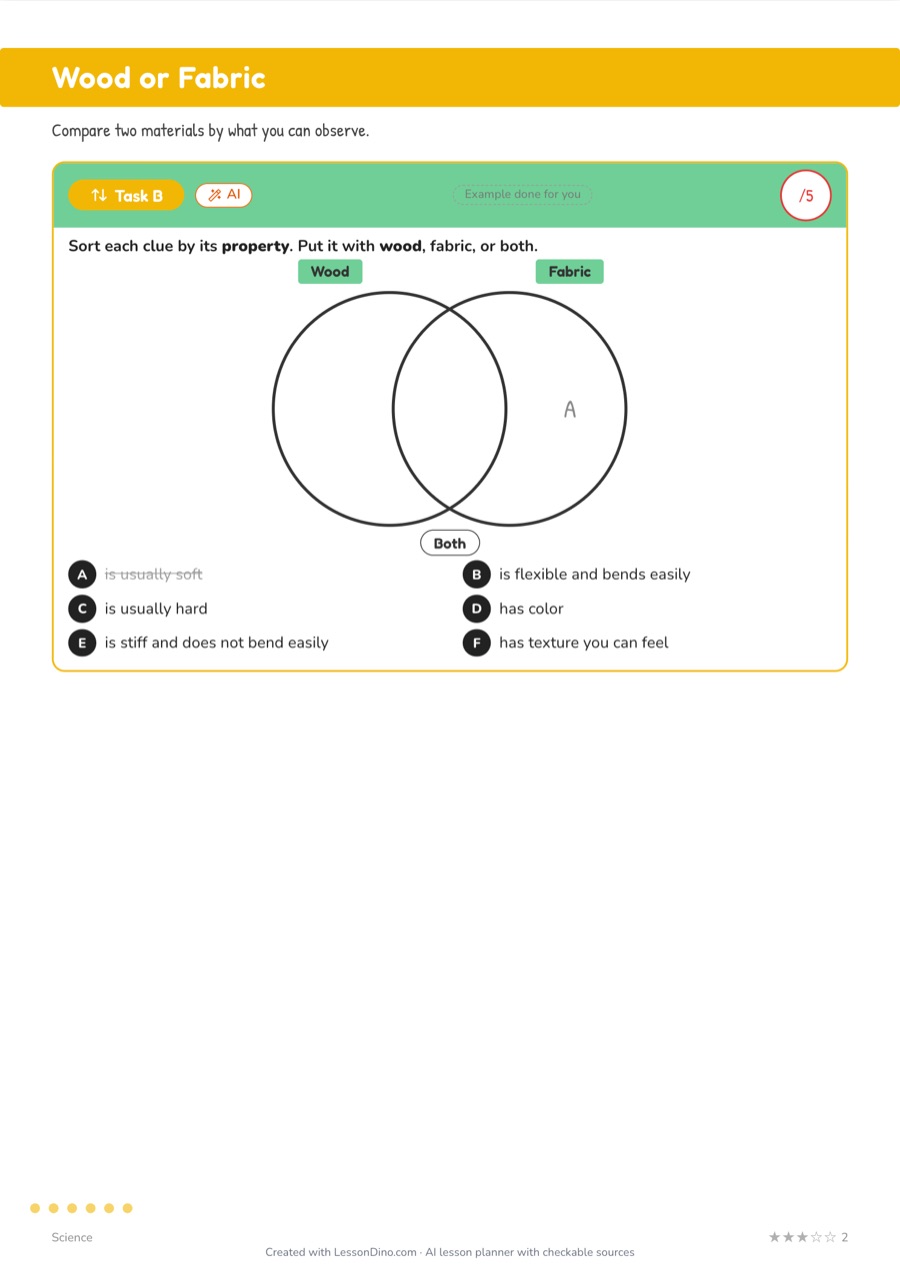
- Share and apply (10 minutes): Hand out Worksheet Task B and have pairs sort each clue with wood, fabric, or both, noting wood is usually strong and can bend.
- Plenary (5 minutes): Hand out Worksheet Task A and read the statement together.
- Support: Start with only 4 cubes and one choice at a time, such as shiny or dull, then add the rest.
- Stretch: Ask groups to predict which cube is wood, plastic, or metal and explain what clues they used.
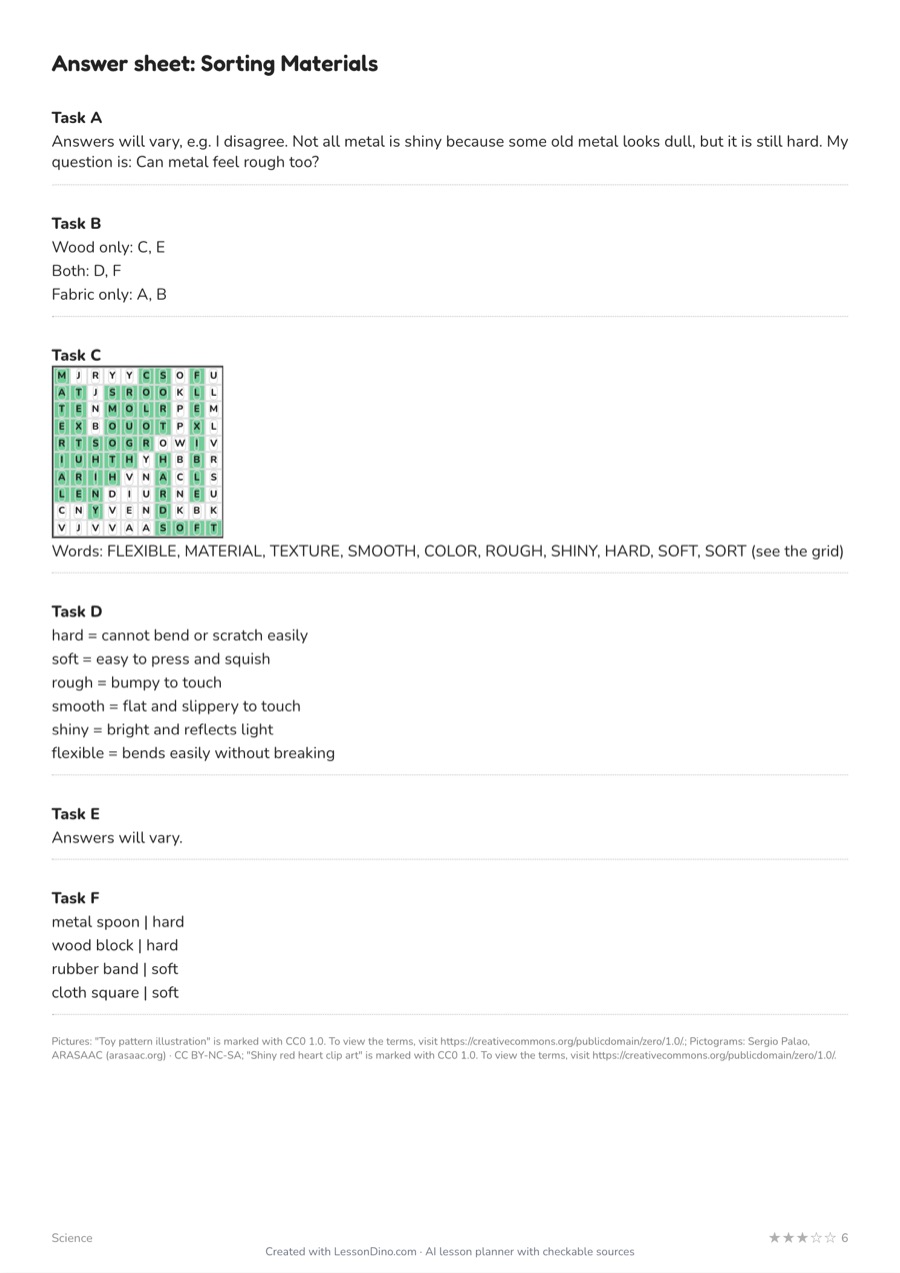
- The answer sheet is the last page, so you can print it on its own or let students check their own work.
Key vocabulary
- material: what an object is made from, like wood, metal, or plastic
- property: something you can see or touch that tells what a thing is like
- texture: how a surface feels to your fingers, like smooth or rough
- hardness: if a thing keeps its shape or gets a dent when you push it
- flexibility: if you can bend a thing safely without it breaking
- pattern: the same trait you see again in many different objects
Mistakes to watch for
- Mixing up object names and material names, such as saying the material is spoon. Practice the frame: The object is a spoon and the material is plastic, and sort by kind of material not object type.
- Thinking same size and shape means same material. Heft and feel again to show all cubes are the same size and shape but are made of different materials with different weight and luster.
- Using more than one property at once or naming color as material. Reset to one rule at a time and recall observations could include color, texture, hardness, and flexibility, but color alone does not tell material.
What's on the worksheet
Sort It Out!
Learn how scientists describe and group materials.
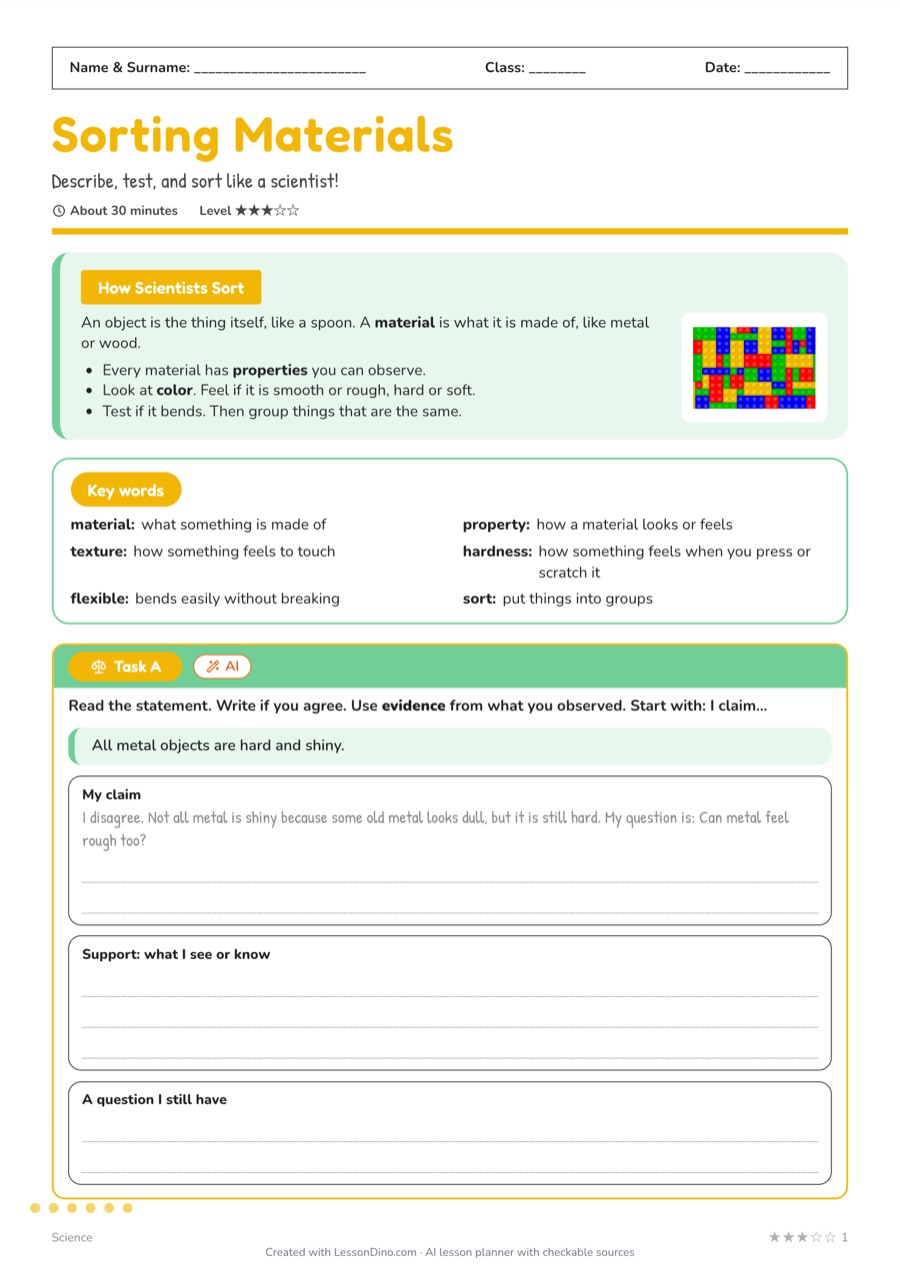
How Scientists Sort
- An object is the thing itself, like a spoon. A material is what it is made of, like metal or wood.
- Every material has properties you can observe.
- Look at color. Feel if it is smooth or rough, hard or soft.
- Test if it bends. Then group things that are the same.
| Word | Meaning |
|---|---|
| material | what something is made of |
| property | how a material looks or feels |
| texture | how something feels to touch |
| hardness | how something feels when you press or scratch it |
| flexible | bends easily without breaking |
| sort | put things into groups |
Read the statement. Write if you agree. Use evidence from what you observed. Start with: I claim...
Wood or Fabric
Compare two materials by what you can observe.
Sort each clue by its property. Put it with wood, fabric, or both.
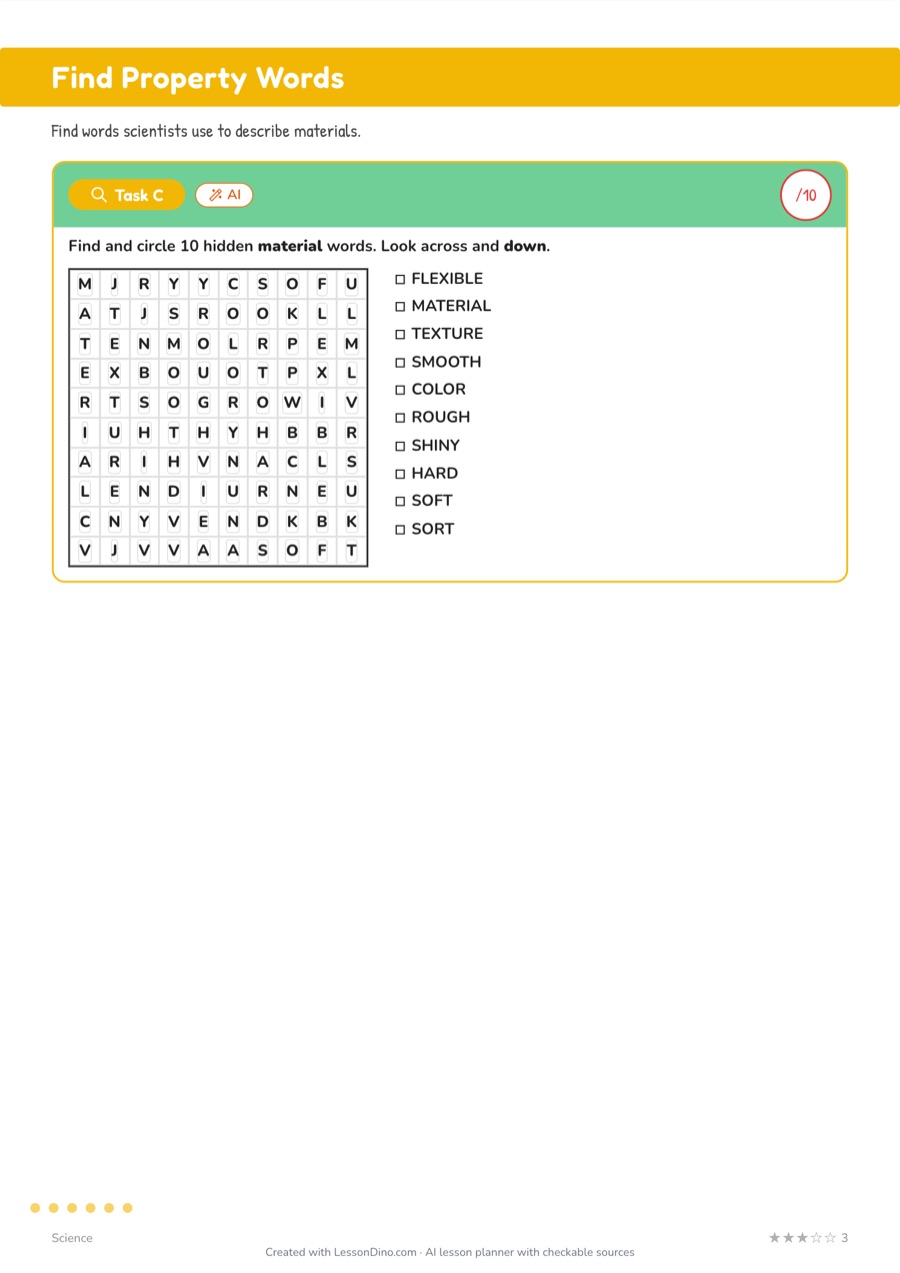
Find Property Words
Find words scientists use to describe materials.
Find and circle 10 hidden material words. Look across and down.
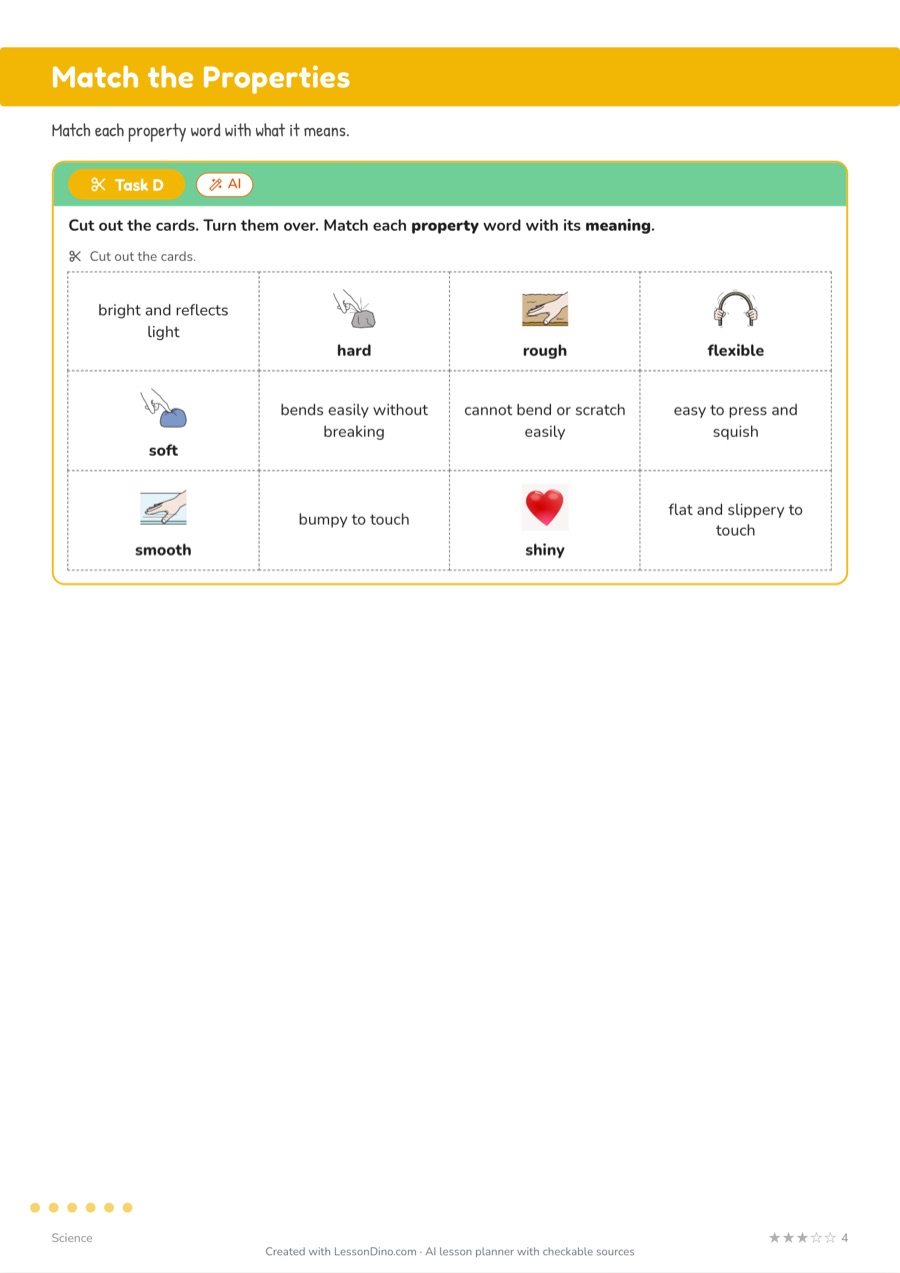
Match the Properties
Match each property word with what it means.
Cut out the cards. Turn them over. Match each property word with its meaning.
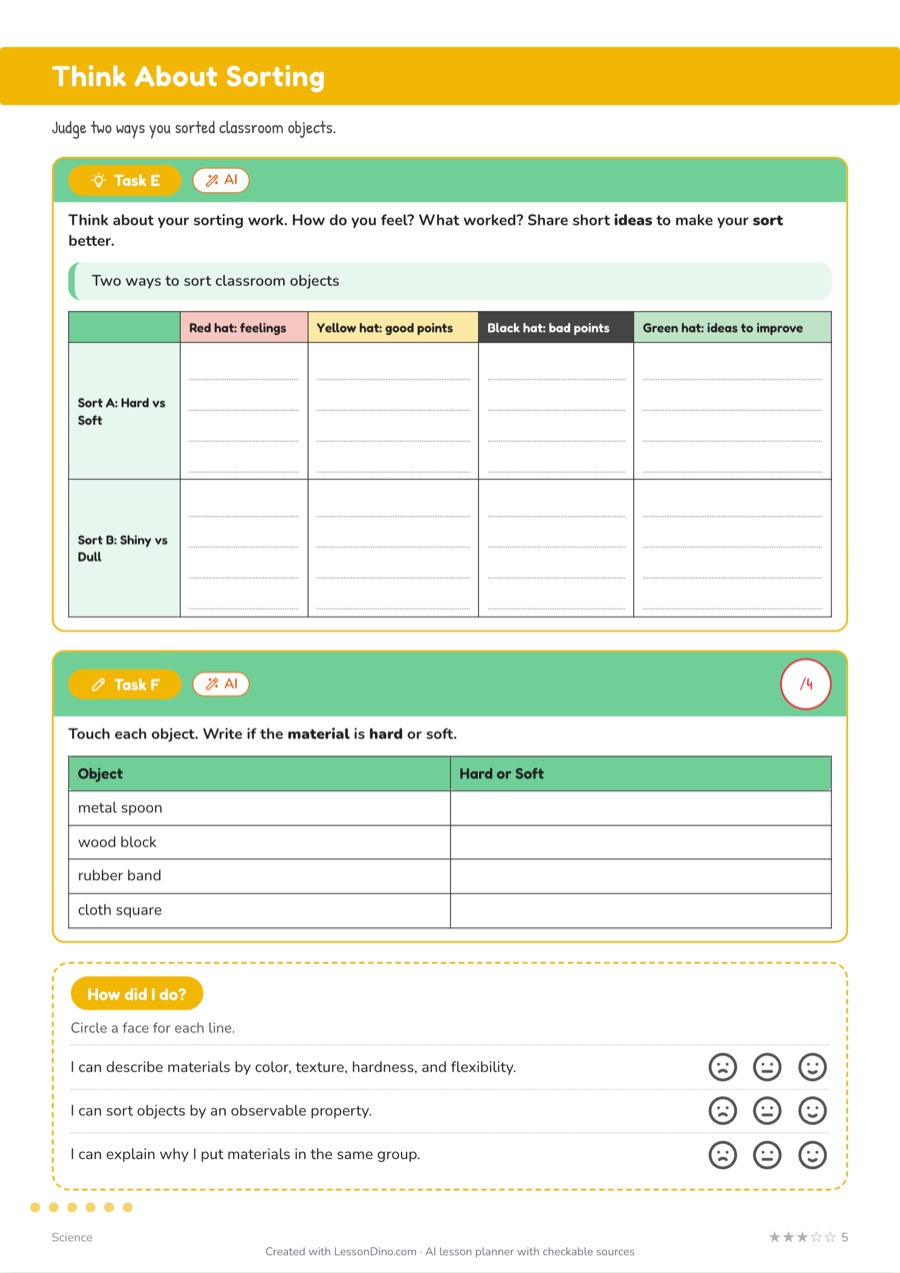
Think About Sorting
Judge two ways you sorted classroom objects.
Think about your sorting work. How do you feel? What worked? Share short ideas to make your sort better.
Touch each object. Write if the material is hard or soft.
Answers
Show the answers
The answers are on the answer sheet, the last picture above.
Curriculum
Plan and conduct an investigation to describe and classify different kinds of materials by their observable properties.
Made with Lesson Dino's AI on 16 October 2026. AI can make mistakes, so check the answers and facts against the sources before you teach.