Slides
Lesson plan
Sorting Materials Three Ways
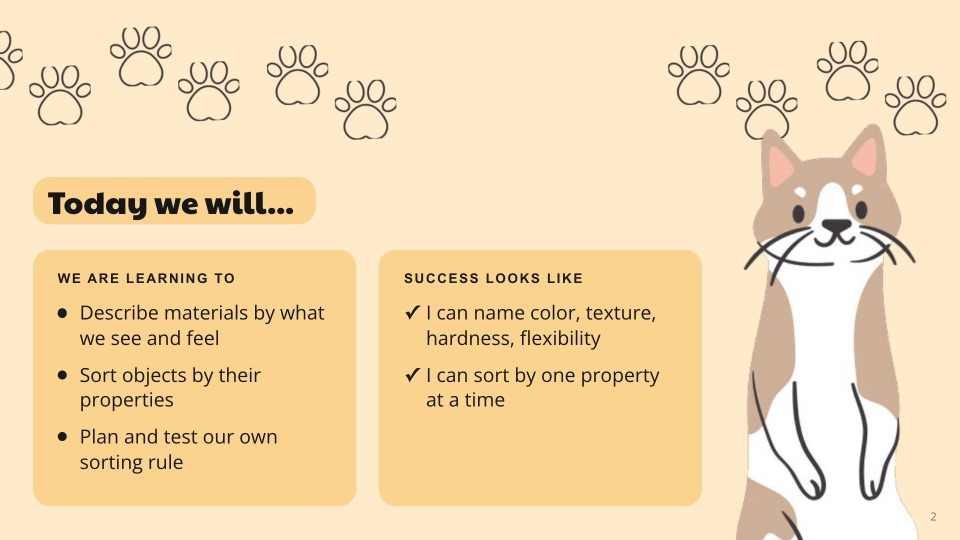
Students learn to describe materials by color, texture, hardness, and flexibility. They sort the same cubes three ways and share the patterns they found.
Objectives
- Students will describe materials by color, texture, hardness, and flexibility.
- Students will sort objects by one observable property and explain groupings.
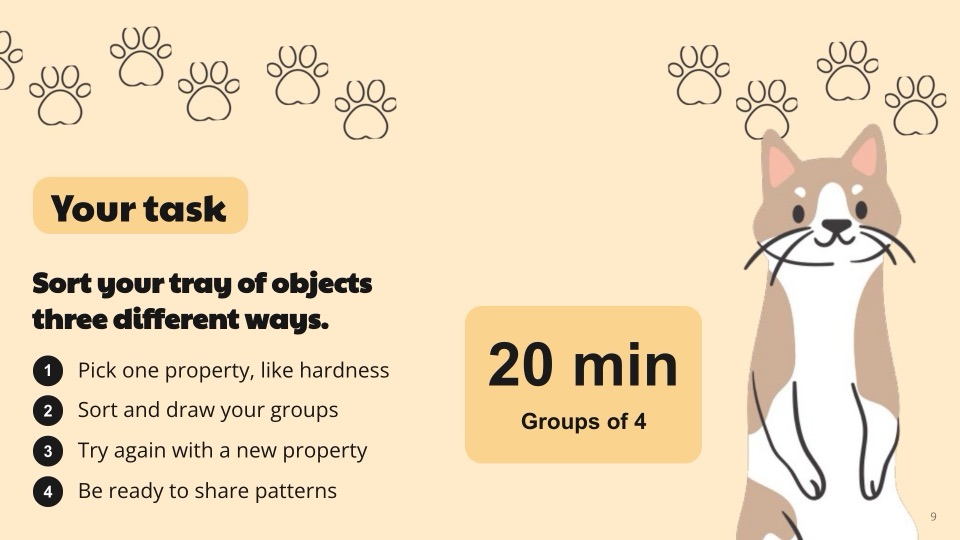
- Students will plan and test three sorting rules for the same set.
Success criteria
- I can use color and feel words to describe a material.
- I can sort objects by one property and tell why.
- I can try a new rule and share the pattern I found.
Key words
| Word | Meaning |
|---|---|
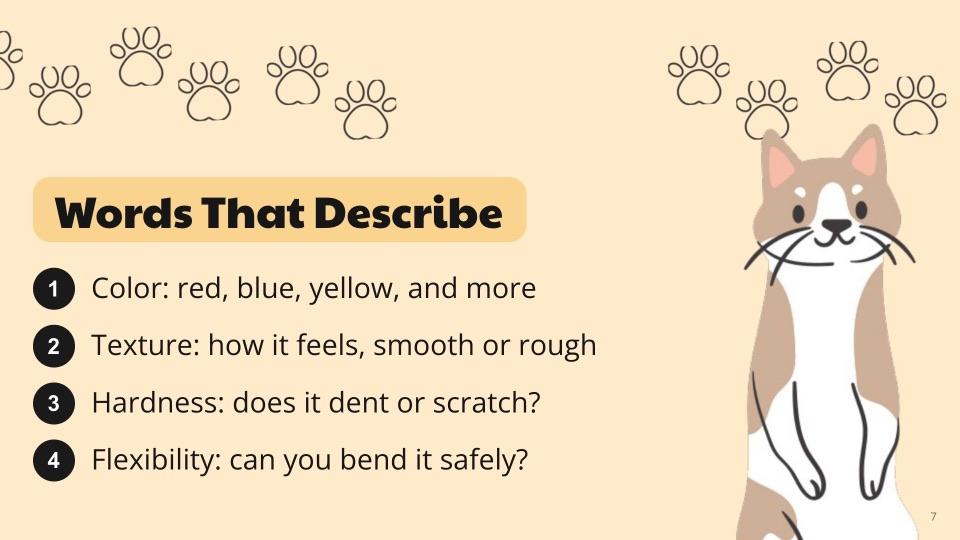
| material | what an object is made from, like wood, metal, or plastic |
| property | something you can see or touch that tells what a thing is like |
| texture | how a surface feels to your fingers, like smooth or rough |
| hardness | if a thing keeps its shape or gets a dent when you push it |
| flexibility | if you can bend a thing safely without it breaking |
| pattern | the same trait you see again in many different objects |
Timed plan (60 minutes)
| Time | Stage | What happens |
|---|---|---|
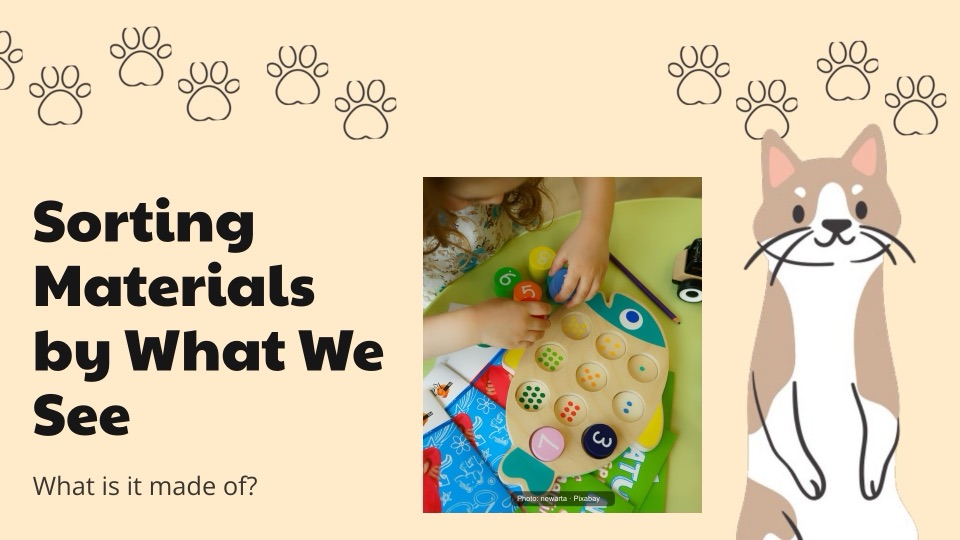
| 8 min | Starter | To spark curiosity about same-size cubes and recall object and material ideas. Show Slide 1 Sorting Materials by What We See and read What is it made of? Hold up two same-size cubes, one wood and one metal, for all to see without touching yet. Show Slide 2 Today we will and read the three goals in simple words. Lead a 2-minute turn-and-talk on what the thing is and what it is made from. |
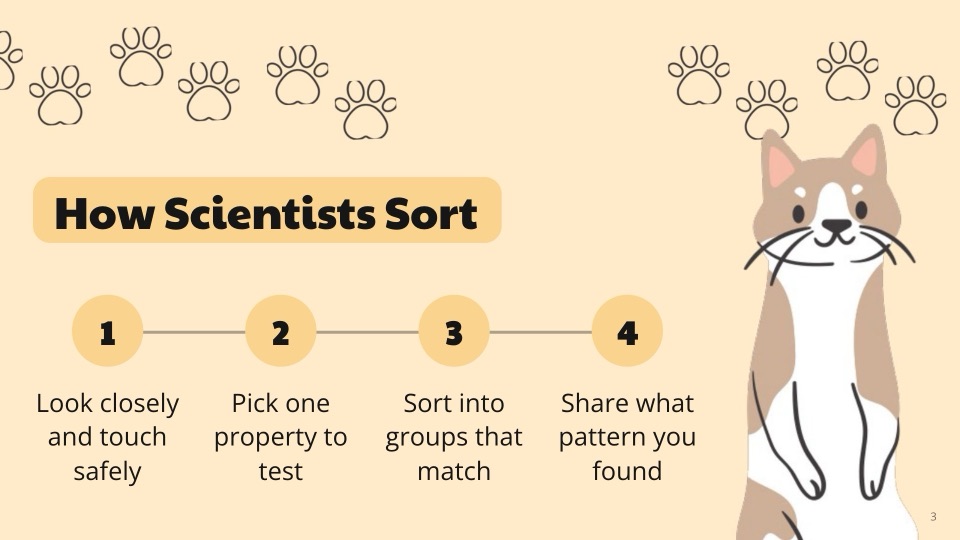
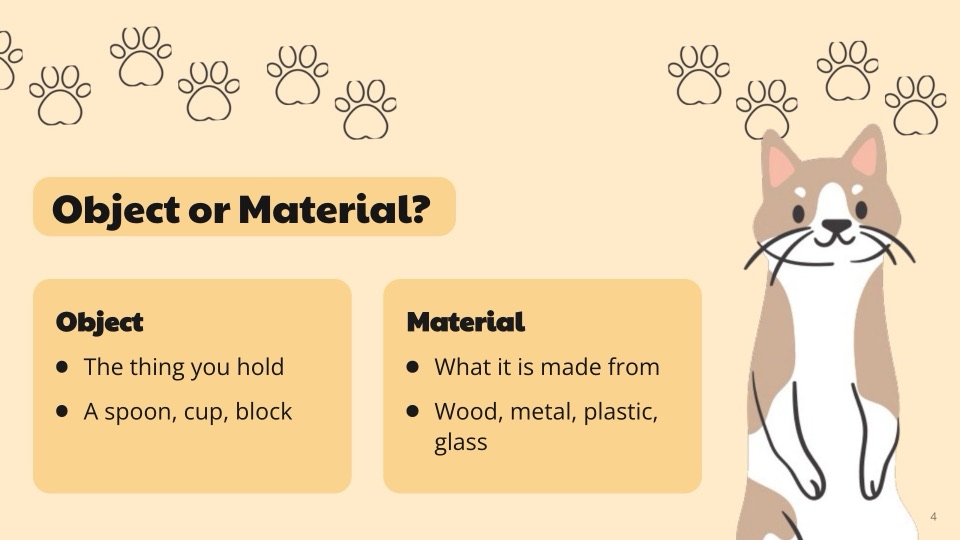
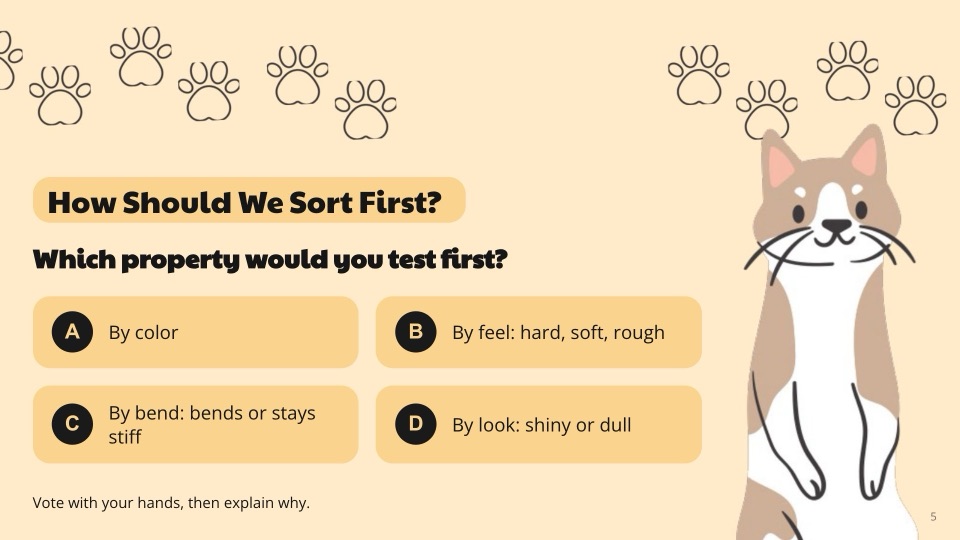
| 12 min | Teaching | To model how to describe materials and sort by one property at a time. Show Slide 3 How Scientists Sort and read the four steps with the class. Show Slide 4 Object or Material and model: the object is a spoon and the material is plastic. Show Slide 7 Words That Describe and model color, texture, hardness, and flexibility observations. Show Slide 5 How Should We Sort First and take a vote for hard or soft, bendy or stiff, shiny or dull. |
| 25 min | Main activity | To plan and conduct sorting tests three different ways with the same cubes. Give each group 8 cubes that are all the same size and shape but are made of different materials with a tray and science notebooks. Model Sort 1 by look: shiny or dull, place cubes, draw groups, and label the property. Challenge groups to plan Sort 2 and Sort 3 by a new property each time, like heavy or light. Remind groups to draw each sort, label weight, color, texture, hardness, luster, and type of material, and get ready to share patterns. |
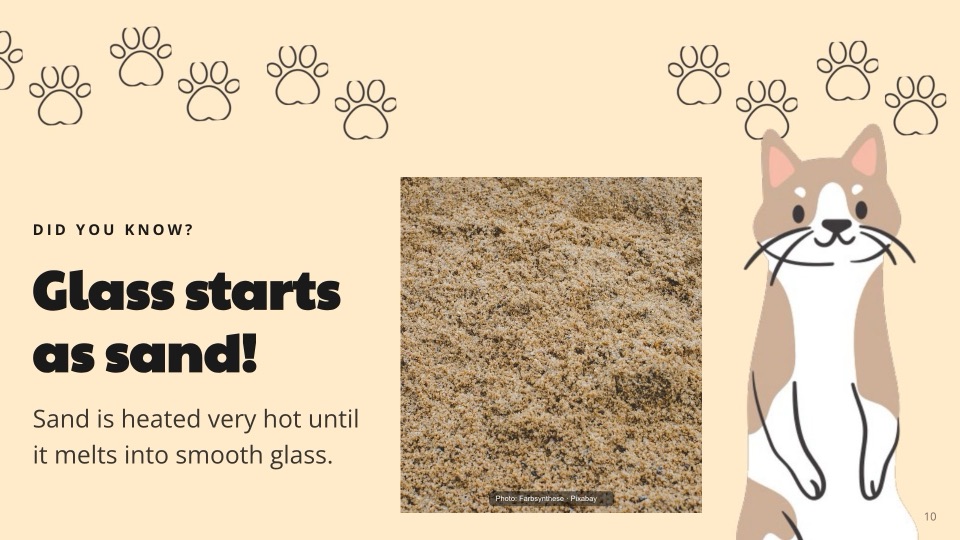
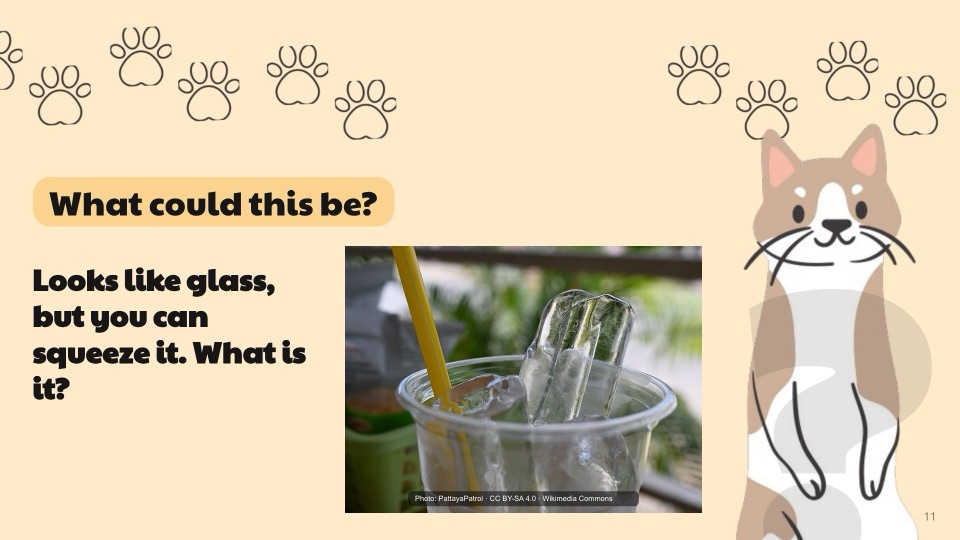
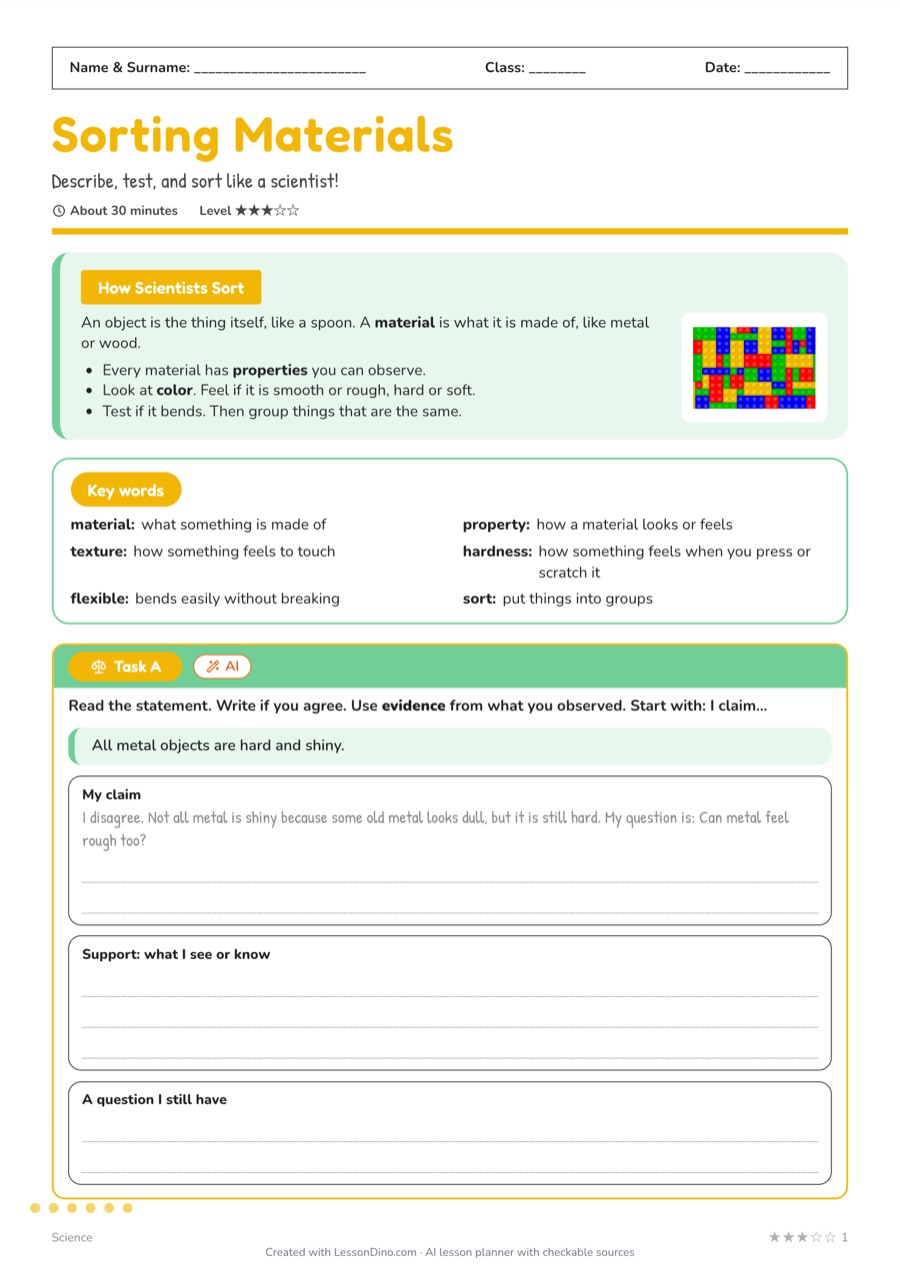
| 10 min | Share and apply | To compare results, name patterns, and apply property ideas to new items. Invite two groups to show one sort and name the similar properties that different materials share. Show Slide 10 Did you know and read: Glass starts as sand! Sand is heated very hot until it melts into smooth glass. Show Slide 11 What could this be and read: Looks like glass, but you can squeeze it. What is it? A plastic cup. It looks like glass but bends. Hand out Worksheet Task B and have pairs sort each clue with wood, fabric, or both, noting wood is usually strong and can bend. |
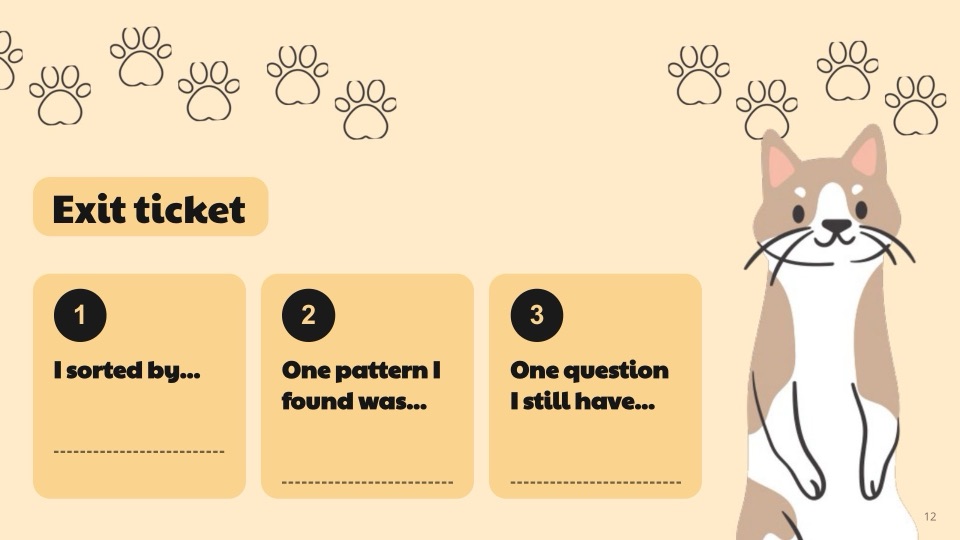
| 5 min | Plenary | To return to goals and check each student can name rule and pattern. Show Slide 12 Exit ticket and read the three starters aloud. Hand out Worksheet Task A and read the statement together. Have each student write agree or disagree starting with I claim and using one observation as evidence. |
Common mistakes
- Mixing up object names and material names, such as saying the material is spoon
How to spot it: Groups sort by spoons or cups instead of metal, plastic, wood products, and rubber
Practice the frame: The object is a spoon and the material is plastic, and sort by kind of material not object type - Thinking same size and shape means same material
How to spot it: Students say all 8 cubes must be the same because they look alike
Heft and feel again to show all cubes are the same size and shape but are made of different materials with different weight and luster - Using more than one property at once or naming color as material
How to spot it: Groups put red plastic and red wood together and say red is the material
Reset to one rule at a time and recall observations could include color, texture, hardness, and flexibility, but color alone does not tell material
Support
- Start with only 4 cubes and one choice at a time, such as shiny or dull, then add the rest.
- Provide picture word bank for smooth, rough, bendy, stiff, shiny, and dull and let students point while describing.
Stretch
- Ask groups to predict which cube is wood, plastic, or metal and explain what clues they used.
- Challenge early finishers to re-sort the same set a fourth way and name the new pattern they found.
Check questions
- What property did you use to sort? Name color, texture, hardness, or flexibility.
Answer: Any one observed property, for example I sorted by hard or soft feel. - What pattern did different materials share in your groups?
Answer: Similar traits grouped together, for example heavy, shiny cubes were metal. - A cup is on the table. Is cup the object or the material? What is it made from?
Answer: Cup is the object; the material is what it is made from, like plastic, glass, or paper.
Curriculum
Plan and conduct an investigation to describe and classify different kinds of materials by their observable properties.
Video clips
Clips on YouTube, from the start and end times we chose. Check each one before you show it.
-
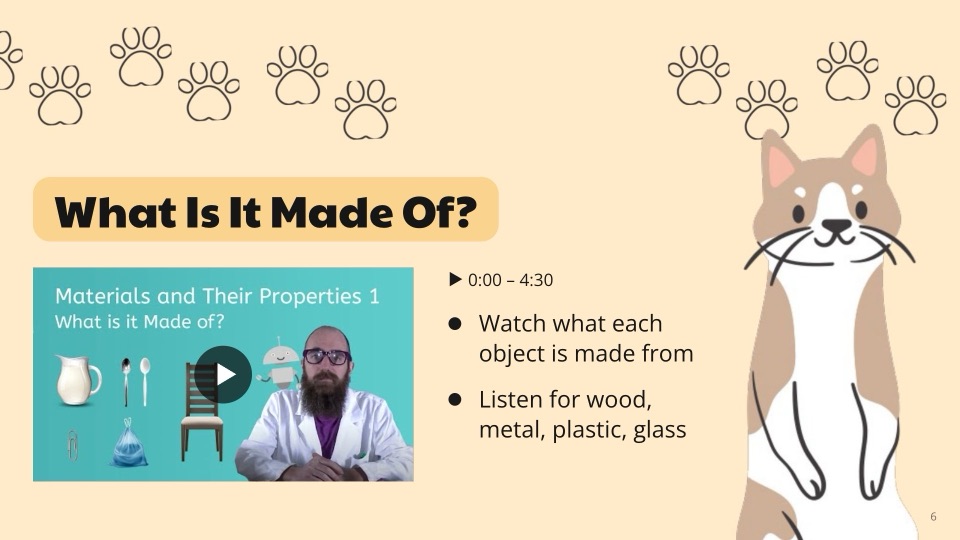
What is it made of? from 0:00 to 4:30
Miacademy & MiaPrep Learning Channel: Materials and Their Properties 1 - What is it Made of? - Elementary Science for Kids!
Elementary vocabulary, pace, and examples are perfect for ages 7-8 to describe what objects are made of.
-
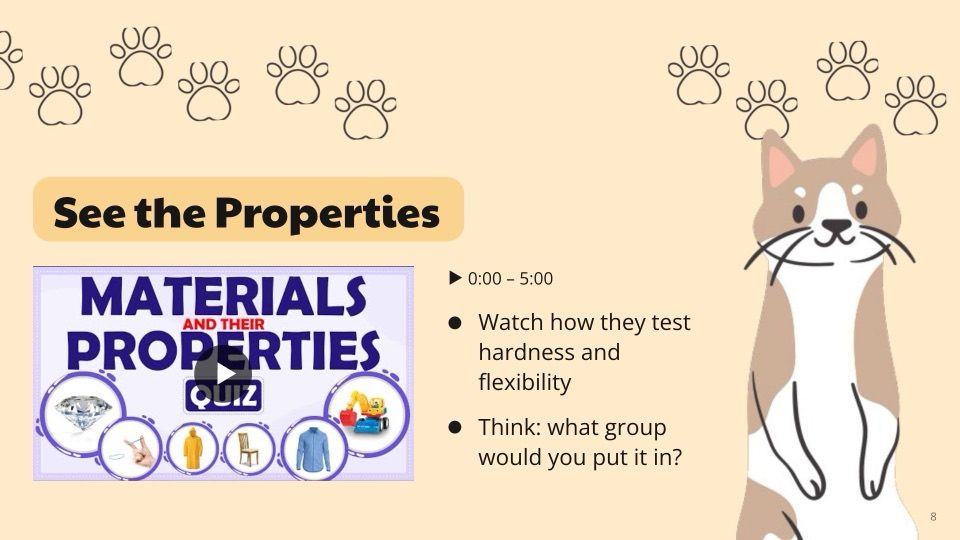
Physical properties of materials from 0:00 to 5:00
Tutoring Hour: Materials and Their Properties Quiz for Kids | Guess What This Object is Made Of and Why!
Made by Kids Academy for ages 7-8 with clear kid-friendly language about observable properties.
Worksheet
Sources
- 2-PS1-1 Matter and Its Interactions | Next Generation Science Standards nextgenscience.org
- Copy of Second Grade Science Curriculum - summit.k12.nj.us summit.k12.nj.us
- Investigating Materials 1 | Grade 3 Curriculum | The Inquiry Project inquiryproject.terc.edu
- Investigating Materials 4 | Grade 3 Curriculum | The Inquiry ... inquiryproject.terc.edu
- Describing materials – KS1 Science curriculum - BBC Bitesize bbc.co.uk
- How can children sort and group materials by their properties? hands-oneducation.com
- How to Observe and Sort Materials by Their Properties lenny.com
Picture credits
- Photo: newarta · Pixabay
- Photo: Farbsynthese · Pixabay
- Photo: PattayaPatrol · CC BY-SA 4.0 · Wikimedia Commons
- Picture: unknown · CC0 · rawpixel via Openverse
- Pictograms: Sergio Palao, ARASAAC (arasaac.org) · CC BY-NC-SA
- Picture: unknown · CC0 · rawpixel via Openverse
Made with Lesson Dino's AI on 16 October 2026. AI can make mistakes, so check facts against the sources before you teach.