Slides

Lesson plan
Same Name, Any Way You Turn It
Students learn that flat and solid shapes keep the same name in any size or turn. They feel, name, and sort shapes in games and partner work.
Objectives
- Students will correctly name familiar 2D and 3D shapes in any size or turn.
- Students will describe shapes as flat or solid and count sides and corners.
Success criteria
- I can say the shape name when it is big, small, or turned.
- I can tell if a shape is flat or solid and count sides and corners.
Key words
| Word | Meaning |
|---|---|
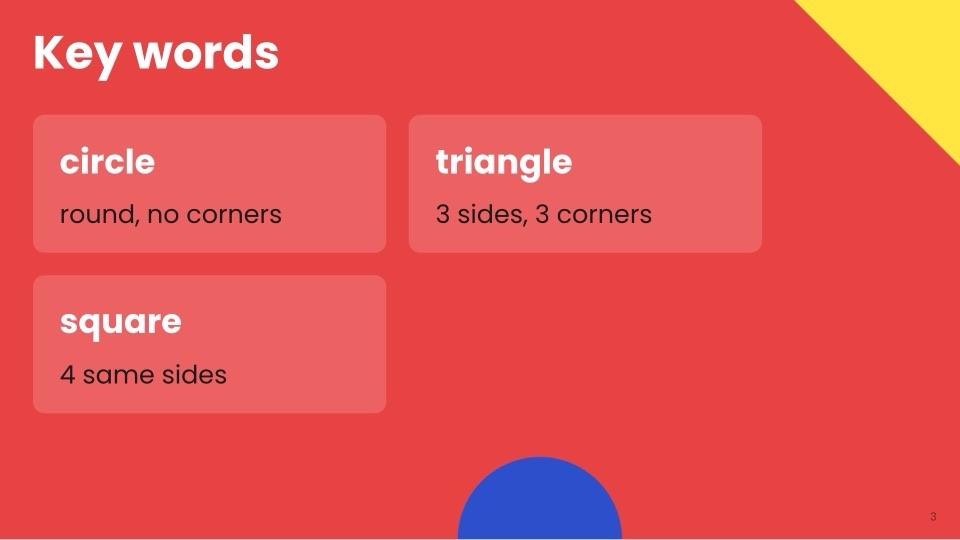
| circle | a round loop with no straight lines and no pointy places |
| triangle | a shape with three straight edges and three pointy places |
| square | a shape with four edges all just as long and four pointy places |
| flat | thin like paper, not puffed out all around |
| solid | puffed out all around like a ball you can pick up |
| corner | a pointy place where two straight lines meet |
Timed plan (60 minutes)
| Time | Stage | What happens |
|---|---|---|
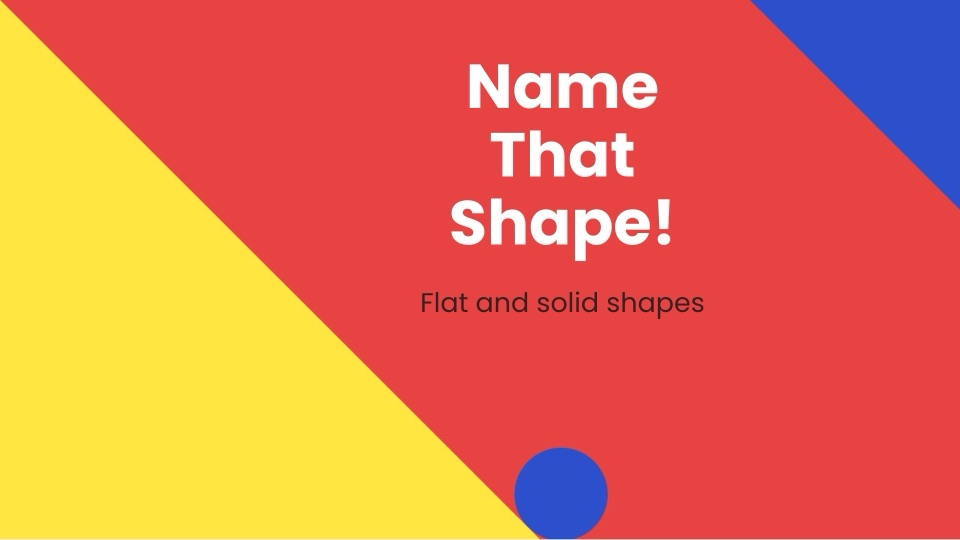
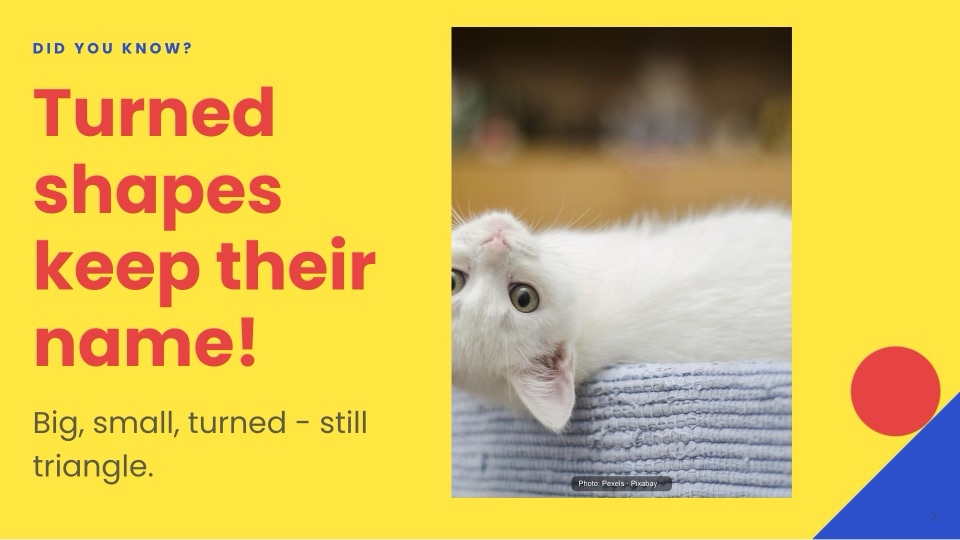
| 5 min | Starter | Hook curiosity about the hidden shape and recall that turned shapes keep their name. Show Slide 1 and shake the feel box without showing inside. Say the hook and show Slide 2: big, small, turned - still triangle. Hold up a big upside-down triangle and a tiny upright triangle side by side. Ask class to chant both names together to hear it stays triangle. |
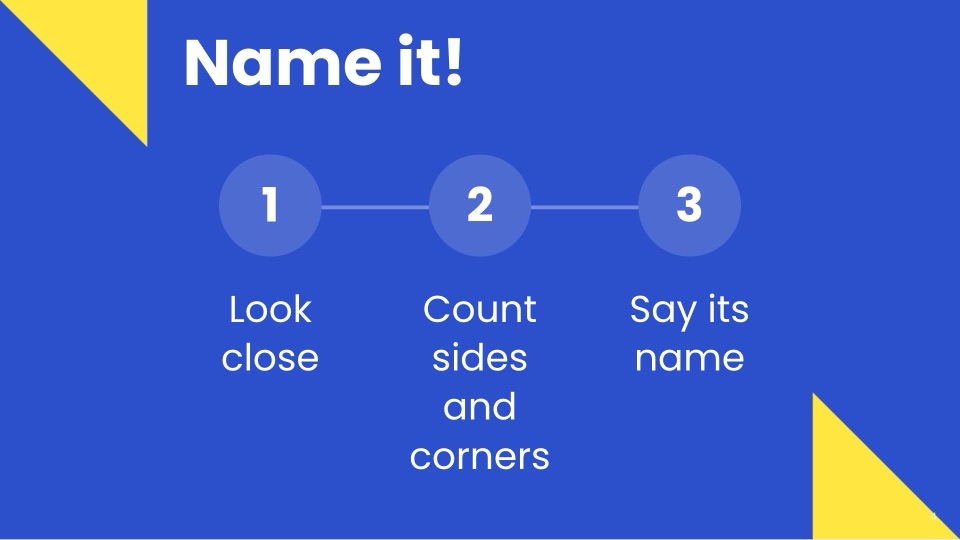
| 10 min | Teaching | Teach shape names, flat or solid, and how to count sides and corners. Show Slide 3 key words and point to circle, triangle, square while students trace in air. Show Slide 4 steps and model: Look close, count sides and corners, say its name. Model with a tilted large square and a small upright square, counting 4 sides and 4 corners for both. Hold flat paper circle and solid ball to show 2D shapes are flat and 3D shapes are solid. |
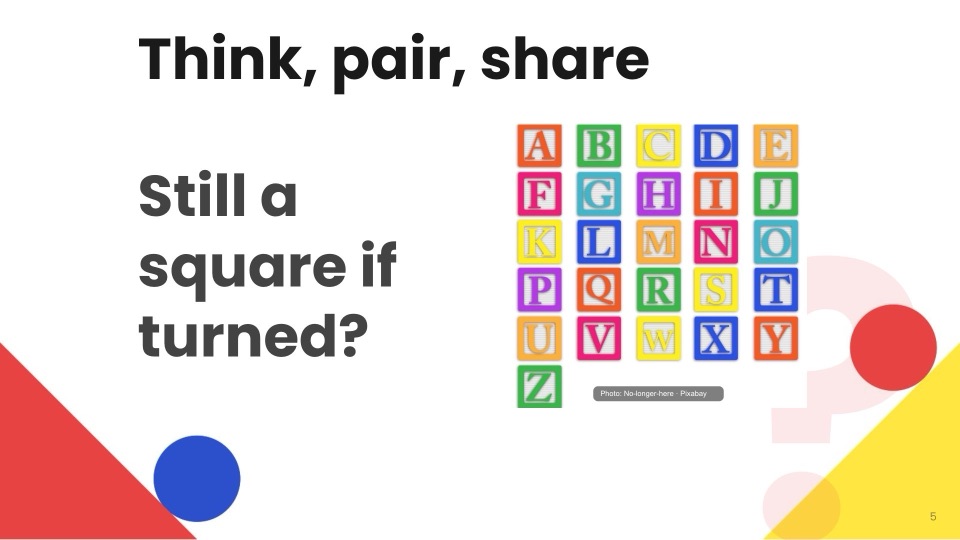
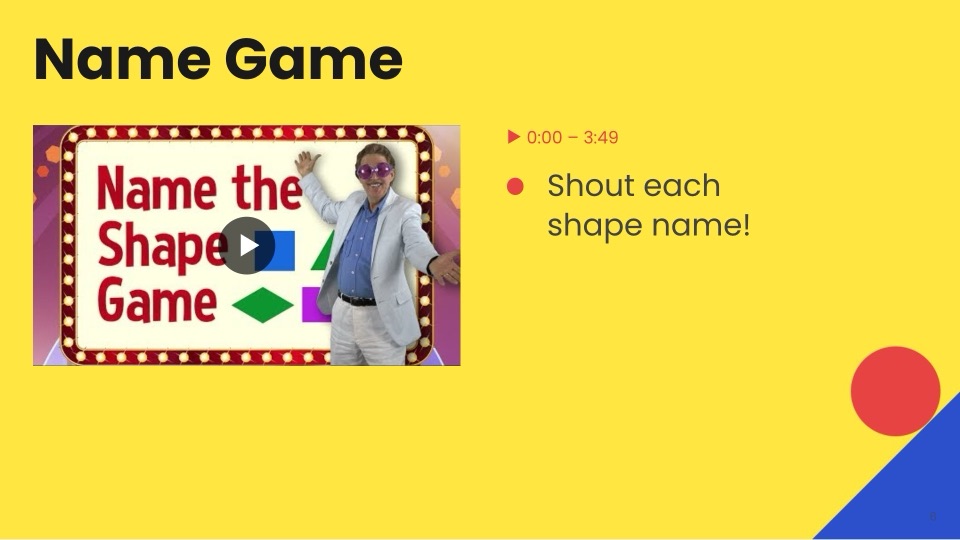
| 12 min | Practice Together | Practice naming shapes together in different turns and sizes. Show Slide 5 question Still a square if turned? and turn a square in four positions. Think, pair, share: partners whisper answer, then two partners share out. Play Slide 6 Video clip 1, pause after each shape for class to shout the name. Repeat that the name stays the same regardless of orientation or size. |
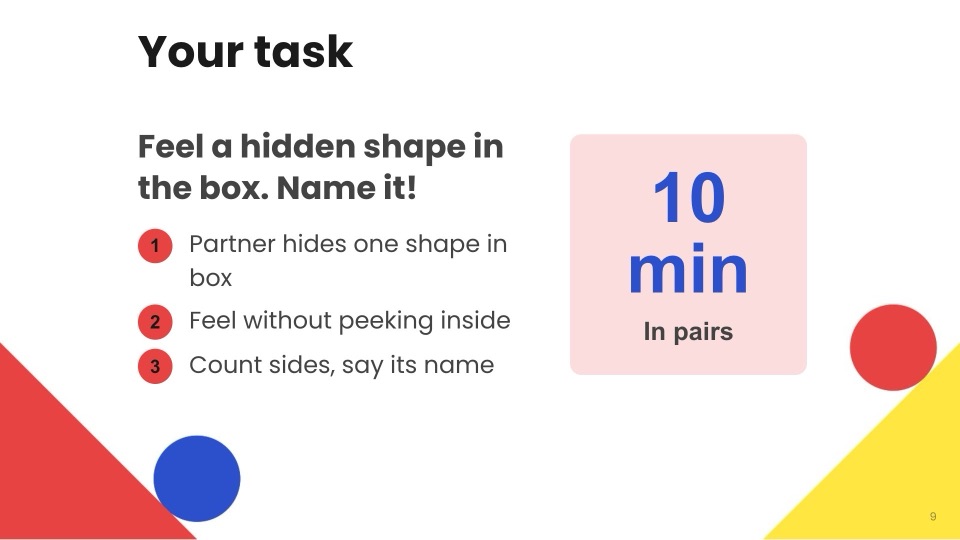
| 23 min | Main Activity | Feel hidden shapes by touch and name them by sides and corners. Show Slide 7 flat and solid names and quick sort: paper circle flat, cube box solid, sphere ball solid. Show Slide 9 steps and model: partner hides, guesser feels without peeking, counts sides, says name. Send pairs to tables with feel box and table shapes; remind to look away while partner hides. Circulate, ask guessers to say side and corner counts, confirm name stays same in any size or turn. |
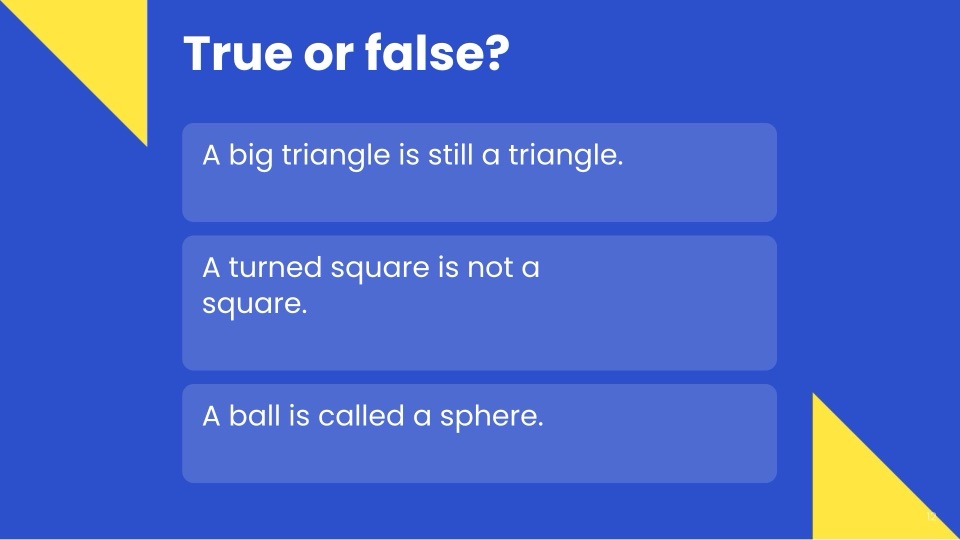
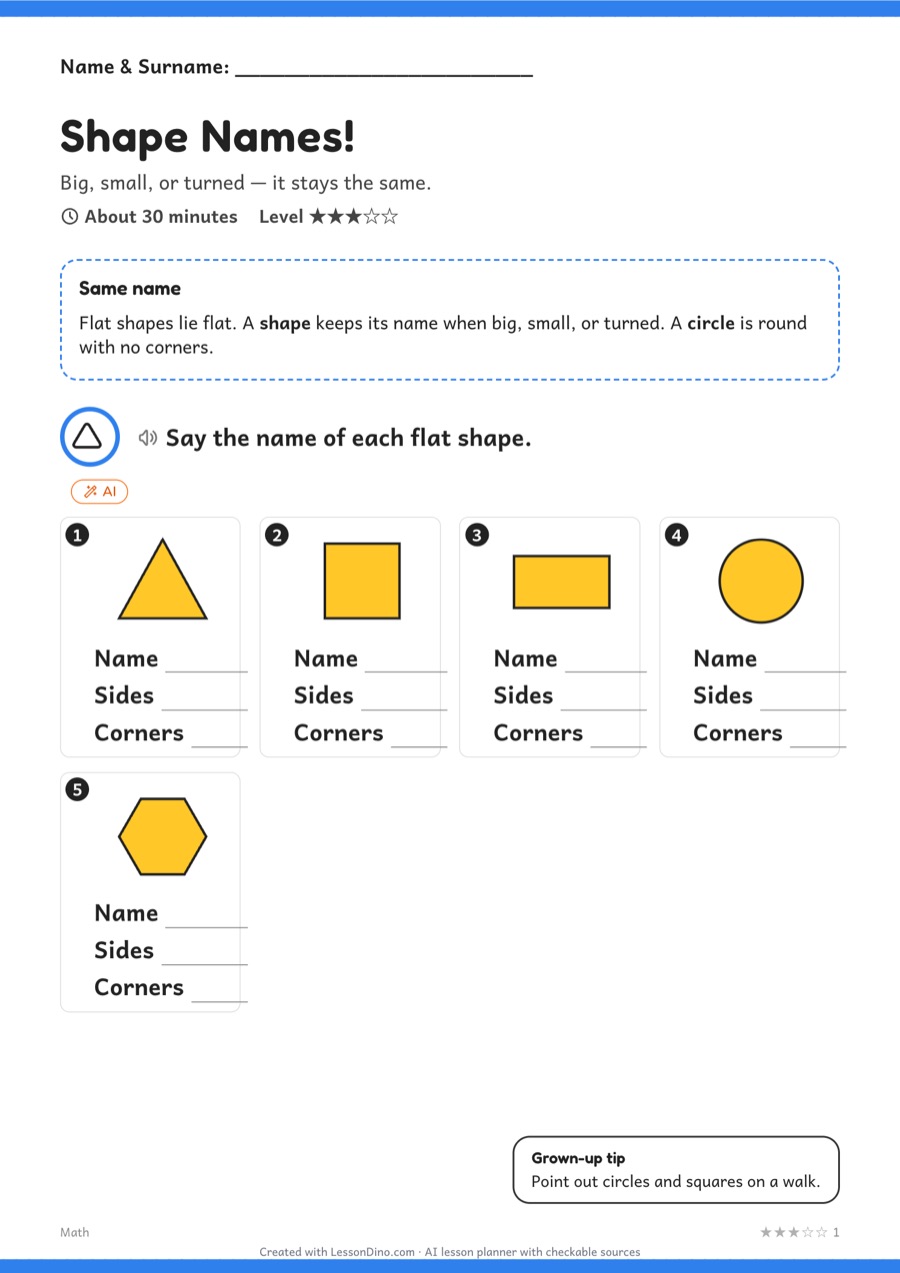
| 10 min | Plenary | Check that everyone can name shapes in any size or turn and tell flat or solid. Show Slide 10 big idea and lead chant: Big or small, turned around, name stays the same! Hand out Worksheet page 1: Say the name of each flat shape; students point and whisper names. Show Slide 12 true-or-false lines and vote thumbs up or down for each one. Close by holding tiny tilted triangle and big triangle: both triangle. |
Common mistakes
- Thinking a square turned on its corner is a different shape, not a square.
How to spot it: Student calls tilted square a diamond and says it is not square.
Turn it slowly back upright, count 4 same sides and 4 corners together, and chant same name in every turn. - Thinking a big shape has a different name than a small same shape.
How to spot it: Student says big triangle is triangle but little one is not, or gives new name.
Hold big and small together, count sides and corners on both to show they match, since name stays same regardless of size. - Calling a solid ball a circle.
How to spot it: Student says ball is circle when sorting flat or solid.
Pat flat paper circle and hug solid ball to show 2D flat and 3D solid, then rename: flat circle, solid sphere.
Support
- Start with only circle, square, and triangle and match to same-size upright cards first.
- Offer table shapes to feel and point to while guessing in the box.
Stretch
- Name hexagon and rhombus in skinny, tilted versions.
- Describe hidden shapes with no choices using long side, short side, pointy corner before naming.
Check questions
- I turn a rectangle upside down. What is it called now?
Answer: Still a rectangle; turned shapes keep the same name. - A tiny square and a huge square — same name or different?
Answer: Same name, square; size does not change name. - Is a cube flat or solid?
Answer: Solid.
Curriculum
Correctly name shapes regardless of their orientations or overall size.
Video clips
Clips on YouTube, from the start and end times we chose. Check each one before you show it.
-
Name the Shape Game from 0:00 to 3:49
Jack Hartmann Kids Music Channel: Name the Shape Game | Shape Review Game | Jack Hartmann
Direct naming practice with varied examples that is perfect pace and participation for 5-6-year-olds in kindergarten.
-
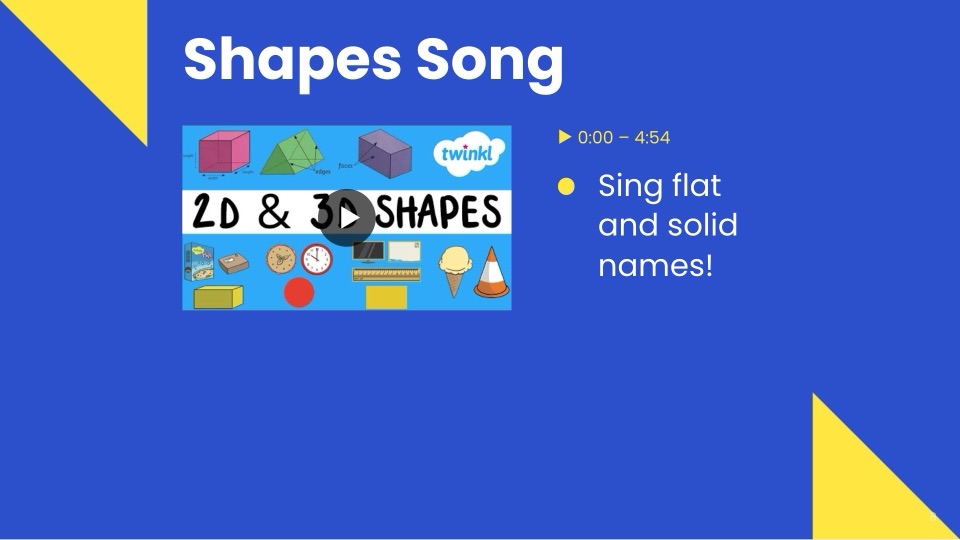
2D and 3D Shapes for Kids from 0:00 to 4:54
Twinkl Teaching Resources - United States and Twinkl Kids TV: 2D and 3D Shapes for Kids | Geometry for Kids | Twinkl USA
Covers both 2D and 3D naming clearly with kid-friendly visuals ideal for 5-6-year-olds.
Worksheet
Sources
- Kindergarten » Geometry | Common Core State Standards Initiative thecorestandards.org
- Kindergarten Math Curriculum boepublic.parkhill.k12.mo.us
- Naming Shapes - DREME For Teachers preschoolmath.stanford.edu
- 2D and 3D shapes - BBC Bitesize bbc.co.uk
- Donkey Kong Bananza Wikipedia
- Mario (franchise) Wikipedia
- Doctor Strange in the Multiverse of Madness Wikipedia
Picture credits
- Photo: FeeLoona · Pixabay
- Photo: Pexels · Pixabay
- Photo: No-longer-here · Pixabay
- Photo: 1665199 · Pixabay
- Photo: sasint · Pixabay
- Microsoft Fluent Emoji (MIT)
- Pictograms: Sergio Palao, ARASAAC (arasaac.org) · CC BY-NC-SA
Made with Lesson Dino's AI on 17 October 2026. AI can make mistakes, so check facts against the sources before you teach.