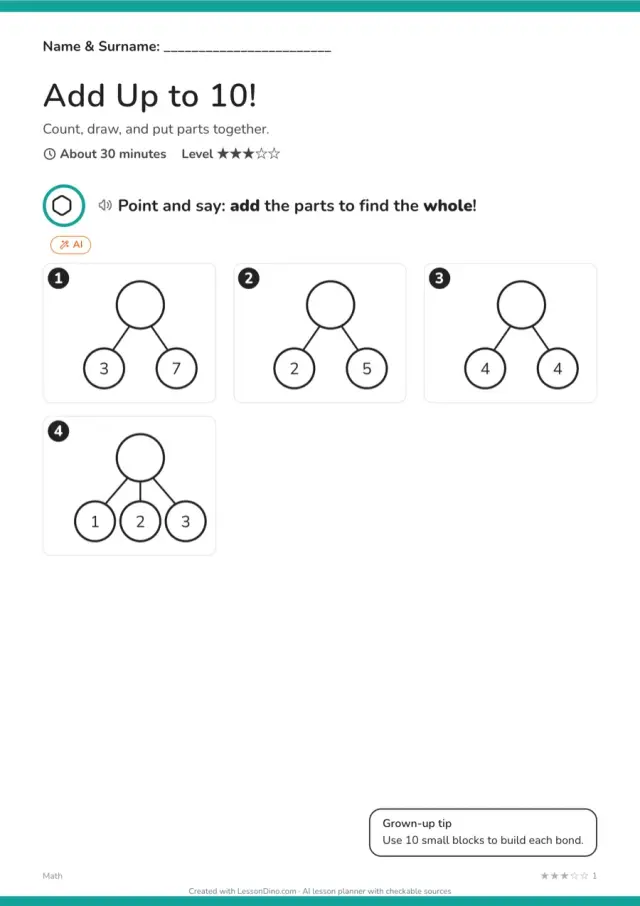
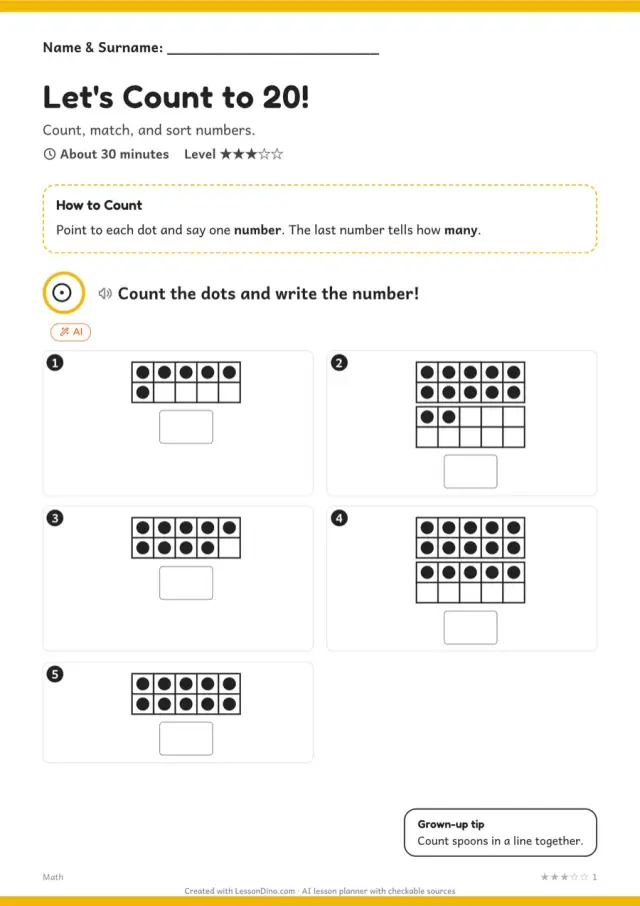
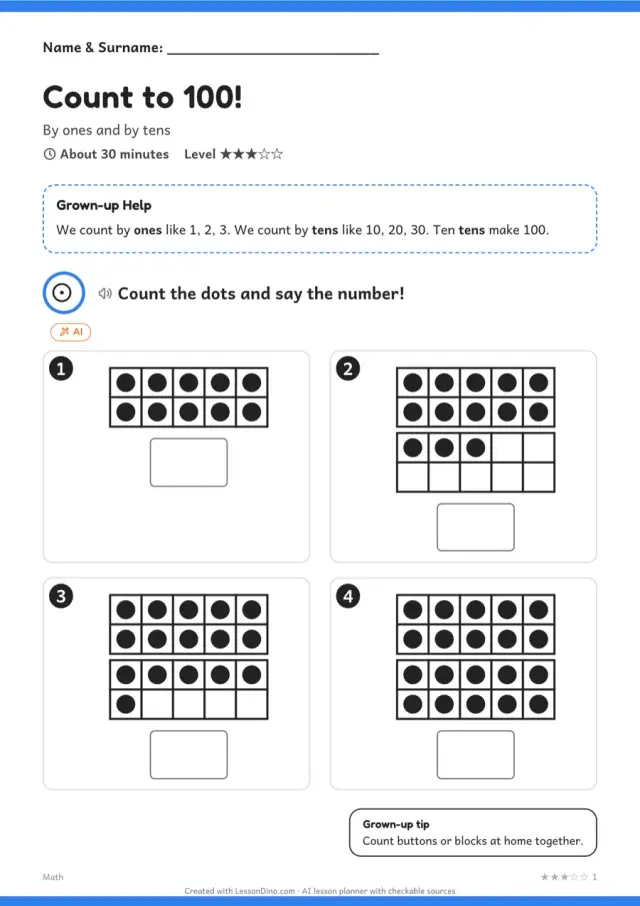
The worksheet
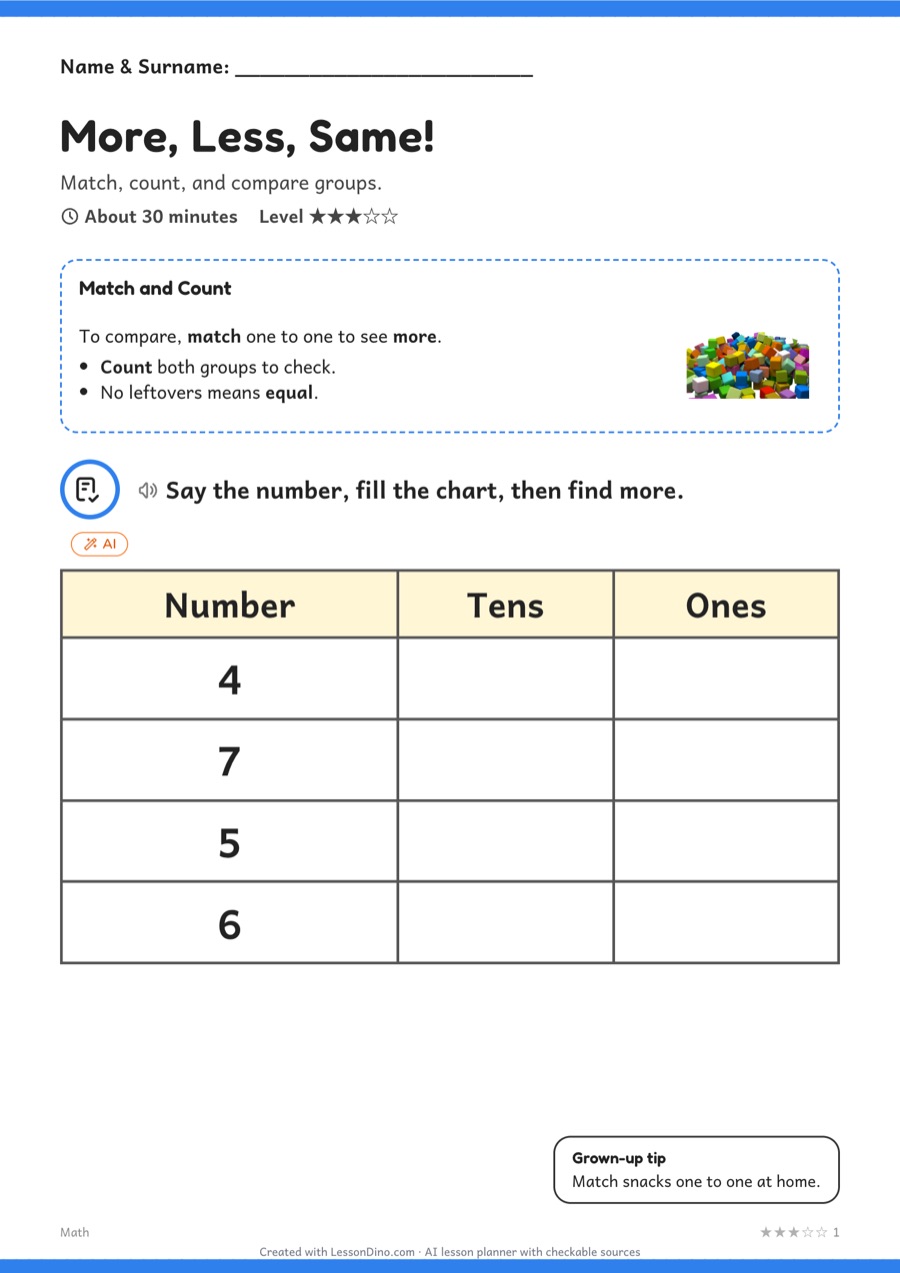
About this worksheet
Students learn to tell if one group has more, less, or the same as another. They build groups, match one to one, and count to check. This Kindergarten Math worksheet gives students (ages 5–6) five pages of practice on comparing numbers, part of the counting and cardinality unit. It goes with our free Comparing numbers lesson, which has the slides and a timed lesson plan.
What it covers
By the end, students should be able to:
- Students will compare two groups up to 10 as greater than, less than, or equal.
- Students will use matching one to one and counting to compare two groups.
How to use it
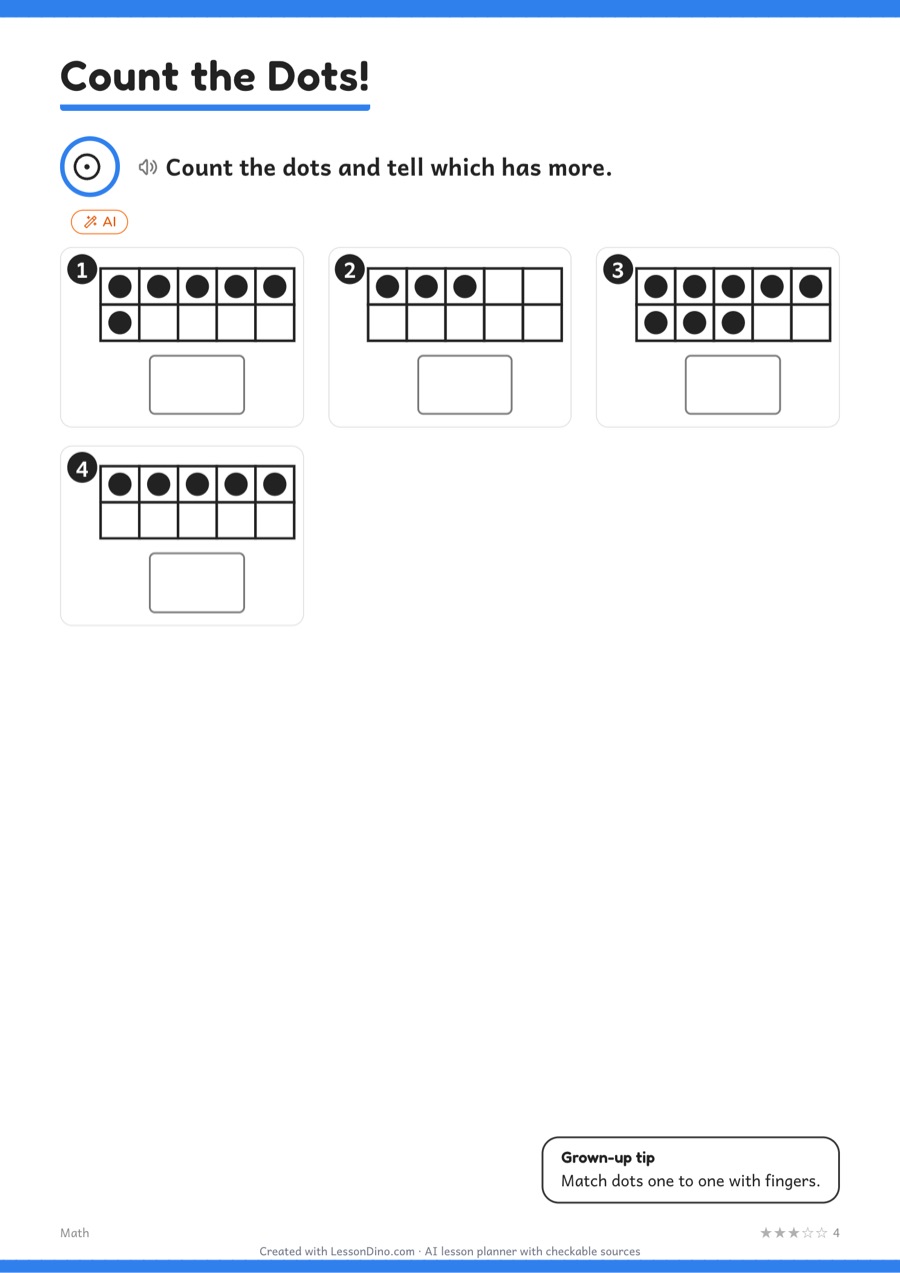
- Plenary (15 minutes): Hand out Worksheet page 4 Ten frames: Count the dots and tell which has more. Students circle or point to the side with more and say the sentence.
- Support: Start with obviously different-sized collections like 2 and 6 and use the words more than, fewer than, and same as.
- Stretch: Count both groups and tell how many extra are left unmatched.
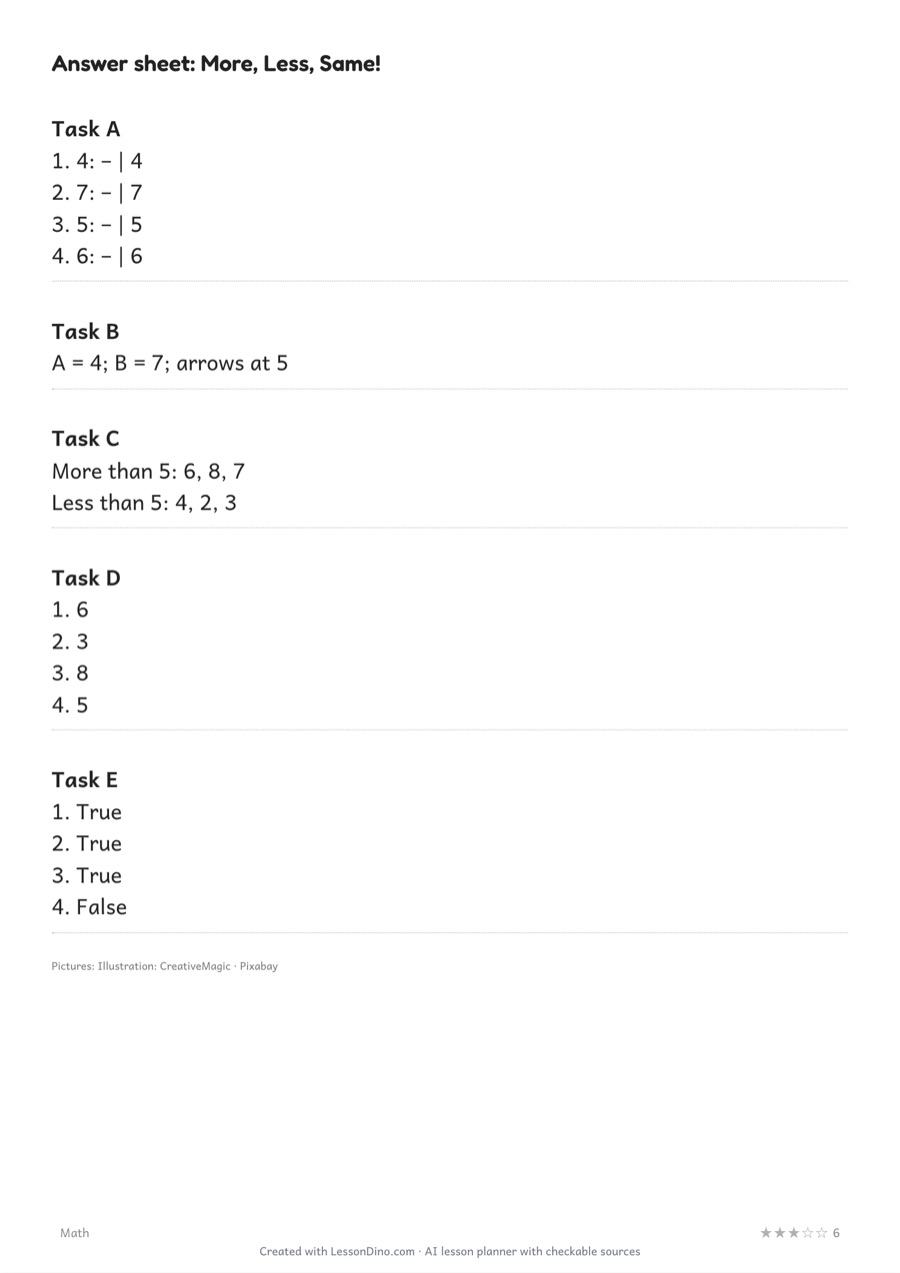
- The answer sheet is the last page, so you can print it on its own or let students check their own work.
Key vocabulary
- more: a bigger amount of things
- less: a smaller amount of things
- same: having an equal amount on both sides
- match: putting one thing next to one other thing to pair them
- count: saying numbers in order to find how many there are
Mistakes to watch for
- Thinks a longer spread-out row has more even with same number. Line up one to one in two straight rows to show each has a partner and they are the same.
- Only looks without counting and mixes up less and more words. Practice sentence frames with actions: more than means extra left, fewer than means short, same as means all matched.
- Counts without one-to-one touch and gets wrong total. Touch and move each counter once while saying numbers in order, then count again to check.
What's on the worksheet
Build the Numbers!
Match and Count
- To compare, match one to one to see more.
- Count both groups to check.
- No leftovers means equal.
Say the number, fill the chart, then find more.
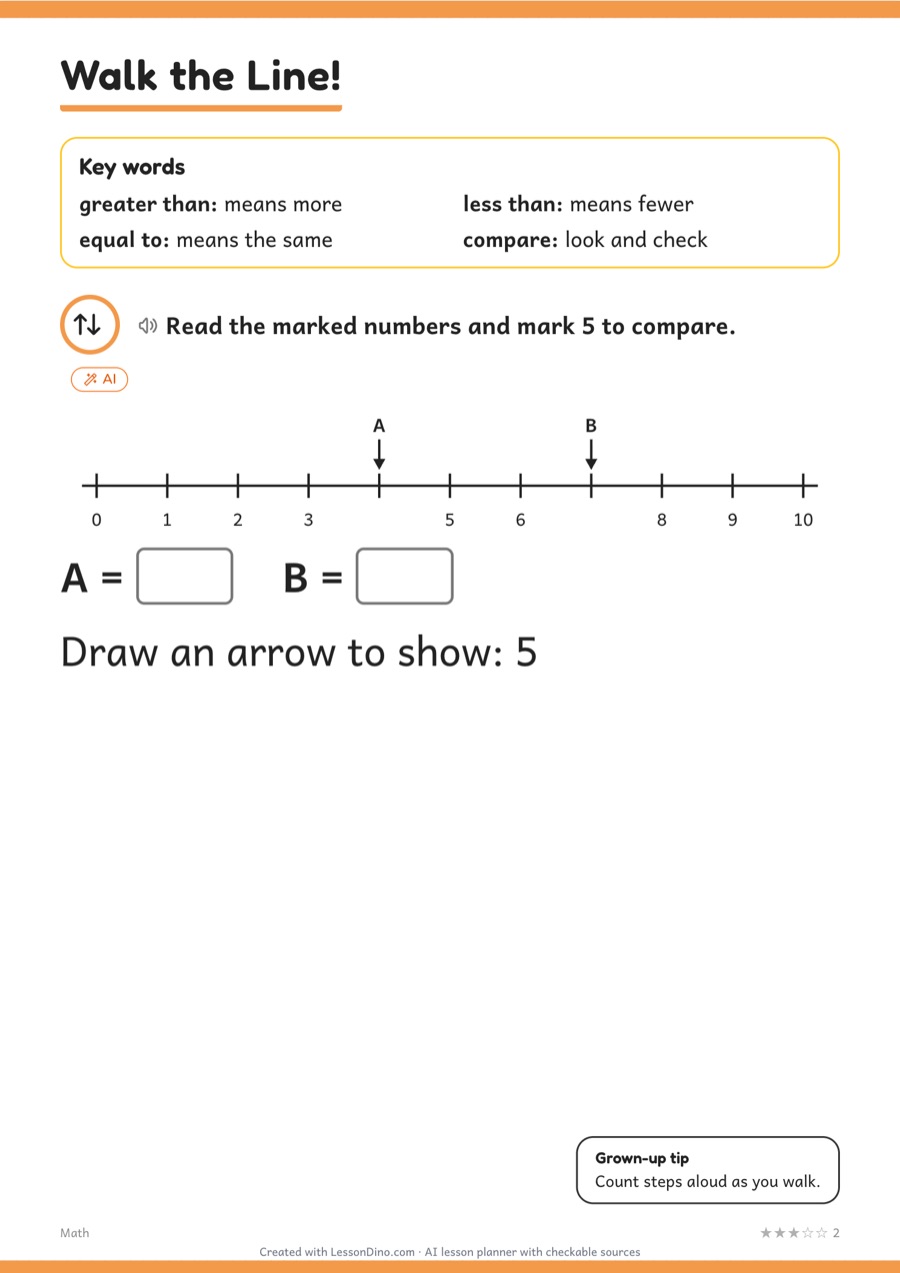
Walk the Line!
| Word | Meaning |
|---|---|
| greater than | means more |
| less than | means fewer |
| equal to | means the same |
| compare | look and check |
Read the marked numbers and mark 5 to compare.
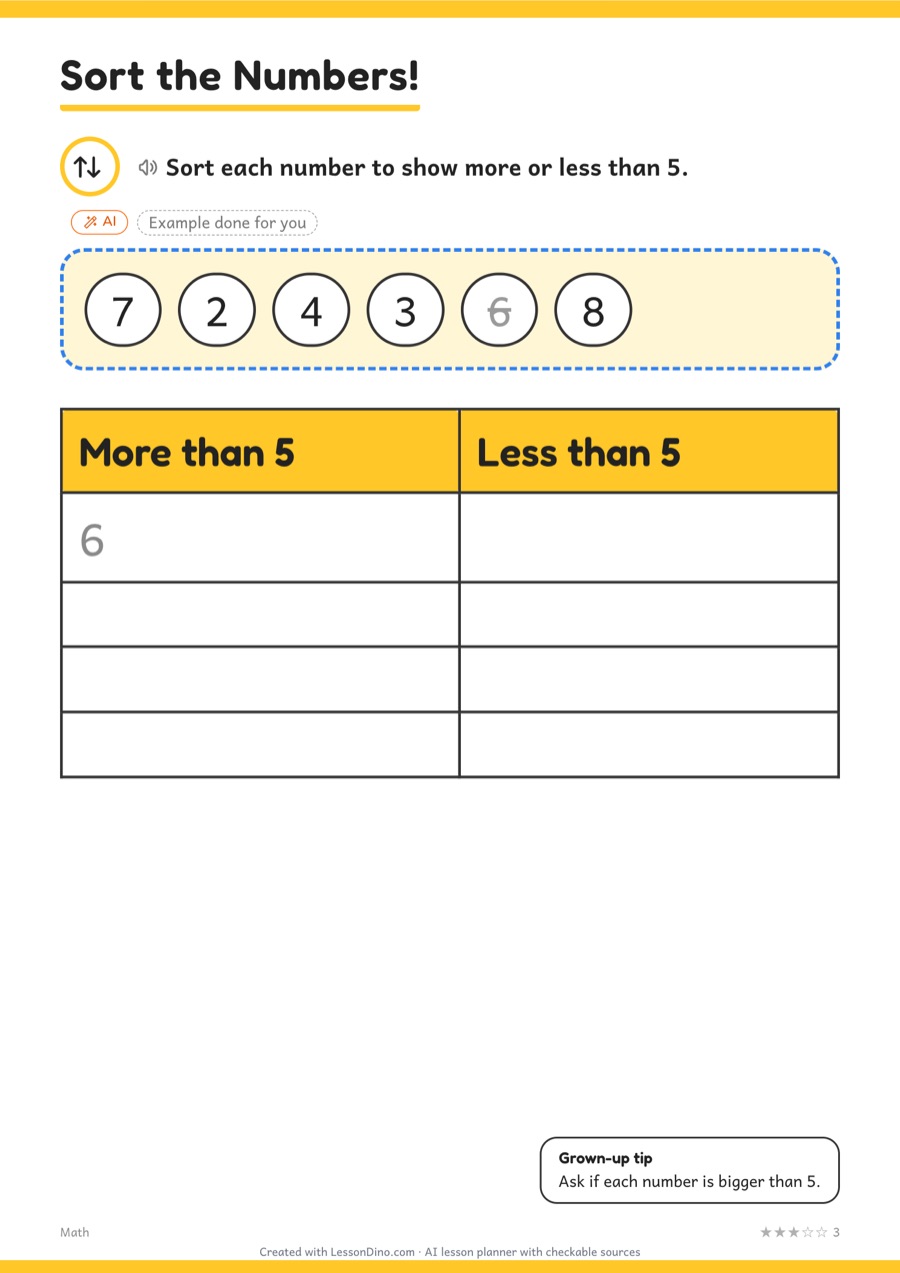
Sort the Numbers!
Sort each number to show more or less than 5.
Count the Dots!
Count the dots and tell which has more.
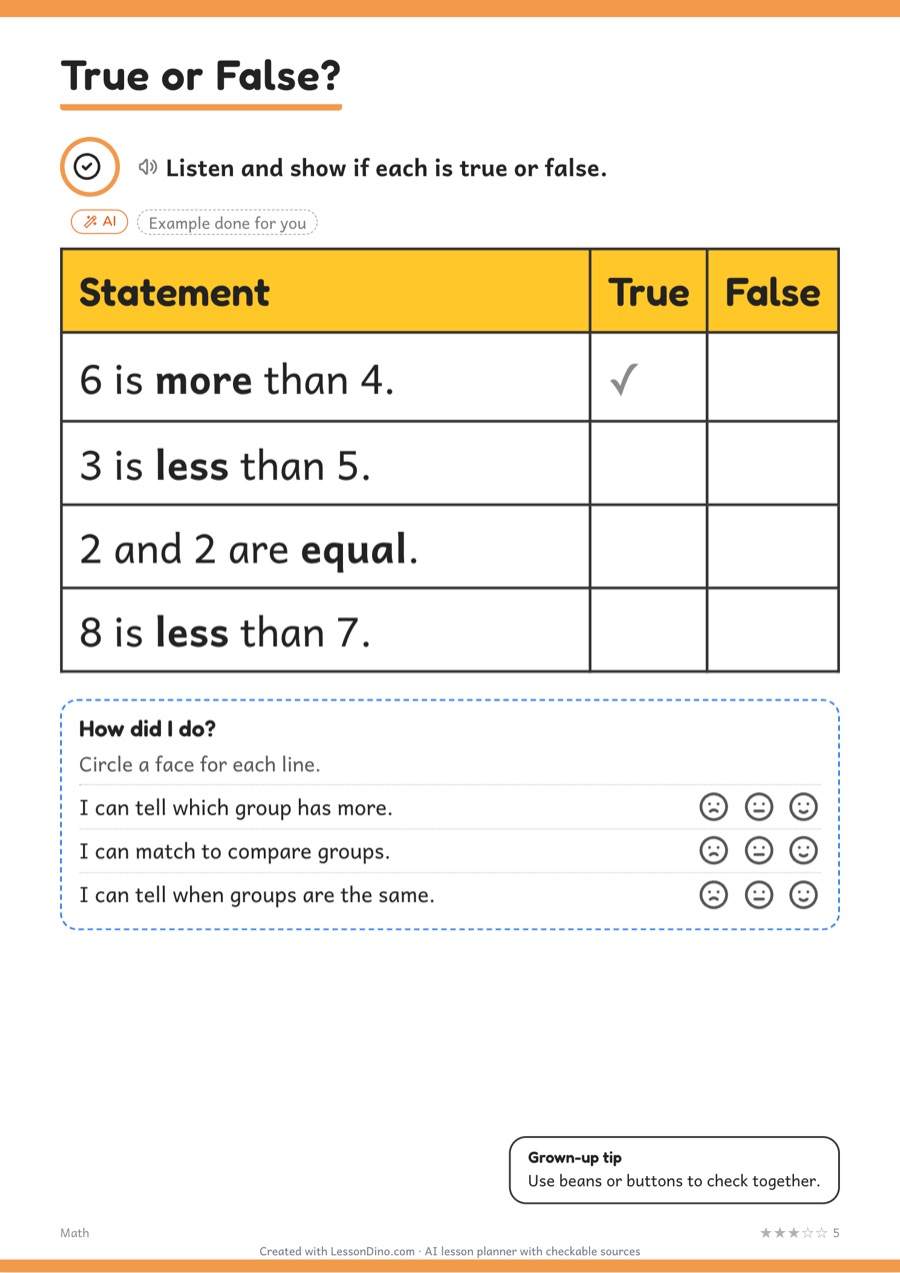
True or False?
Listen and show if each is true or false.
Answers
Show the answers
The answers are on the answer sheet, the last picture above.
Curriculum
Identify whether the number of objects in one group is greater than, less than, or equal to the number of objects in another group, e.g., by using matching and counting strategies.
Made with Lesson Dino's AI on 17 October 2026. AI can make mistakes, so check the answers and facts against the sources before you teach.