Slides
Lesson plan
How Many? Count and Make Groups to 20
Students learn to count lines, arrays, circles and scattered groups. They count out coins to fill shop orders to 20.
Objectives
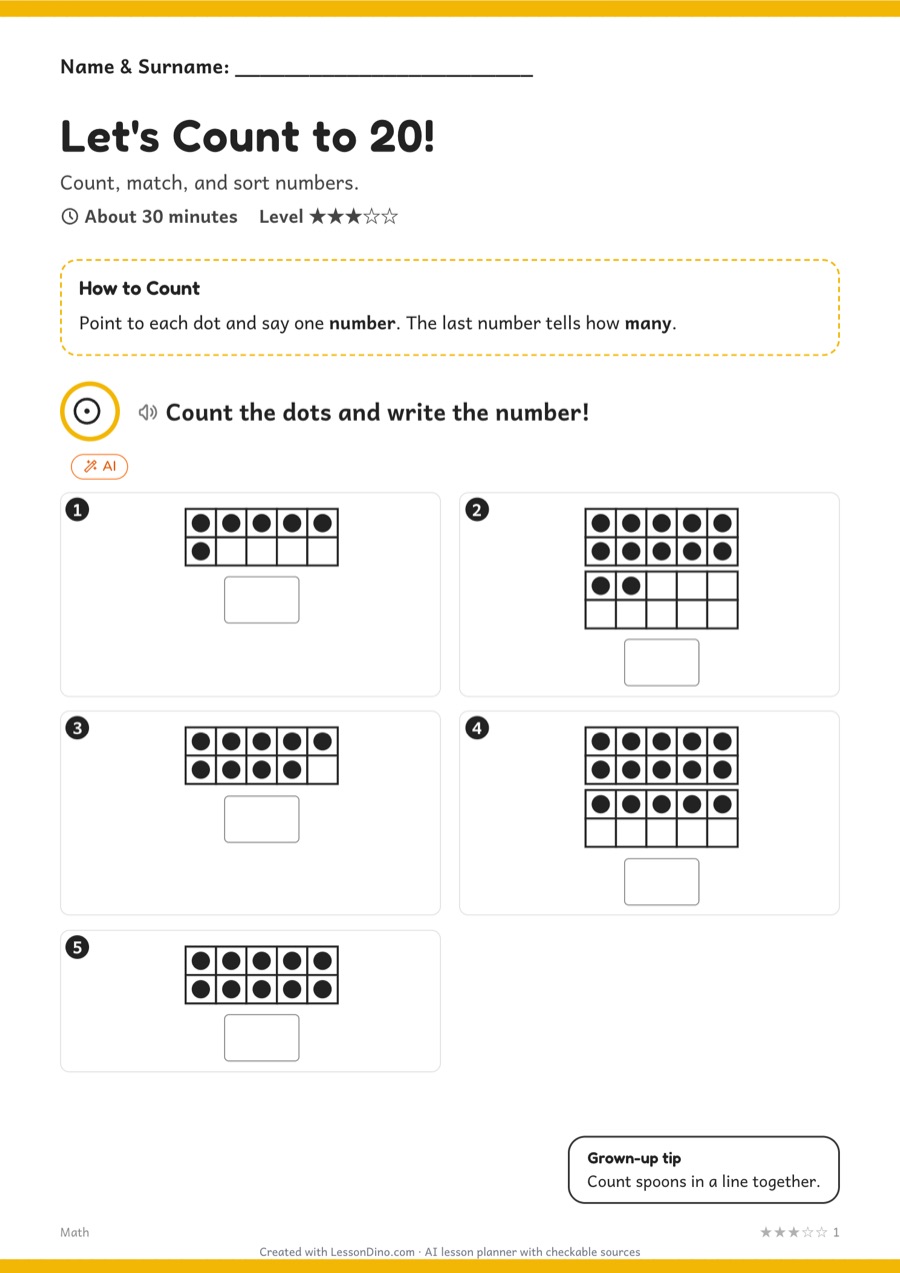
- Students will count up to 20 objects in a line, array, or circle to answer how many.
- Students will count up to 10 scattered objects by moving each object as they count.
- Students will count out 1 to 20 objects to match a given number.
Success criteria
- I can touch, count, and tell how many in lines, rows, and circles.
- I can move and count a messy pile up to 10.
- I can count out the right number of coins for an order.
Key words
| Word | Meaning |
|---|---|
| count | to say numbers in order to find how many |
| total | how many there are all together |
| number | written marks that show how many |
| arrange | the way things are put near each other, like a line |
| circle | a round shape with no ends where counting must stop at the start |
Timed plan (60 minutes)
| Time | Stage | What happens |
|---|---|---|
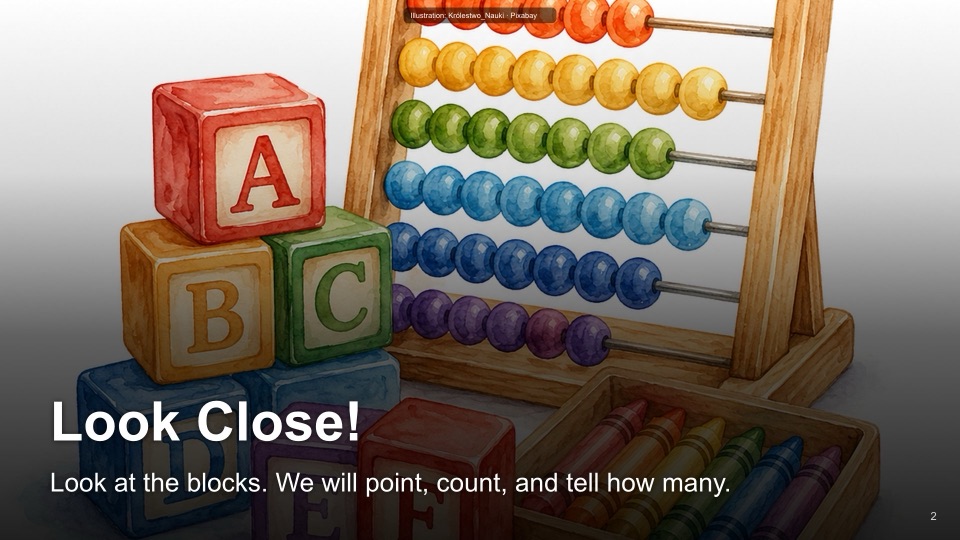
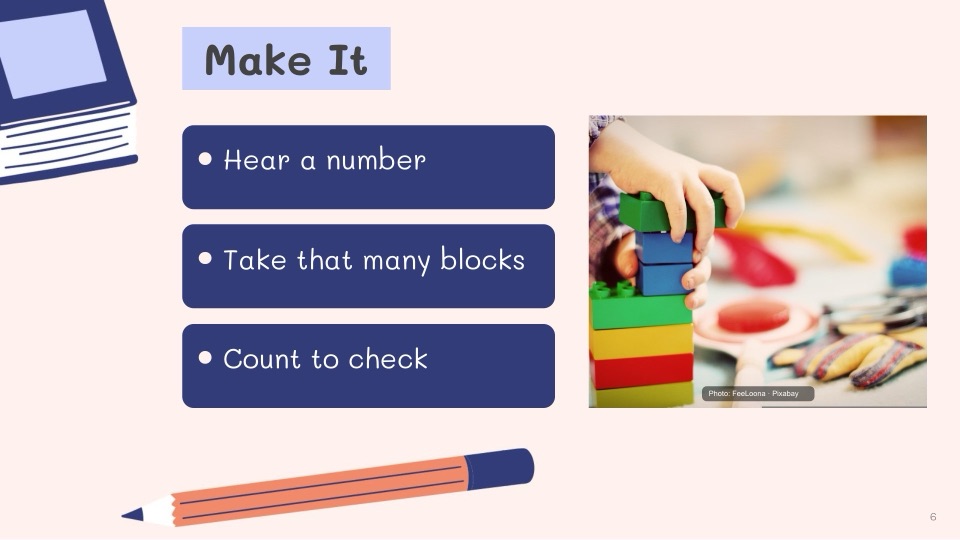
| 5 min | Starter | To hook students with the shop and recall careful counting to 10. Welcome class with the hook: Welcome to our shop! I will place an order for some coins. Can you count out just the right amount? Show Slides 1-2 and point to the blocks photo: Look at the blocks. We will point, count, and tell how many. Model counting 5 blocks, touching each once and saying numbers in order. Ask class to count with you and hold up fingers to show the total. |
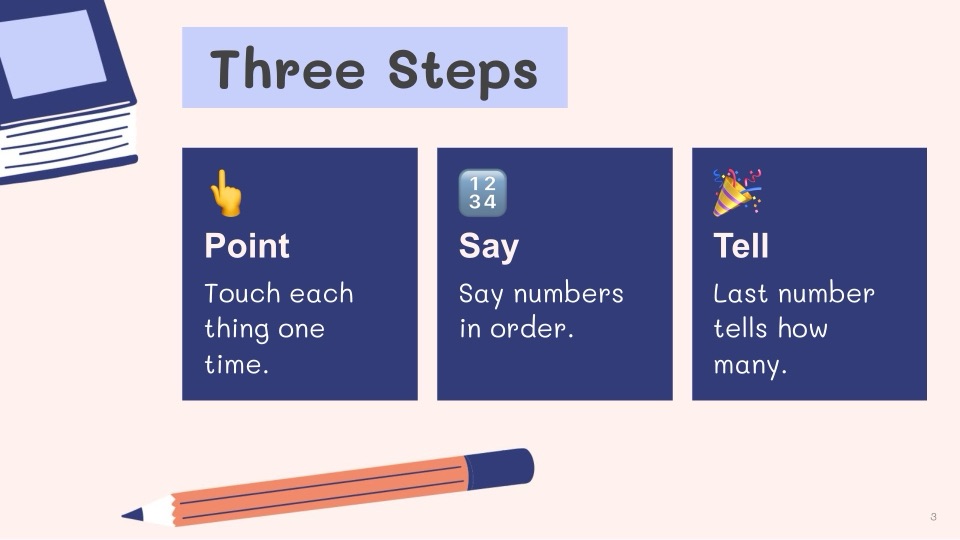
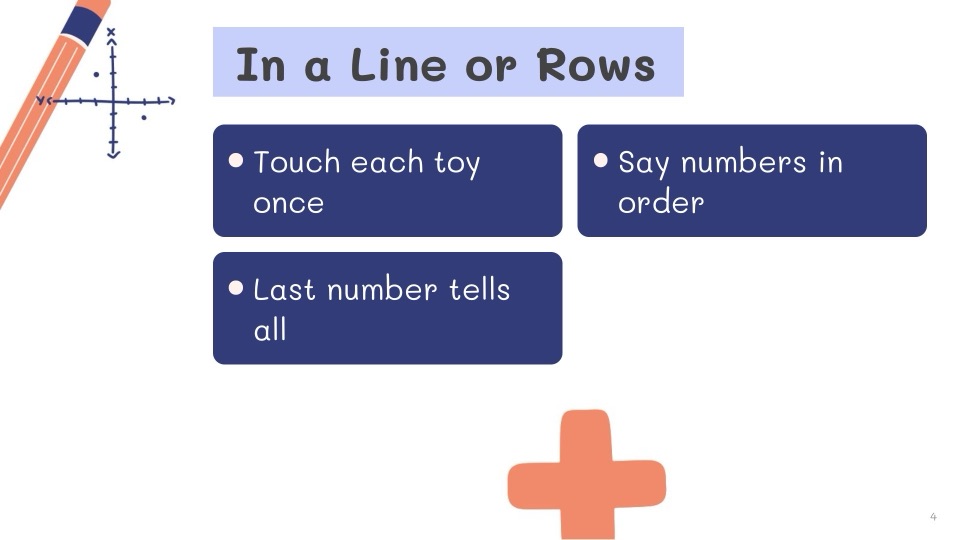
| 10 min | Teaching | To model how to count a line and rows without missing or double-counting. Show Slide 3 Three Steps and read the three steps with actions: Point, Say, Tell. Show Slide 4 and line up 14 coins in a line on the tray. Touch each coin once, saying numbers in order, pairing each object with one and only one number name. Repeat with 12 coins in rows, counting row by row and saying the last number tells the total. |
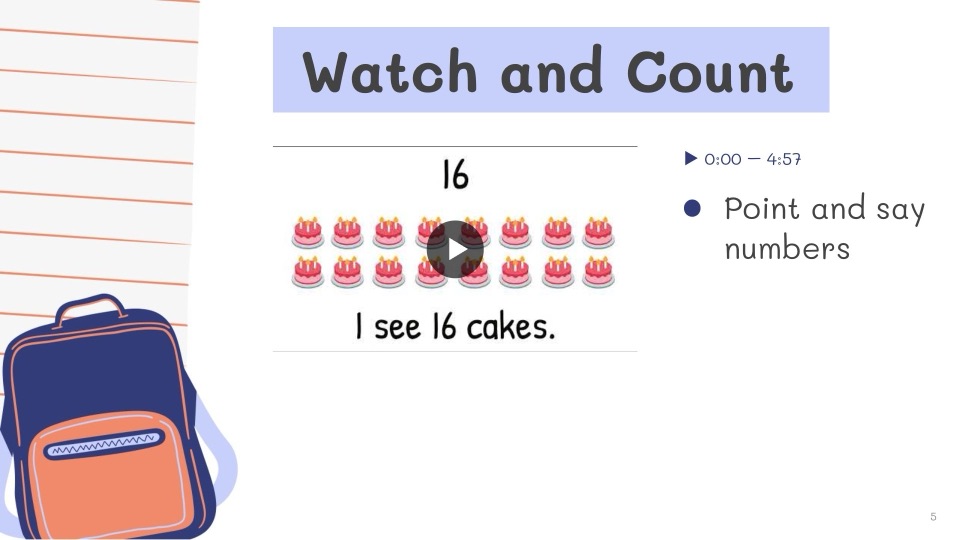
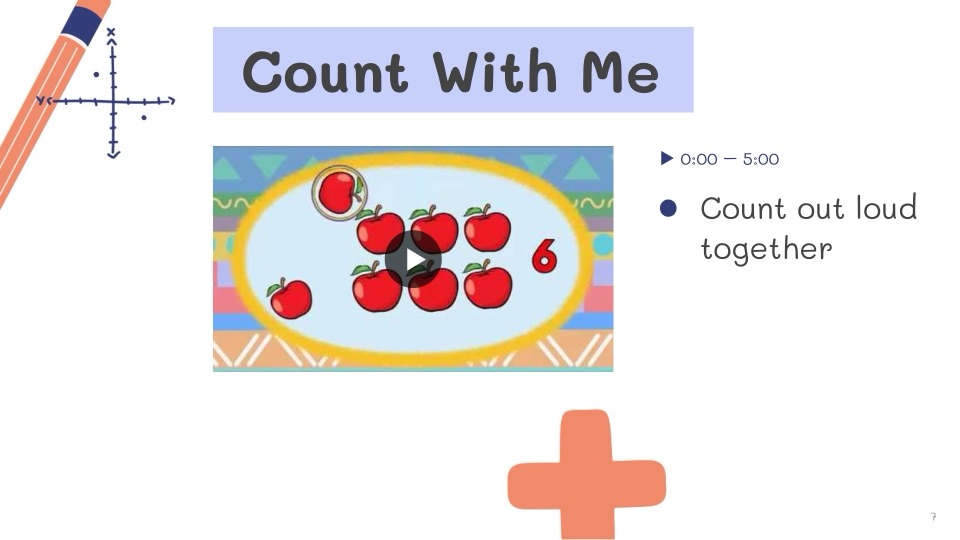
| 15 min | Guided practice | To count together in a circle, rows, and a scattered pile and see moving does not change the total. Play Slide 5 video to model pointing and saying numbers, pausing to count along. Make a circle of 15 coins, mark the start with a cup, and count around without counting twice. Scatter 9 coins, move one at a time into a line while counting, saying one number for each object. Spread the line far apart and recount to show the number is the same regardless of arrangement. |
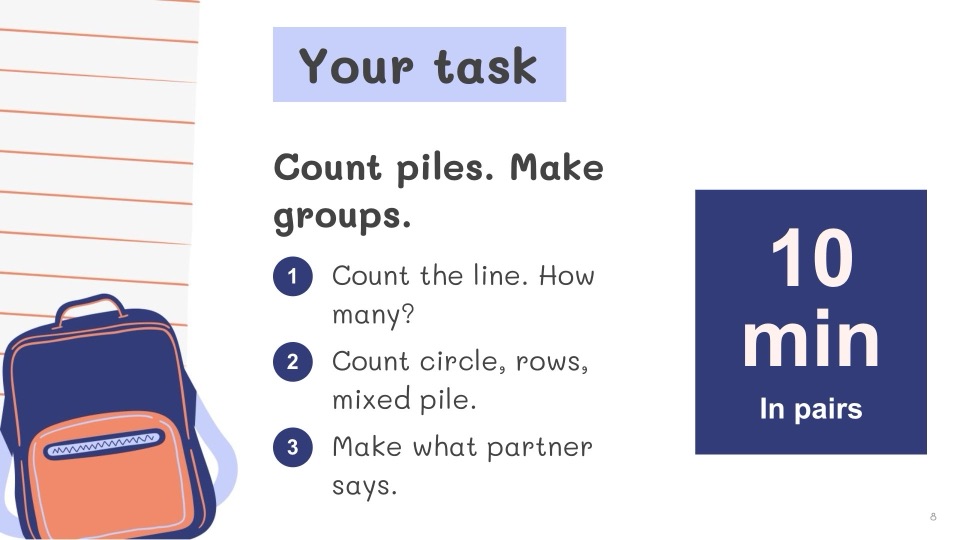
| 20 min | Main activity | To count arrangements and count out orders from 1 to 20 in pairs. Show Slide 6: Hear a number, take that many blocks, count to check. Show Slide 8 task and give each pair trays, coins, cups, and number cards 1 to 20. Demo an order: flip 13, take coins one at a time into the cup counting aloud, stop at 13 to represent that number with objects. Send pairs to count the line, circle, rows, and mixed pile, then fill 3 partner orders and recount for checking. |
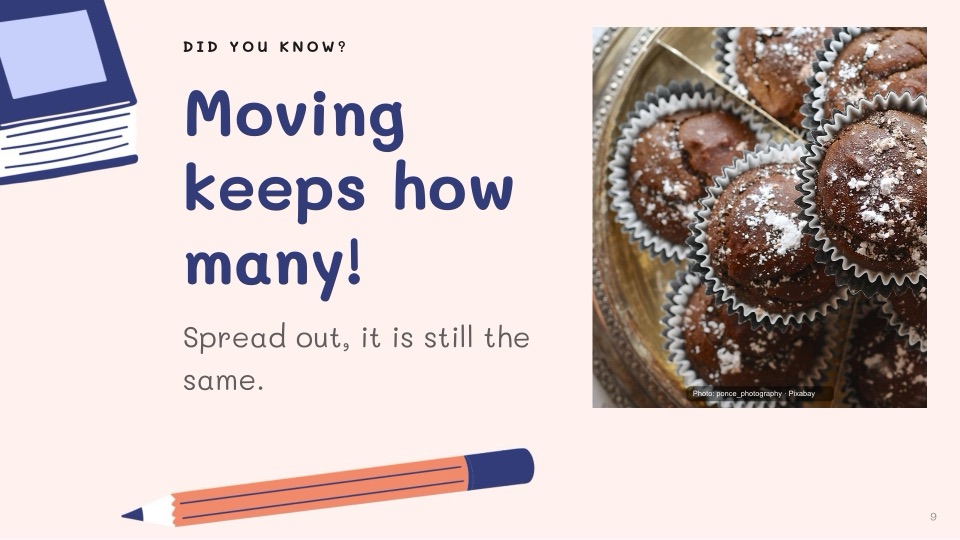
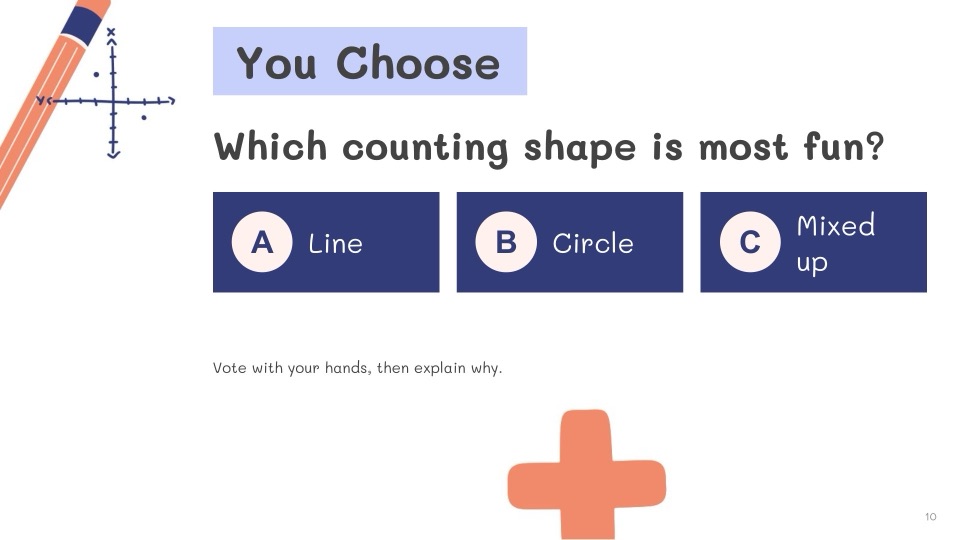
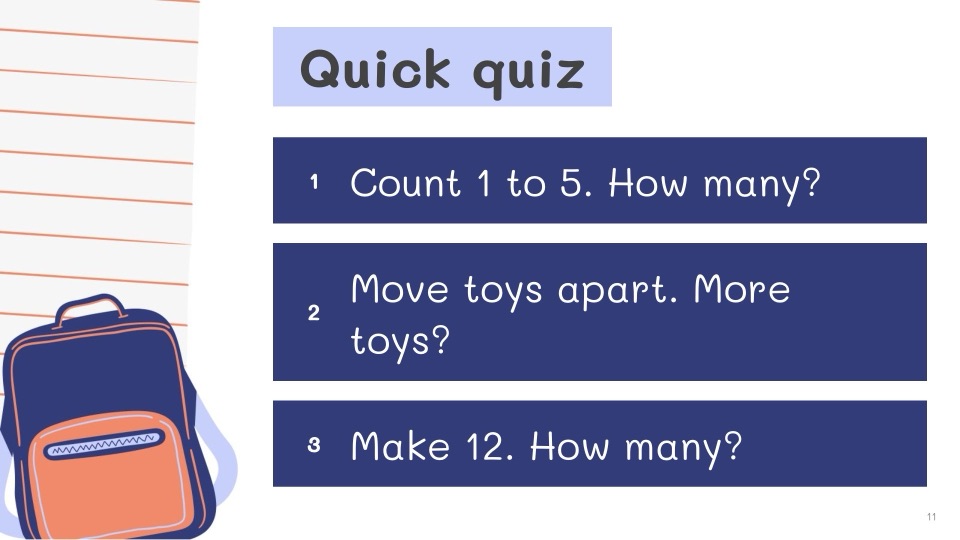
| 10 min | Plenary | To check counting to 20, moving invariance, and making 12. Show Slide 9 and spread 10 coins wide, then bunch them: ask if more now. Show Slide 10 vote: Which counting shape is most fun? Line, Circle, Mixed up. Show Slide 11 Quick quiz and count 1 to 5, move-apart, and make-12 questions together. Restate objectives and have class say totals with Still 10 and last-number-tells. |
Common mistakes
- Skipping or recounting objects, saying two numbers for one thing
How to spot it: Total does not match recount or finger touches and number words do not line up
Slow down, touch and slide each object once while saying one number for each object - Thinking spread-out or moved groups have more
How to spot it: Says more after spreading 10 wide or moving a line into a circle
Recount both ways to show the number is the same regardless of arrangement - Stopping at the wrong total when counting out an order
How to spot it: Cup has 14 for a 12 card or cannot tell when to stop
Count one coin at a time into the cup and stop when the number said matches the card, then recount to check
Support
- Give numbers up to 10 first, and provide a ten-frame or egg carton to place one coin in each space while counting.
- Let students slide each counted object forward and count in small parts of 5 or 6.
Stretch
- Give two orders, like 12 and 5, and ask which cup has more.
- Count 15 to 20 in two colors and tell how many of each color.
Check questions
- Count 14 toys in a line. How many?
Answer: 14 - You scatter 8 counters and recount. How many now?
Answer: 8, moving does not change how many - Make 17 coins for an order. How do you check?
Answer: Count out 1 to 17 and recount; last number 17 tells the total
Curriculum
Count to answer "how many?" questions about as many as 20 things arranged in a line, a rectangular array, or a circle, or as many as 10 things in a scattered configuration; given a number from 1-20, count out that many objects.
Video clips
Clips on YouTube, from the start and end times we chose. Check each one before you show it.
-
Counting Objects to 20 from 0:00 to 4:57
Math (and More) in Minutes: Counting Objects to 20 - Kindergarten Readiness Skills
Directly teaches counting objects to 20 with slow kindergarten pace ideal for ages 5-6.
-
Counting Sets Within 20 from 0:00 to 5:00
Koohi Kids: Counting Sets Within 20 - The Numberniks #5
Practices counting sets within 20 exactly like the lesson goal with kid-friendly pace for ages 5-6.
Worksheet
Sources
- Kindergarten Math Curriculum boepublic.parkhill.k12.mo.us
- Kindergarten Math | SFUSD sfusd.edu
- intro to counting objects generationgenius.com
- What is an example of counting objects?a)Writing numbersb)All of the abovec)Saying number namesd)Pointing to toysCorrect answer is option 'B'. Can you explain this answer? | EduRev Class 1 Question edurev.in
Picture credits
- Illustration: Królestwo_Nauki · Pixabay
- Photo: FeeLoona · Pixabay
- Photo: ponce_photography · Pixabay
- Microsoft Fluent Emoji (MIT)
Made with Lesson Dino's AI on 17 October 2026. AI can make mistakes, so check facts against the sources before you teach.