The worksheet
About this worksheet
Pupils learn how neutralisation, the pH scale and indicators link together. They test clear liquids with universal indicator to make a pH rainbow. This Year 8 Science worksheet gives students (ages 12–13) five pages of practice on acids and alkalis, part of the chemistry unit. It goes with our free Acids and alkalis lesson, which has the slides and a timed lesson plan.
What it covers
By the end, students should be able to:
- Students will describe neutralisation as acid plus alkali making salt and water.
- Students will use the pH scale to classify solutions as acidic, neutral or alkaline.
- Students will predict and test indicator colours in acids, alkalis and neutral solutions.
How to use it
- Plenary (10 minutes): Show Slide 12 True or false and use Worksheet Task G Spot the mistake for pupils to fix the same ideas in writing.
- Support: Provide a large colour chart that shows green means neutral pH 7 and red means strongly acidic.
- Stretch: Ask pupils to predict what would happen to the pH and colour if an acidic sample was diluted with pure water.
- The answer sheet is the last page, so you can print it on its own or let students check their own work.
Key vocabulary
- acid: a liquid or dissolved chemical with a pH below 7, such as vinegar
- alkali: a chemical that dissolves in water and can cancel out an acid, with pH above 7
- neutralisation: mixing just the right amounts of acid and alkali to make a neutral liquid of salt and water
- pH scale: a number line from strongly acidic to strongly alkaline used to show how acidic a liquid is
- indicator: a dye that changes colour in acids or alkalis because a chemical reaction happens
Mistakes to watch for
- All acids are dangerous and corrosive. Show that weak acids like vinegar are safe to handle, while only strong concentrated acids are corrosive and labelled.
- Green with universal indicator means acidic. Point to chart: universal is green at neutral pH 7 like pure water, red is strongly acidic and dark purple is strongly alkaline.
- Litmus gives a pH number. Recall litmus only turns red in acid and blue in alkali, with purple neutral; use universal indicator for pH numbers and range of colours.
What's on the worksheet
Acids Meet Alkalis
What acids, alkalis and neutralisation mean.
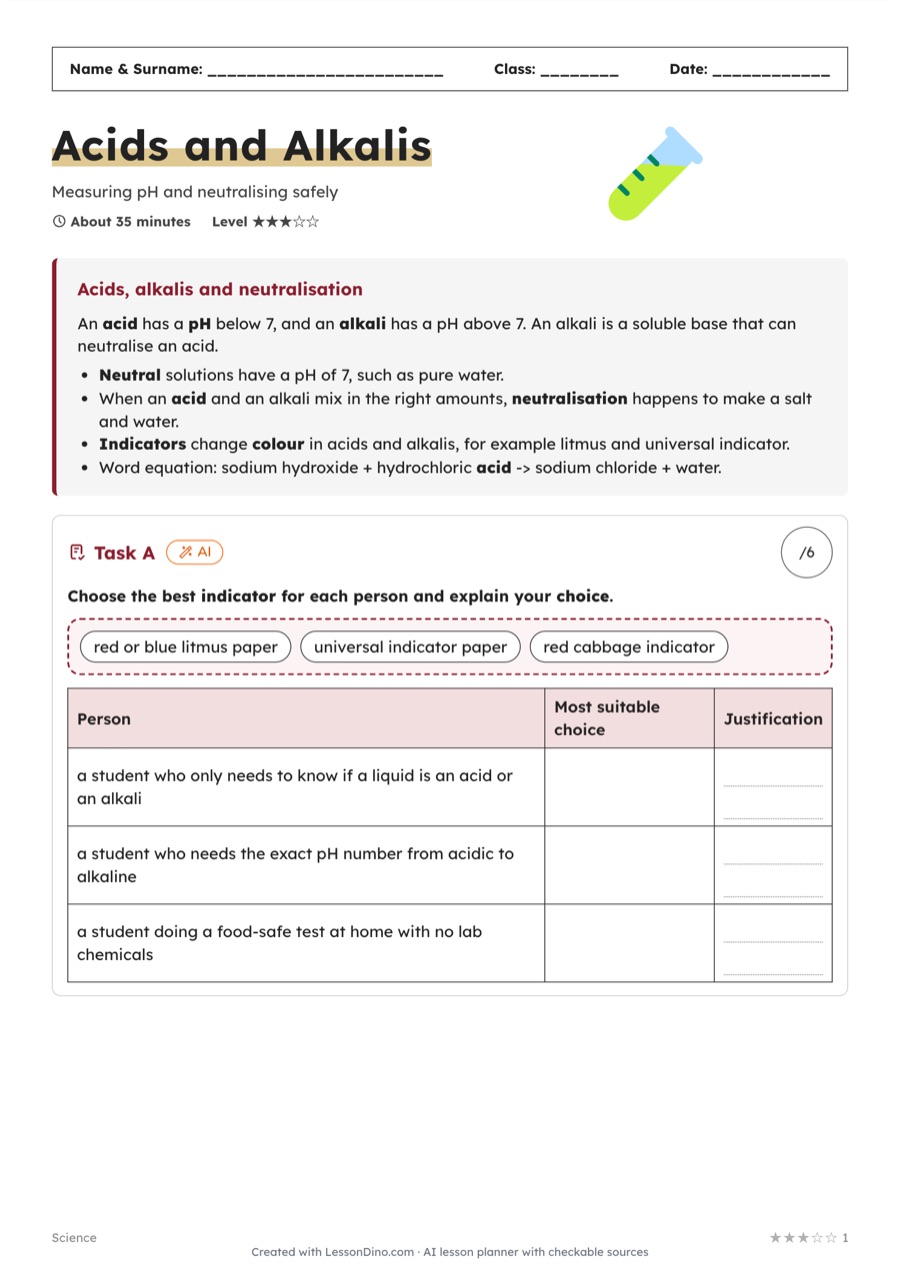
Acids, alkalis and neutralisation
- An acid has a pH below 7, and an alkali has a pH above 7. An alkali is a soluble base that can neutralise an acid.
- Neutral solutions have a pH of 7, such as pure water.
- When an acid and an alkali mix in the right amounts, neutralisation happens to make a salt and water.
- Indicators change colour in acids and alkalis, for example litmus and universal indicator.
- Word equation: sodium hydroxide + hydrochloric acid -> sodium chloride + water.
Choose the best indicator for each person and explain your choice.
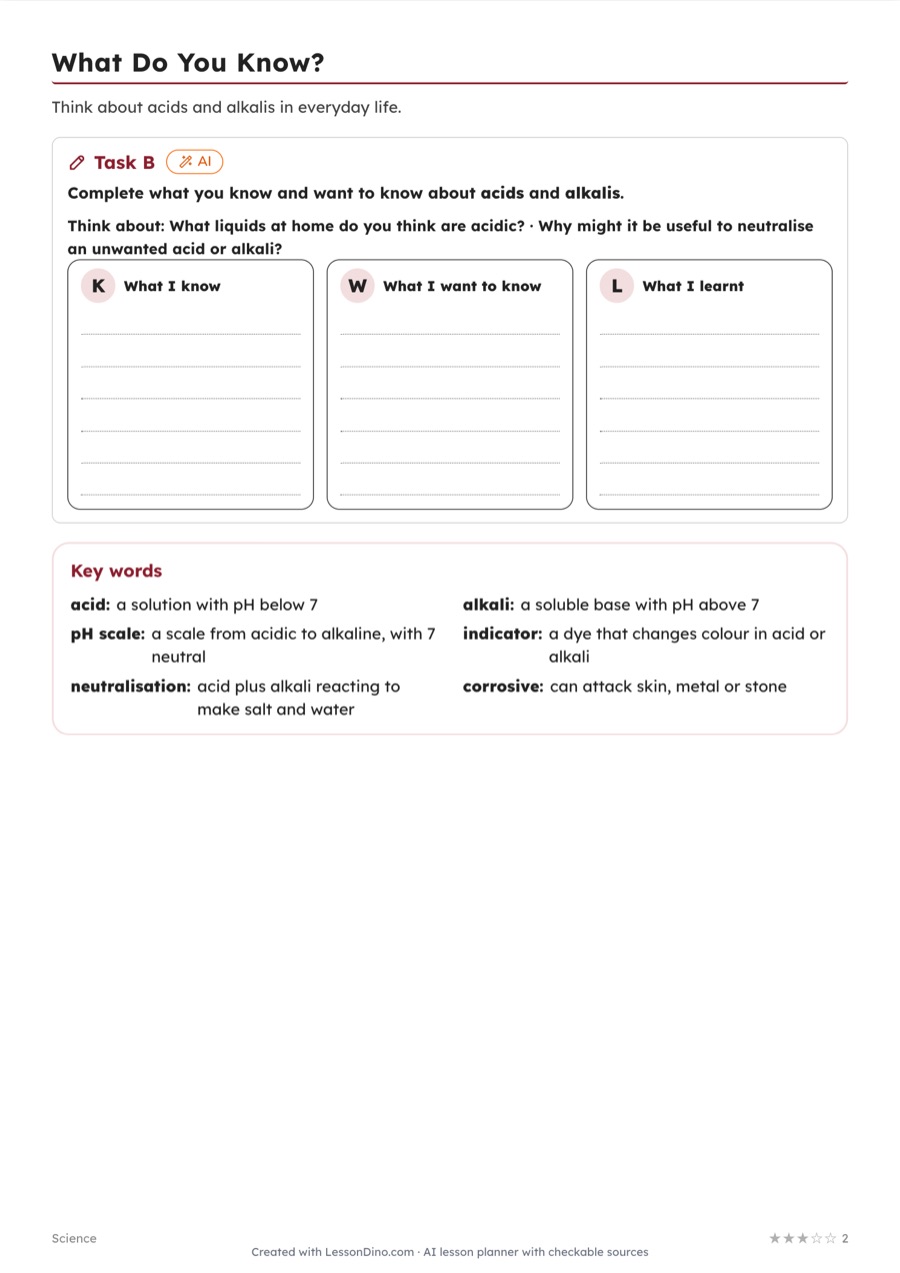
What Do You Know?
Think about acids and alkalis in everyday life.
Complete what you know and want to know about acids and alkalis.
| Word | Meaning |
|---|---|
| acid | a solution with pH below 7 |
| alkali | a soluble base with pH above 7 |
| pH scale | a scale from acidic to alkaline, with 7 neutral |
| indicator | a dye that changes colour in acid or alkali |
| neutralisation | acid plus alkali reacting to make salt and water |
| corrosive | can attack skin, metal or stone |
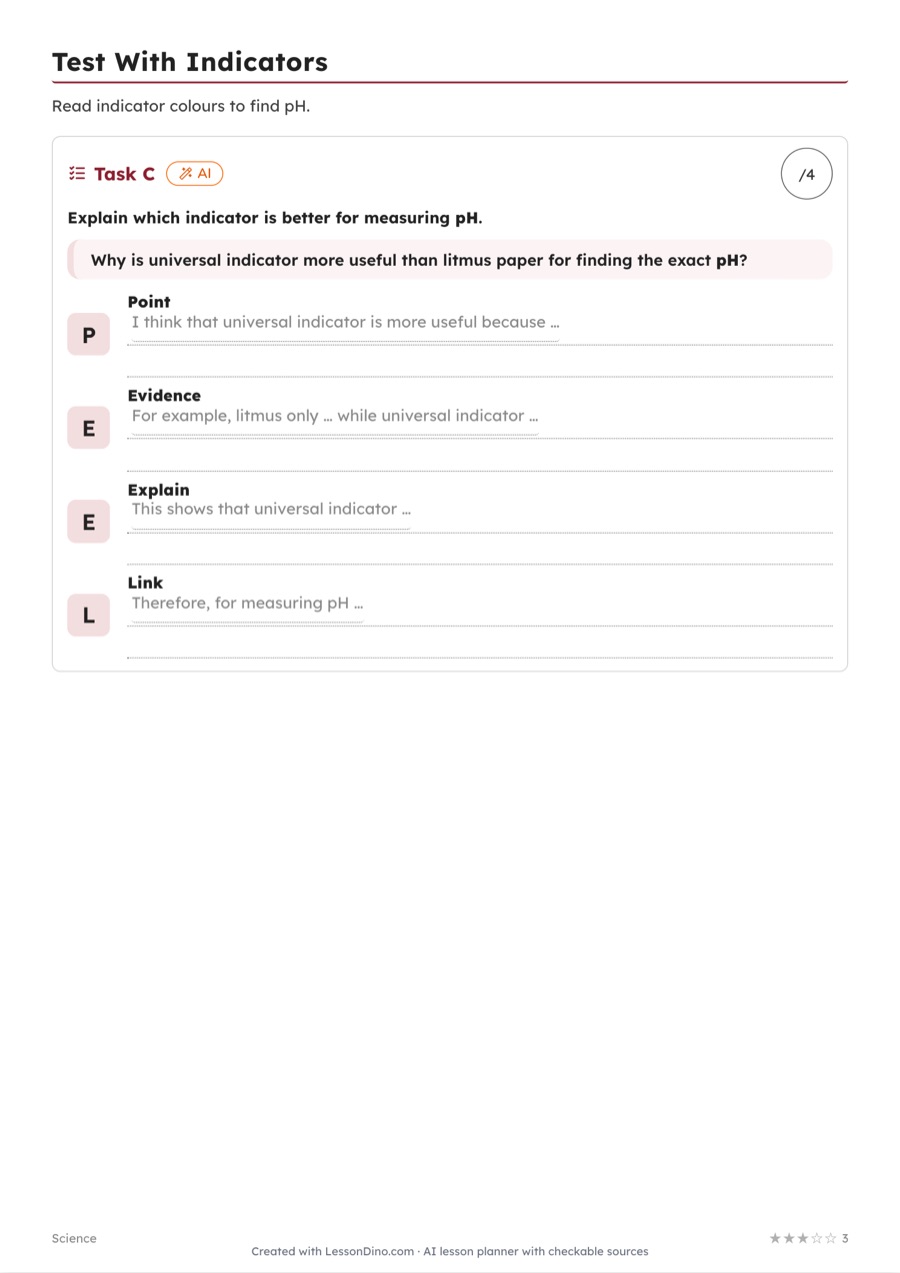
Test With Indicators
Read indicator colours to find pH.
Explain which indicator is better for measuring pH.
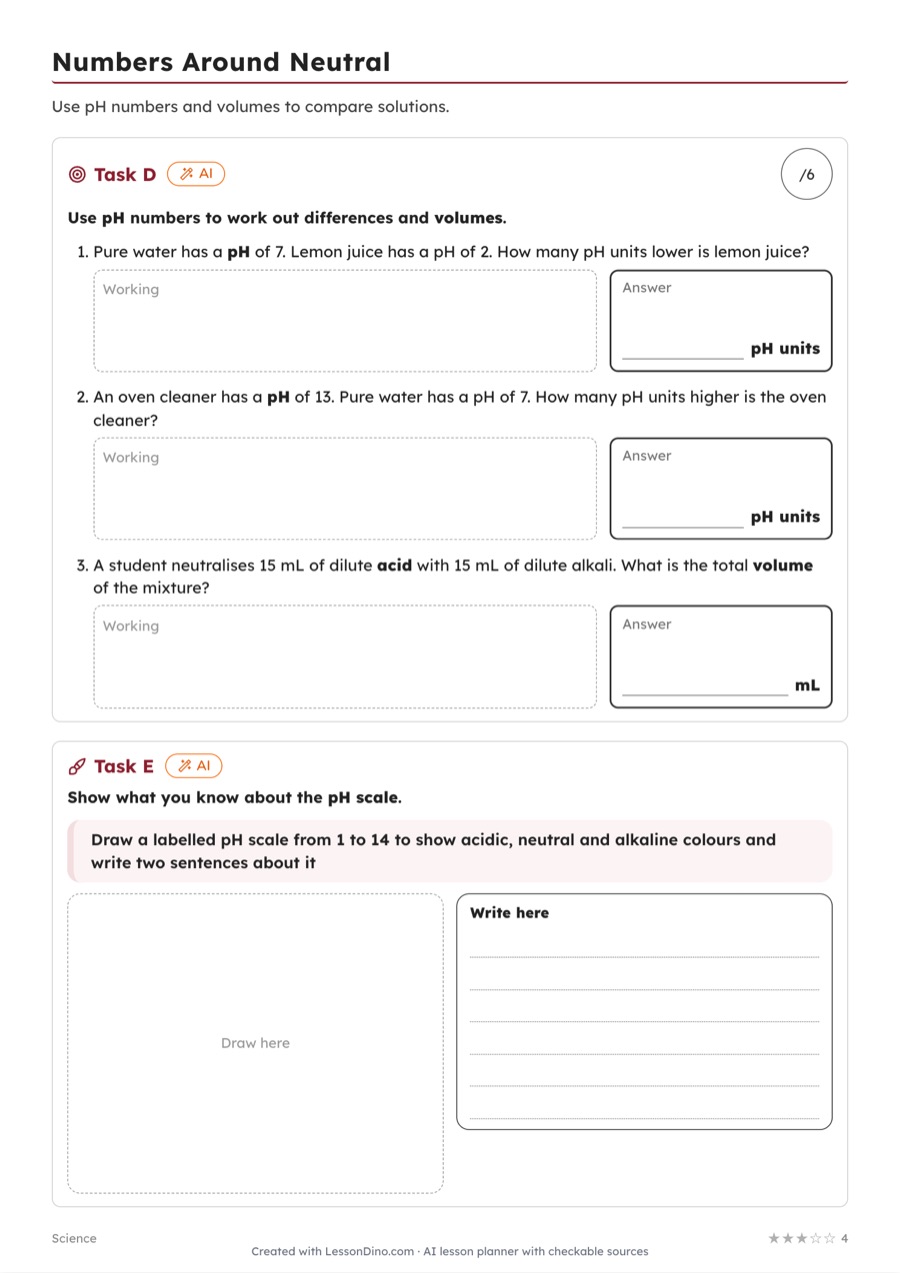
Numbers Around Neutral
Use pH numbers and volumes to compare solutions.
Use pH numbers to work out differences and volumes.
Show what you know about the pH scale.
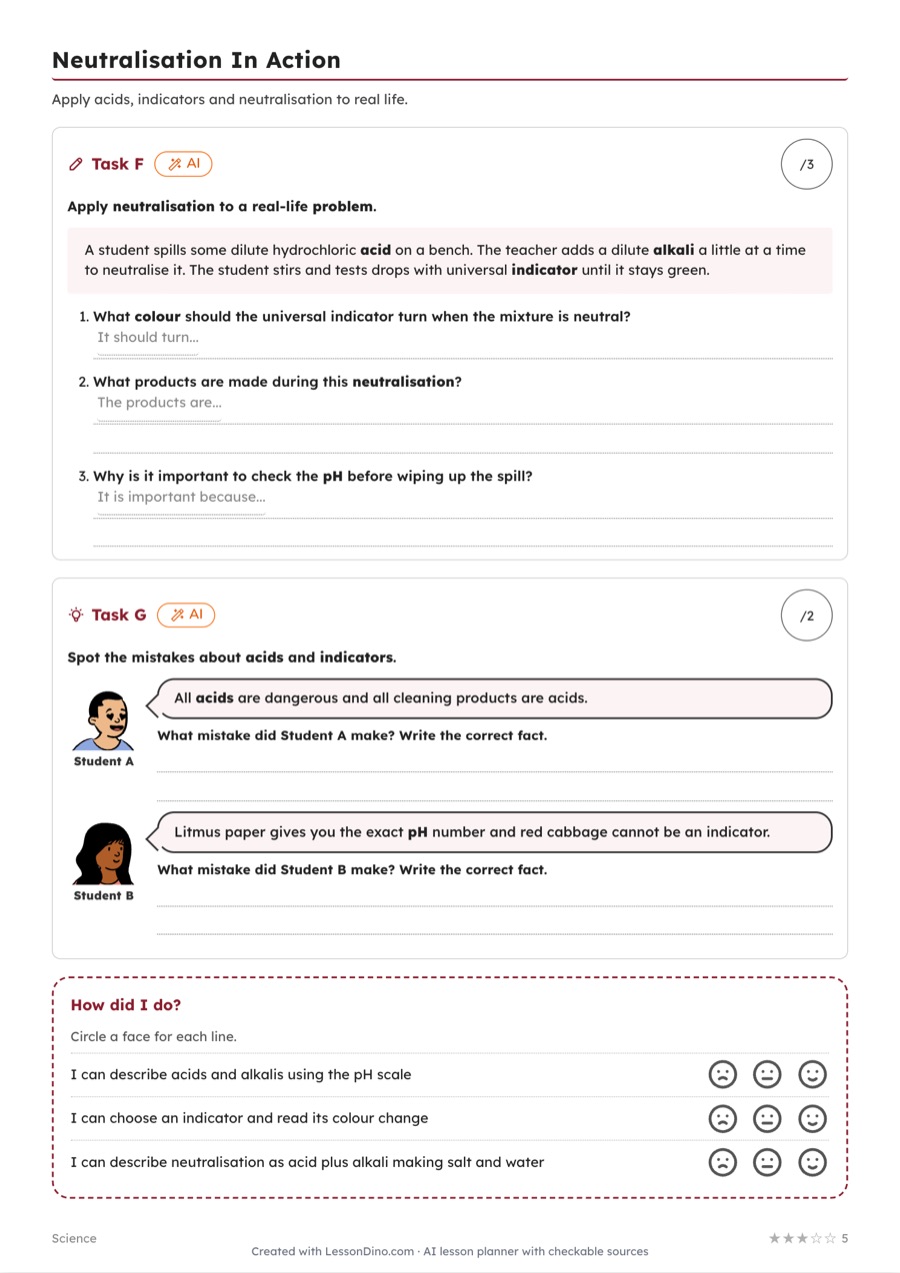
Neutralisation In Action
Apply acids, indicators and neutralisation to real life.
Apply neutralisation to a real-life problem.
- What colour should the universal indicator turn when the mixture is neutral?
- What products are made during this neutralisation?
- Why is it important to check the pH before wiping up the spill?
Spot the mistakes about acids and indicators.
Answers
Show the answers
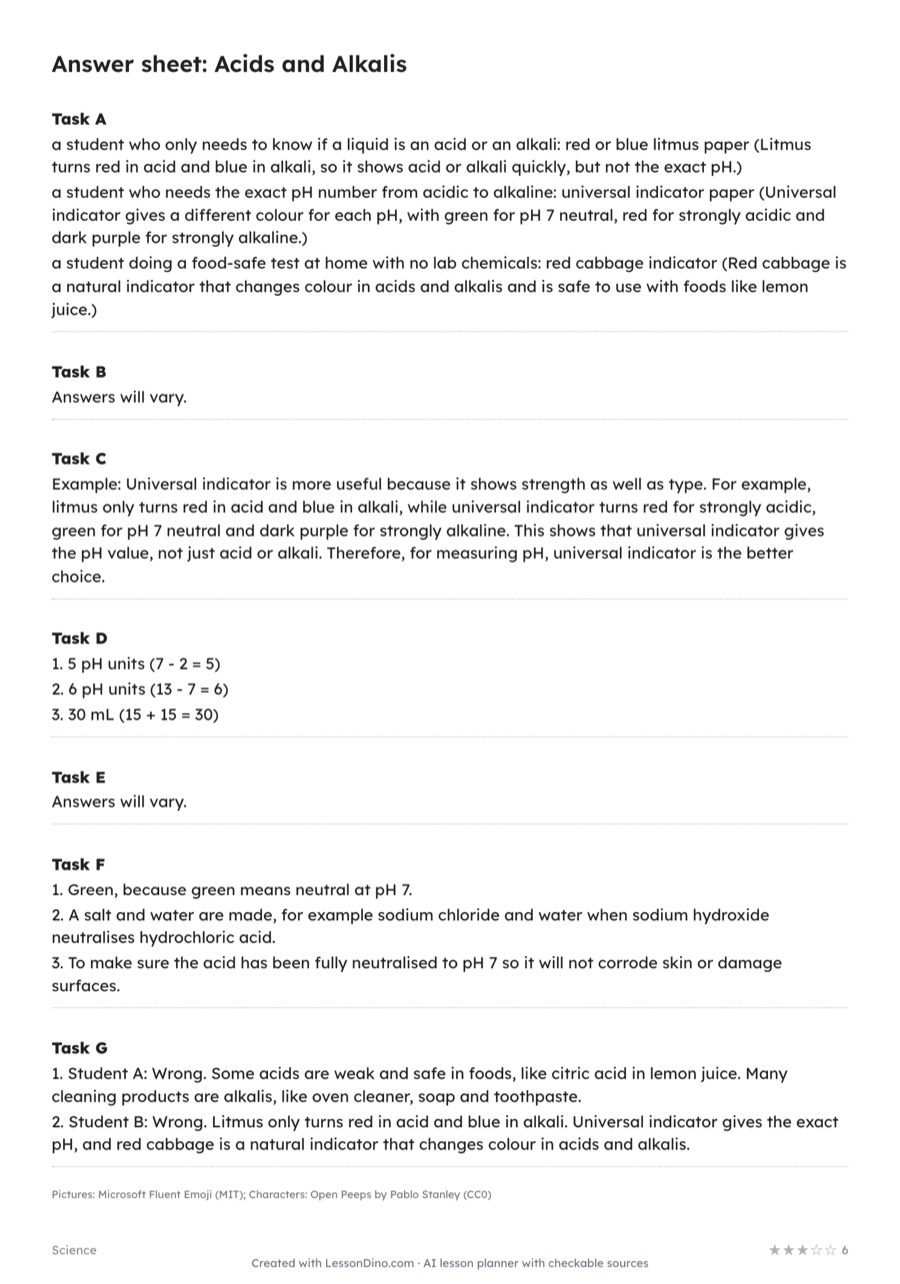
- Pure water has a pH of 7. Lemon juice has a pH of 2. How many pH units lower is lemon juice? 5 pH units
- An oven cleaner has a pH of 13. Pure water has a pH of 7. How many pH units higher is the oven cleaner? 6 pH units
- A student neutralises 15 mL of dilute acid with 15 mL of dilute alkali. What is the total volume of the mixture? 30 mL
- What colour should the universal indicator turn when the mixture is neutral? Green, because green means neutral at pH 7.
- What products are made during this neutralisation? A salt and water are made, for example sodium chloride and water when sodium hydroxide neutralises hydrochloric acid.
- Why is it important to check the pH before wiping up the spill? To make sure the acid has been fully neutralised to pH 7 so it will not corrode skin or damage surfaces.
The answer sheet is the last picture above.
Curriculum
defining acids and alkalis in terms of neutralisation reactions; the pH scale for measuring acidity/alkalinity; and indicators
Made with Lesson Dino's AI on 17 October 2026. AI can make mistakes, so check the answers and facts against the sources before you teach.