Slides
Lesson plan
What Plants and Animals Need to Live
Students learn the pattern of what plants and animals need to survive. They sort picture cards and observe to show those needs.
Objectives
- Students will sort pictures to show what plants and animals need to live.
- Students will describe patterns in what living things need to stay alive.
- Students will tell what people need each day, like food, water and air.
Success criteria
- I can sort pictures to show what plants need and what animals need.
- I can say the pattern of what living things need to stay alive.
- I can tell what people need each day to live and grow.
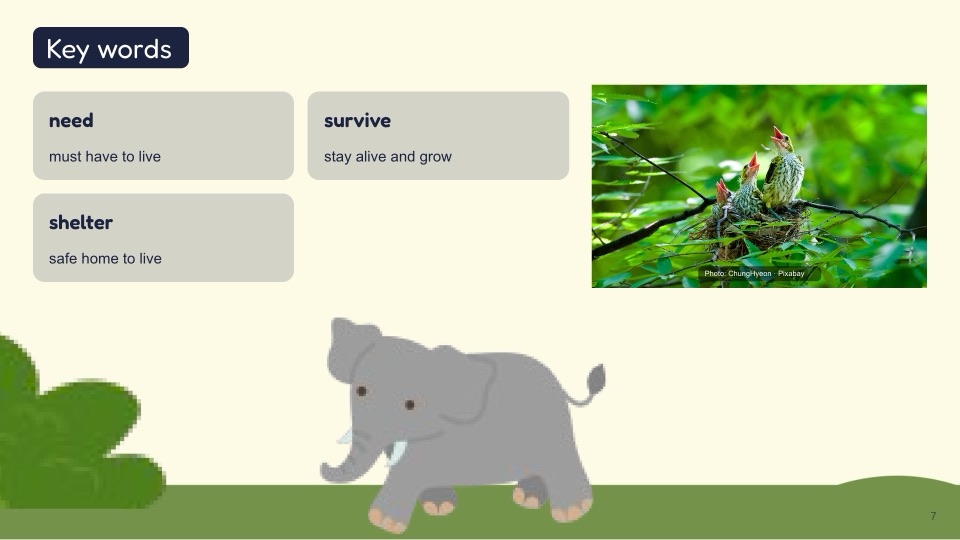
Key words
| Word | Meaning |
|---|---|
| need | something you must have to live |
| survive | to stay alive and grow |
| shelter | a safe home to live in |
| water | the drink that people, animals and plants use to live |
| light | sunshine that helps plants grow tall and green |
| air | what moves in and out when we breathe |
Timed plan (60 minutes)
| Time | Stage | What happens |
|---|---|---|
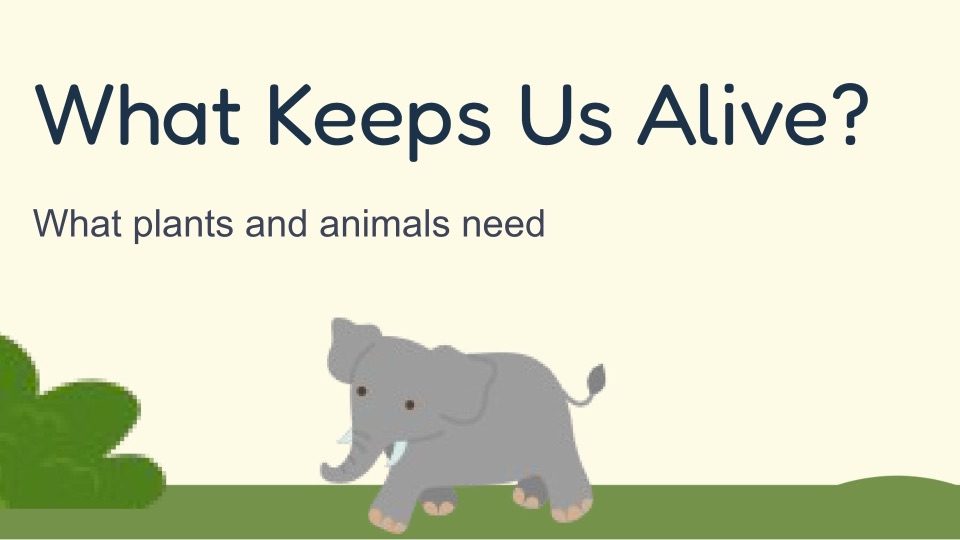
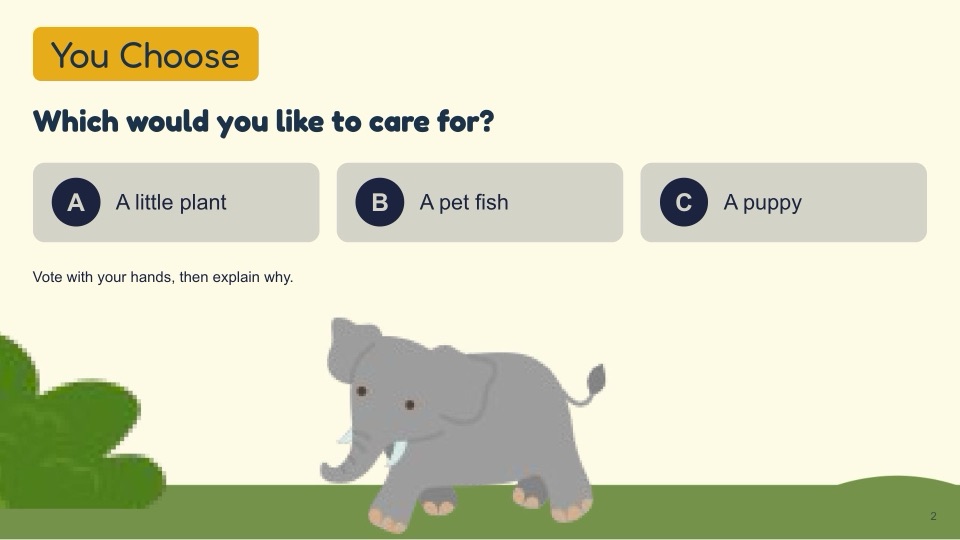
| 10 min | Starter | Hook interest and surface what students think plants and animals need. Show Slide 1 What Keeps Us Alive? and read the title together. Show Slide 2 You Choose vote with a little plant, a pet fish, a puppy and take a hand vote. Use the hook: hold up mixed picture cards and say we have a mixed-up picnic for plants and animals. Chart 3-4 student ideas on the board without correcting yet. |
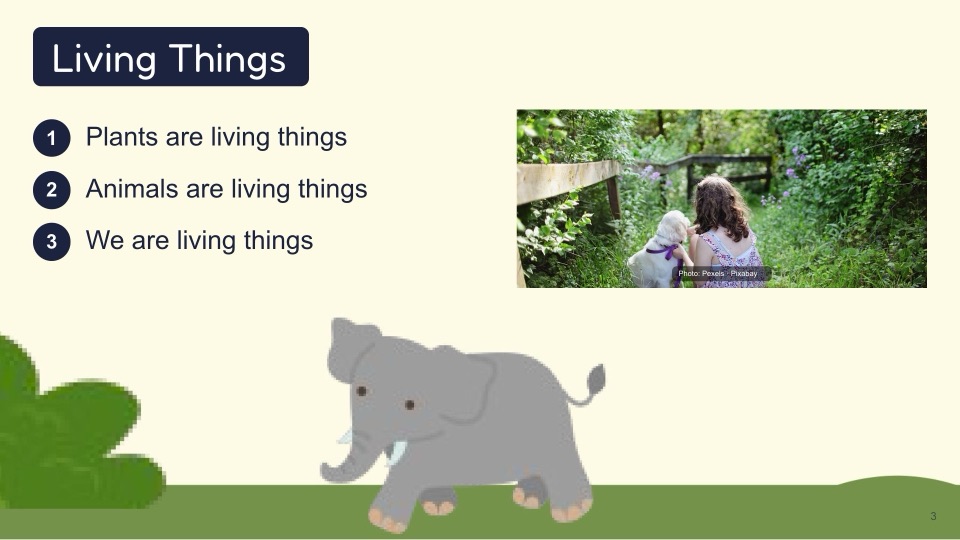
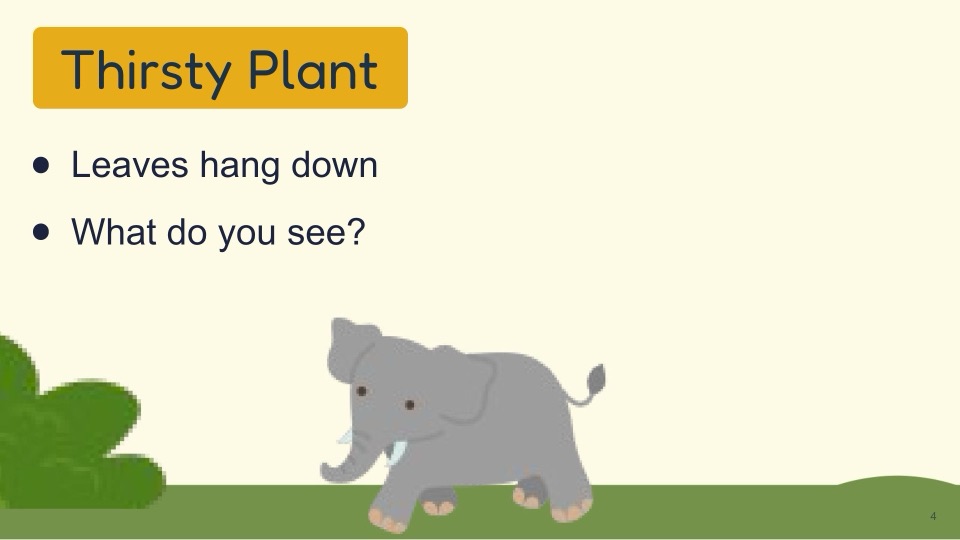
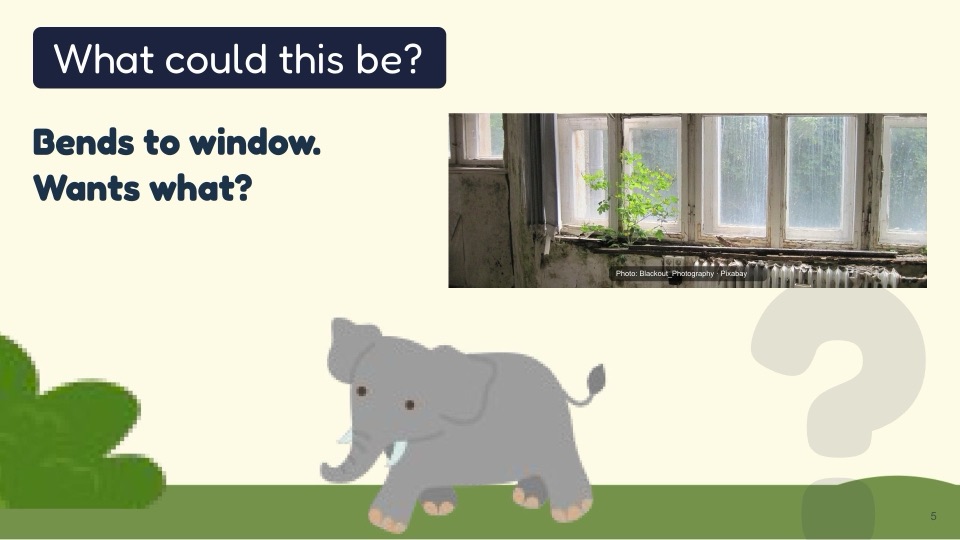
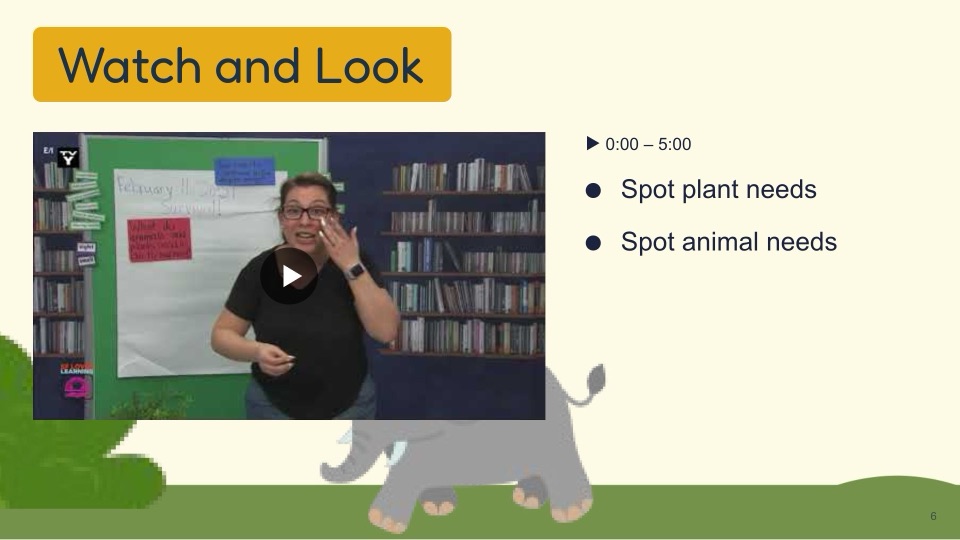
| 12 min | Teaching | Model how to observe and name the pattern of needs for plants and animals. Show Slide 3 Living Things and have students point to self: We are living things. Show Slide 4 Thirsty Plant with leaves hanging down and model observing color, droop, and dry soil. Show Slide 5 mystery Light! that bends to the window and Slide 7 Key words need, survive, shelter. Play Slide 6 Video clip 1 Plants and animals needs and pause to name plant needs and animal needs. |
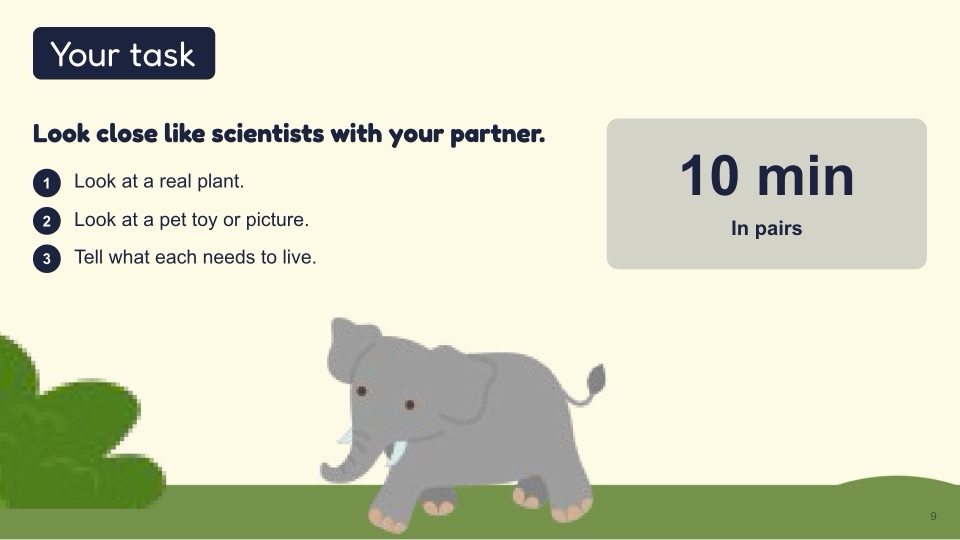
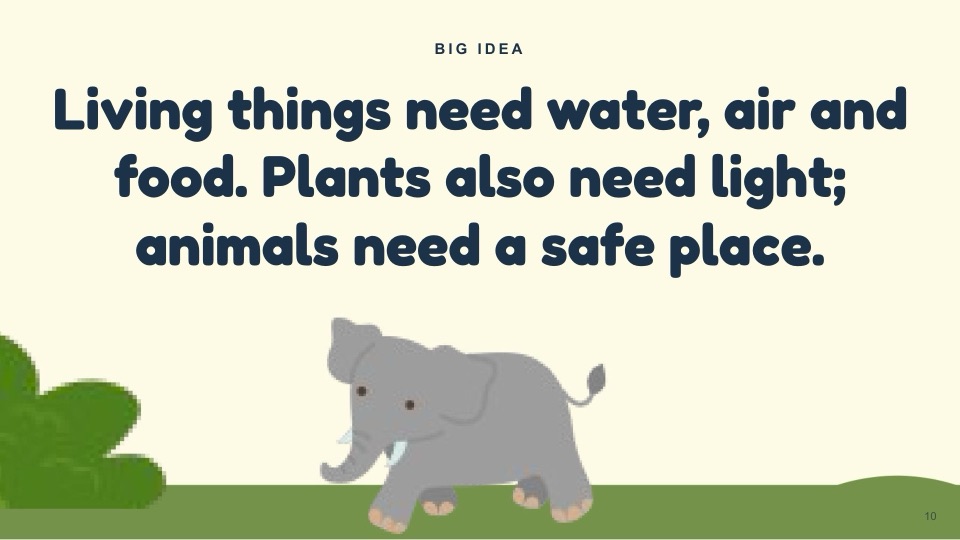
| 20 min | Main activity | Sort picture needs to show the pattern for plants and animals. Show Slide 9 Your task: In pairs look close, tell what each needs to live. Model one sort: hold up watering can, place it to touch both hoops because both need it. Send small groups to place cards into Plants hoop and Animals hoop and talk about why. Show Slide 10 Big idea: Living things need water, air and food. Plants also need light; animals need a safe place. |
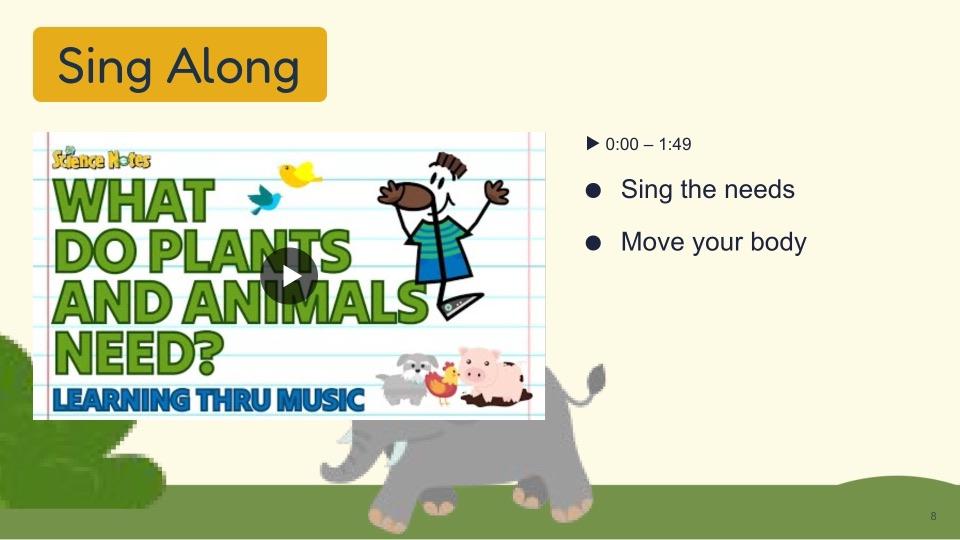
| 10 min | Human needs and song | Connect the pattern to humans and lock it in with song and movement. Ask: You are animals too. What did you already need today before school? Chart repeated answers for food, water, and air to show the pattern. Play Slide 8 Video clip 2 Plants and animals needs song and lead eating, drinking, breathing, hiding moves. Add that animals, including humans, have basic life needs that allow them to survive, including air, water, and food for energy and growth. |
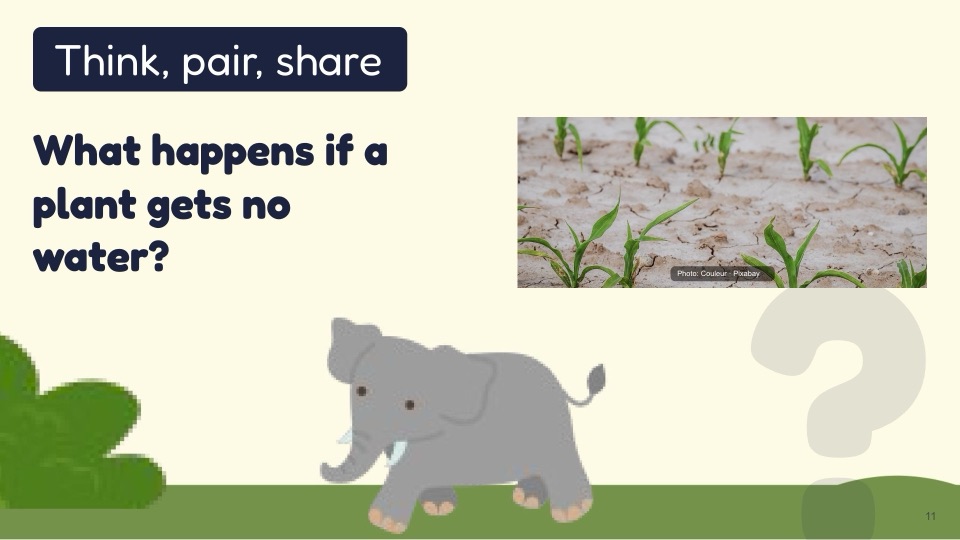
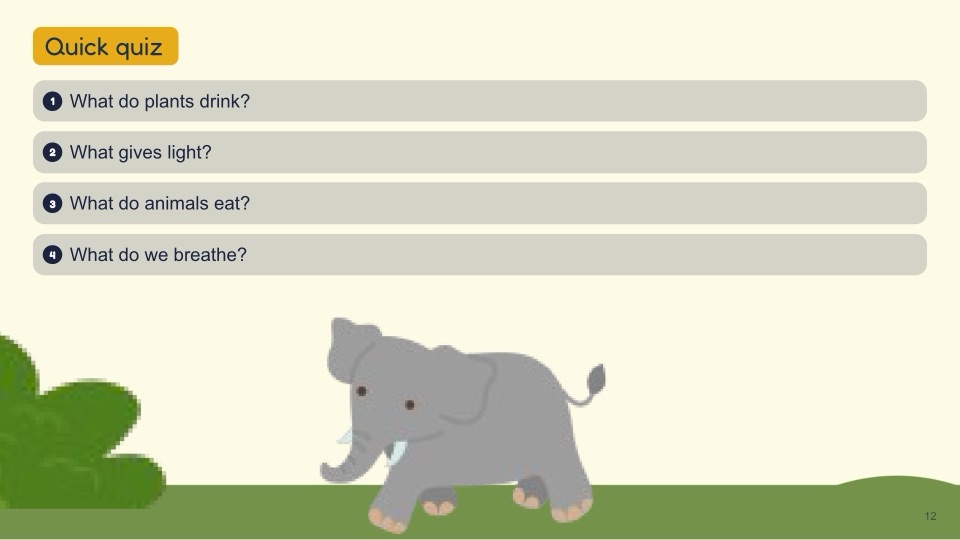
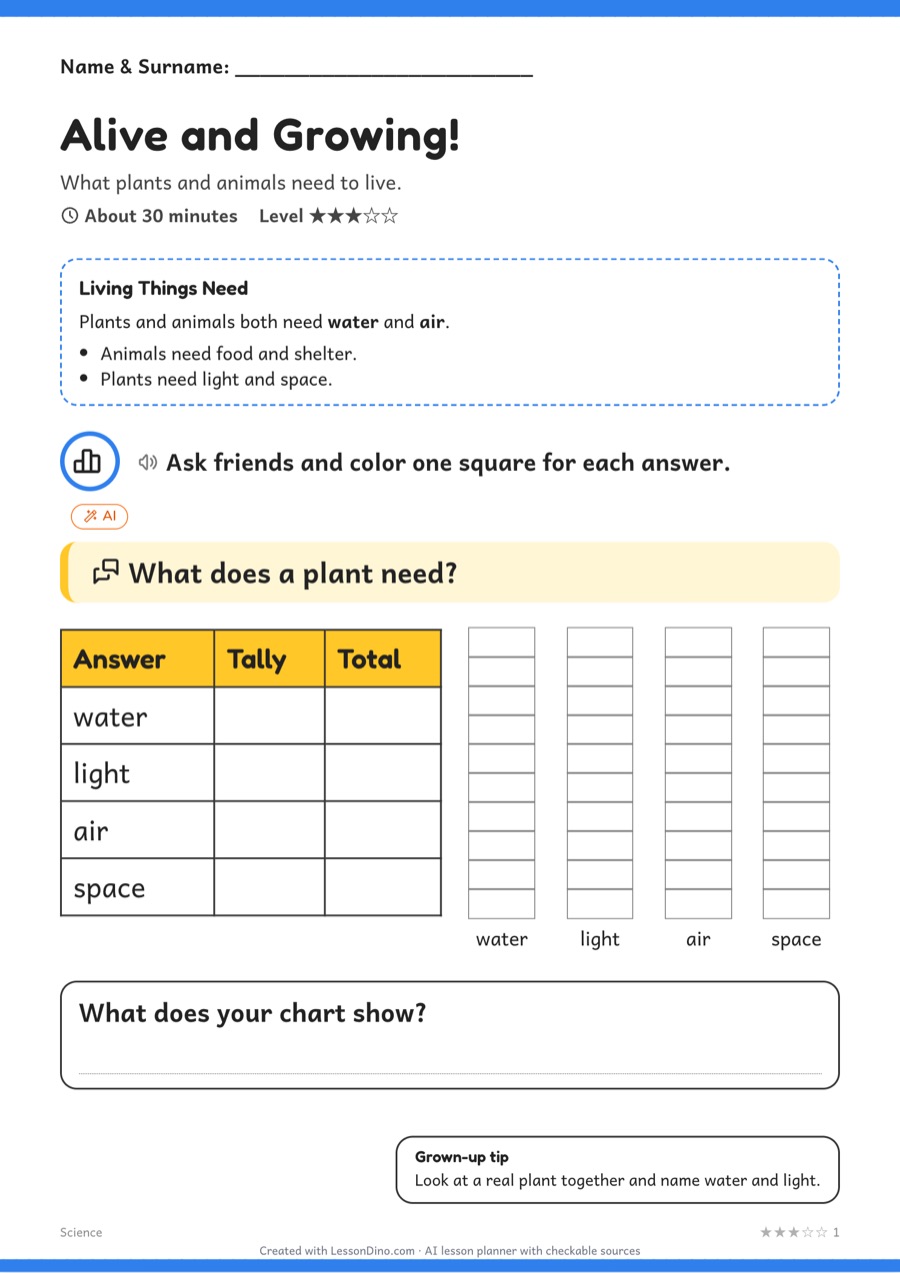
| 8 min | Plenary | Check the pattern and show learning on the matching sheet. Reread Slide 10 Big idea and have class say it with you. Do Slide 11 Think, pair, share: What happens if a plant gets no water? Hand out Worksheet page 5 Label the pictures and have students match each need to the picture. Finish with Slide 12 Quick quiz: What do plants drink? What gives light? What do animals eat? What do we breathe? |
Common mistakes
- Thinking plants eat food like sandwiches just as animals do.
How to spot it: Puts apple or sandwich card in Plants hoop.
Resort sun and sandwich: only animals need to eat food and only plants need light. Plants depend on water, light and air to grow. - Thinking people are not animals and do not have the same needs.
How to spot it: Says people do not need shelter or water like animals.
Remind that animals, including humans, have basic life needs to survive, including air, water, and food. - Thinking shelter is only a house.
How to spot it: Cannot find shelter for toy animal except a house.
Show nest, burrow underground, and shell: some find shelter in shells and some live underground in burrows; shelter protects from predators and weather.
Support
- Sort with only four very clear cards first, water, sun, sandwich, shelter, step by step.
- Use sentence frames and pointing: The leaves feel ___. People need ___ to live.
- Offer a half-started shelter or hoop sort so the student finishes one part.
Stretch
- Find one card both plants and animals need and explain how each uses it differently.
- Predict and count how pale a dark-covered plant gets and compare sunny and shady spots.
- Add food and water spots next to a built shelter and label what each part gives.
Check questions
- Name two things both plants and animals need to survive.
Answer: Water and air (and space). - What does a plant need that an animal does not need the same way?
Answer: Light. - What do people need every day to live?
Answer: Food, water, and air.
Curriculum
Use observations to describe patterns of what plants and animals (including humans) need to survive.
Video clips
Clips on YouTube, from the start and end times we chose. Check each one before you show it.
-
Plants and animals needs from 0:00 to 5:00
SF Loves Learning SFUSD: What do animals and plants need to do to survive? 2/16/2021
Covers both plants and animals together with slow, simple words and big pictures perfect for ages 5-6.
-
Plants and animals needs song from 0:00 to 1:49
LearningThruMusic: What Do Plants and Animals Need? - Learning Thru Music - Science Notes
Short music video about both plant and animal needs with easy vocabulary ideal for 5-6-year-olds.
Worksheet
Sources
- Grade 1 Science Curriculum What is taught in grade 1 Science? fcps.edu
- Science Kindergarten - Chicago Public Schools cps.edu
- Survival: What do plants & animals need? | Plants for Human ... stem.plantsforhumanhealth.ncsu.edu
- Plant and Animal Interactions - Government of New York extapps.dec.ny.gov
- What Animals Need to Live (Extension and Outreach) ecosystems.psu.edu
- What do animals need to survive? - KS1 Science curriculum ... bbc.co.uk
- What do animals need to survive? - BBC Bitesize bbc.co.uk
Picture credits
- Photo: Pexels · Pixabay
- Photo: Blackout_Photography · Pixabay
- Photo: ChungHyeon · Pixabay
- Photo: Couleur · Pixabay
- Pictograms: Sergio Palao, ARASAAC (arasaac.org) · CC BY-NC-SA
- Illustration: Haninabz · Pixabay
- Illustration: IdeaTivas-TLM · Pixabay
- Drawing: Dahn · Public domain · Wikimedia Commons
- Mulberry Symbols by Steve Lee (mulberrysymbols.org) · CC BY-SA 4.0
Made with Lesson Dino's AI on 17 October 2026. AI can make mistakes, so check facts against the sources before you teach.