The worksheet
About this worksheet
Students learn young animals and plants are like parents but not exactly the same. They match parents to babies and name one same and one different part. This Grade 1 Science worksheet gives students (ages 6–7) five pages of practice on animal parents and their young, part of the heredity unit. It goes with our free Animal parents and their young lesson, which has the slides and a timed lesson plan.
What it covers
By the end, students should be able to:
- Students will match four animal parents to their young using observations.
- Students will explain young plants and animals are like but not exactly like parents.
How to use it
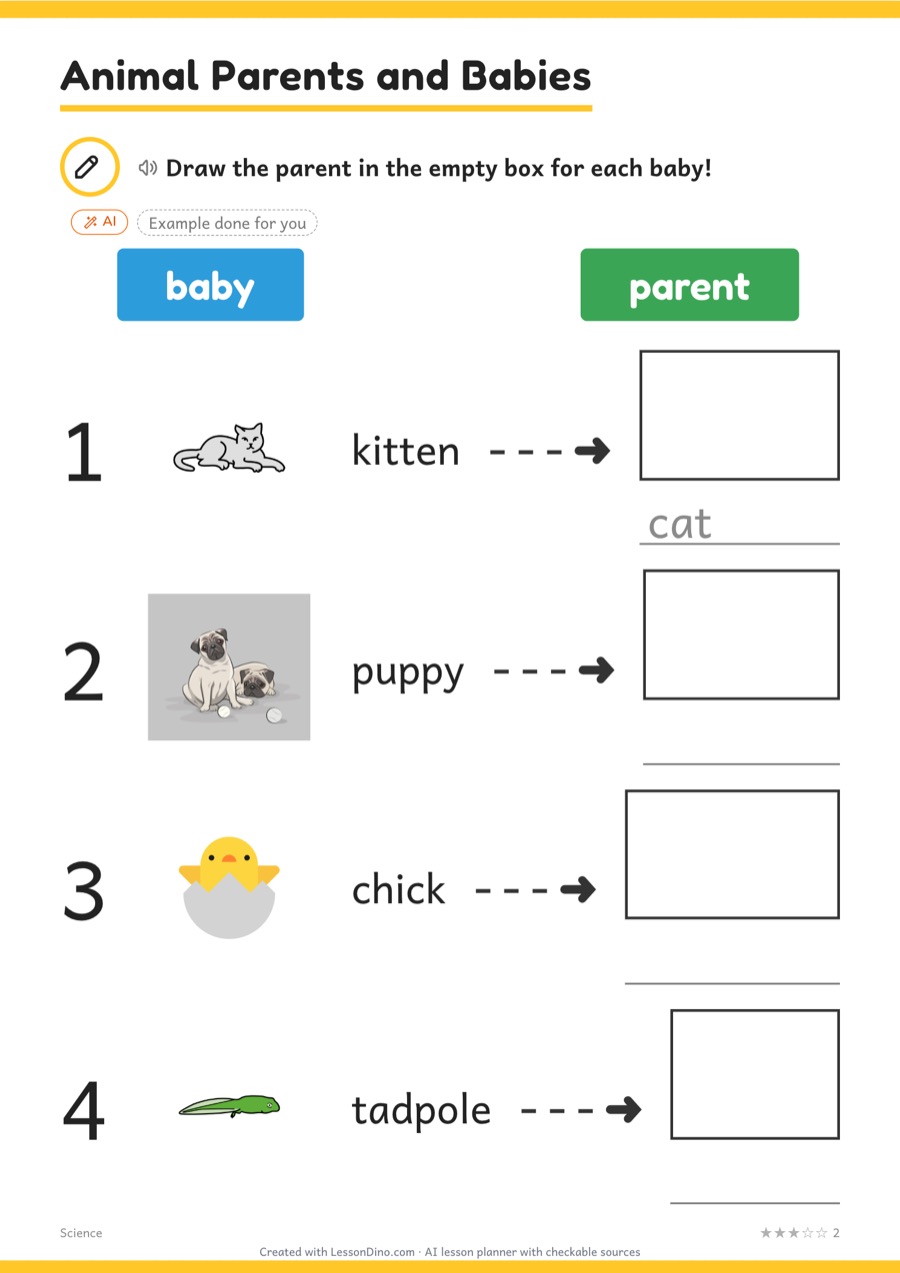
- Main Activity: Match the Baby (15 minutes): Hand out picture cards and Worksheet page 2 activity and remind pairs to mark one same part.
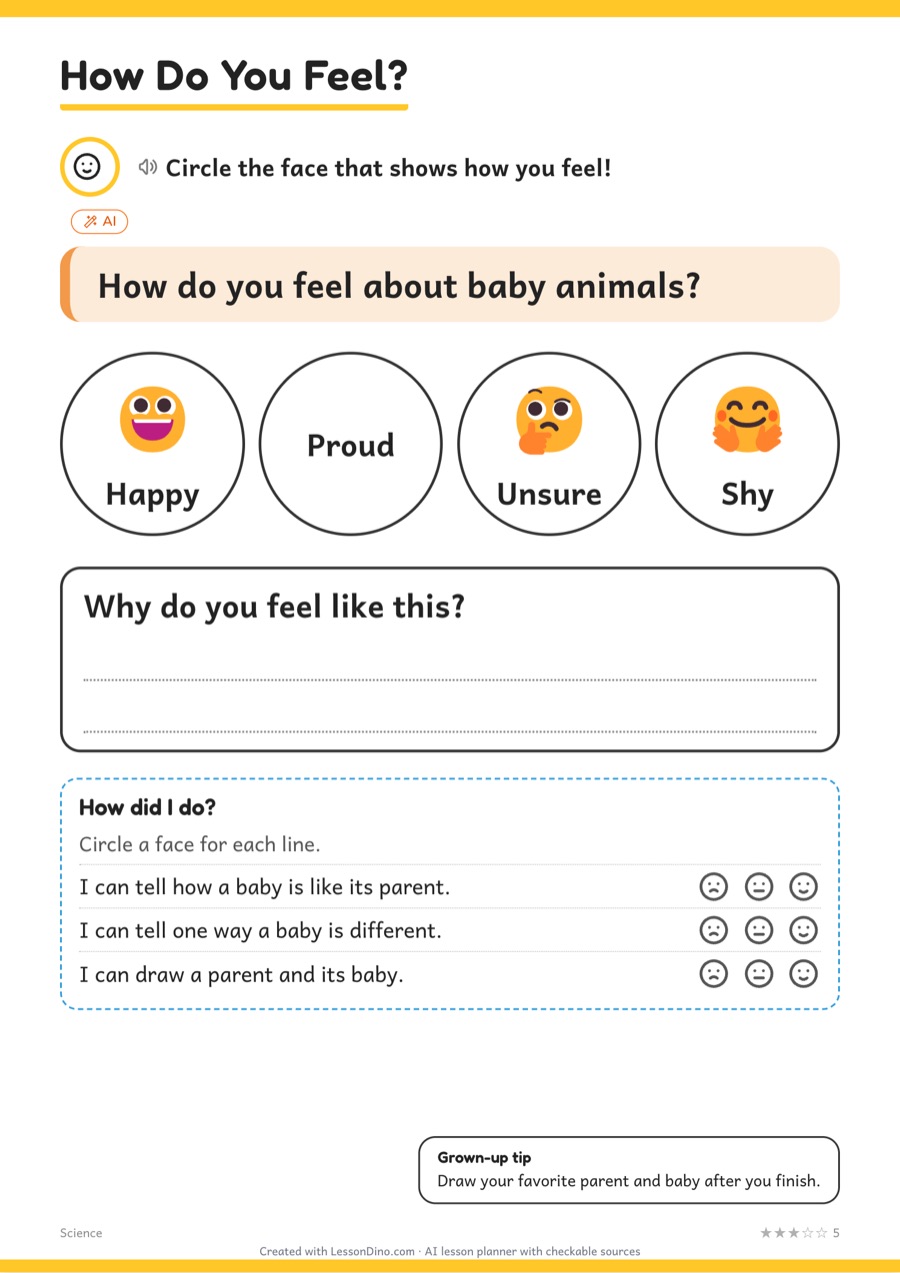
- Plenary: Vote and Quiz (15 minutes): Hand out Worksheet page 5 activity for students to circle the face that shows how they feel.
- Support: Give one pair already matched as a model and let students match only two families first.
- Stretch: Ask students to sort the pairs into looks a lot like parent and looks very different from parent.
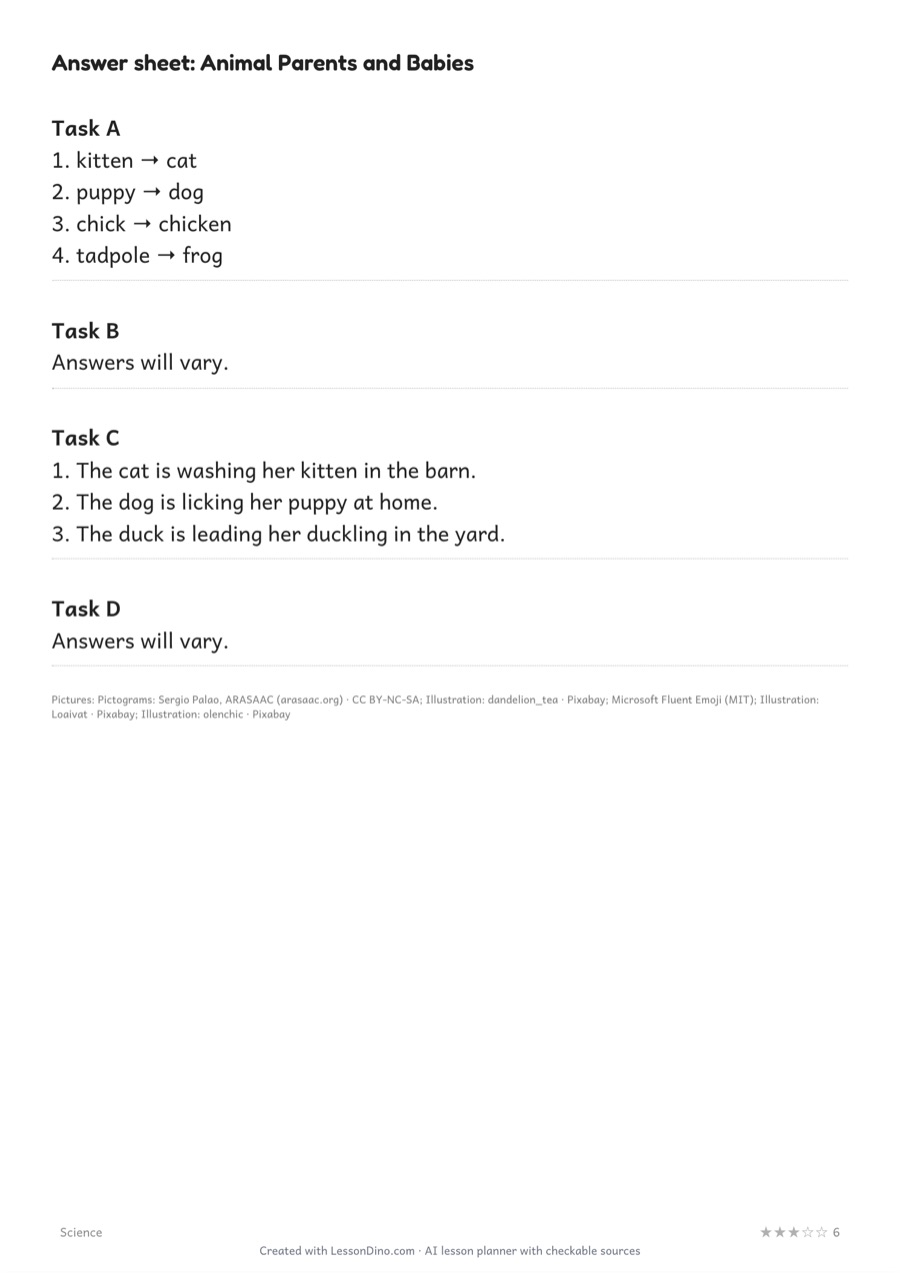
- The answer sheet is the last page, so you can print it on its own or let students check their own work.
Key vocabulary
- parent: a mom or dad that feeds, shelters, and teaches a baby
- offspring: a baby animal or plant
- alike: much the same as something else
- different: not the same in how it looks or works
Mistakes to watch for
- Students think babies are exactly the same as parents, only in a different place. Put parent and baby side by side and compare size and one part, to prove young are like but not exactly like parents.
- Students think a tadpole is a different animal, not a baby frog. Retell that tadpoles hatch from jelly-covered eggs and then lose tails and gills and grow legs to become frogs.
- Students mix up ducklings and goslings. Match slowly to differentiate between geese/goslings and ducks/ducklings by checking size and which parent shape it copies.
What's on the worksheet
Match Baby Parents
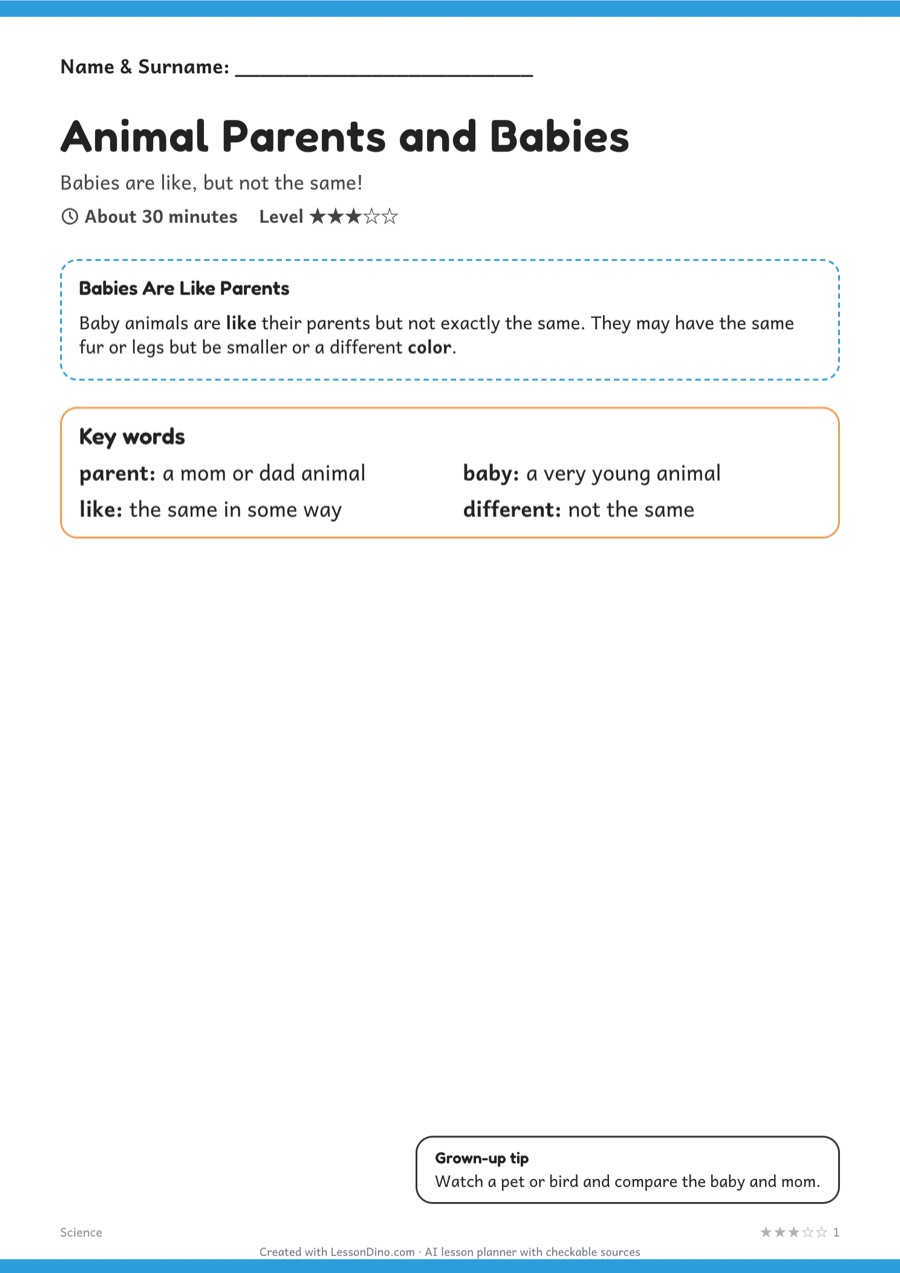
Babies Are Like Parents
- Baby animals are like their parents but not exactly the same. They may have the same fur or legs but be smaller or a different color.
| Word | Meaning |
|---|---|
| parent | a mom or dad animal |
| baby | a very young animal |
| like | the same in some way |
| different | not the same |
Page 2
Draw the parent in the empty box for each baby!
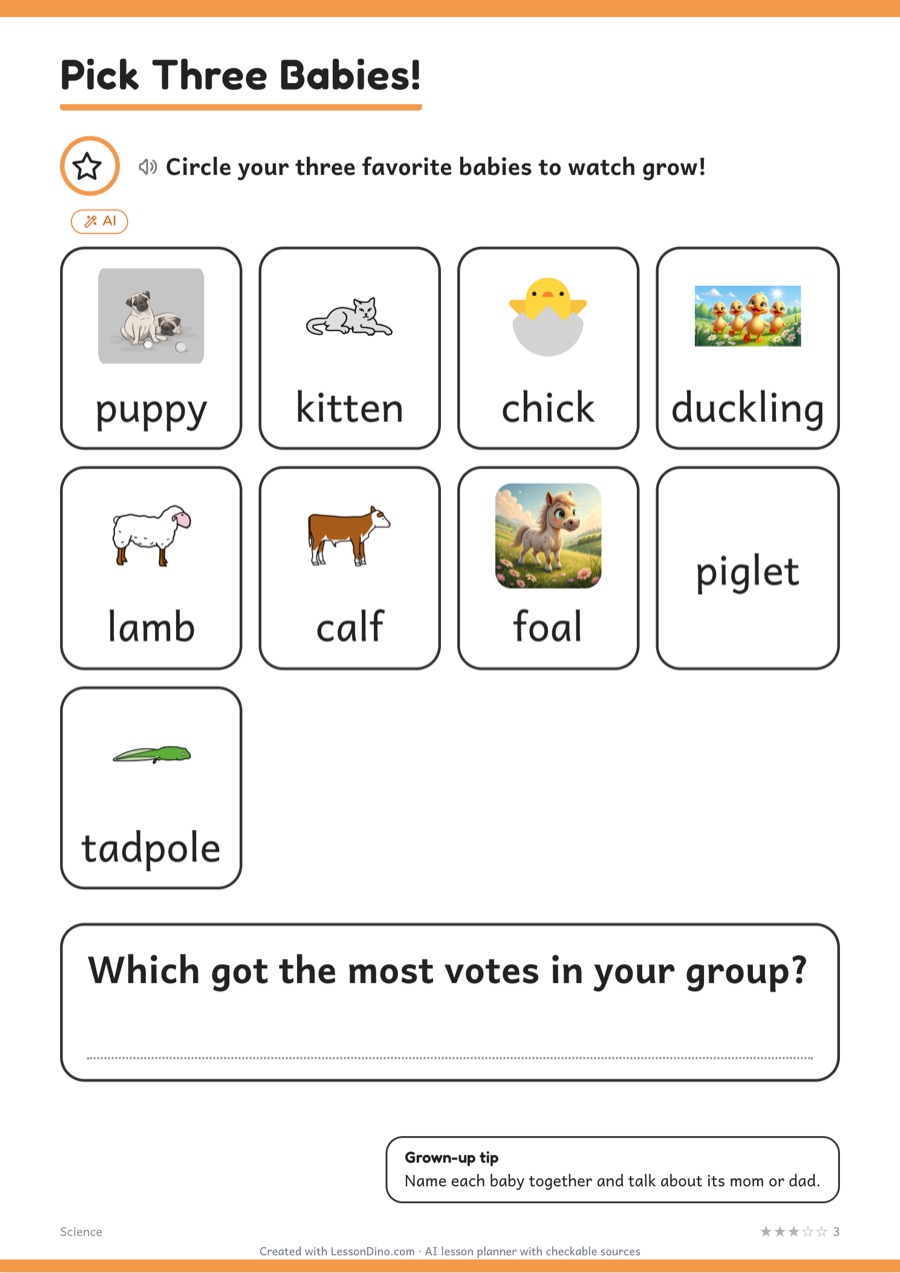
Pick Three Babies!
Circle your three favorite babies to watch grow!
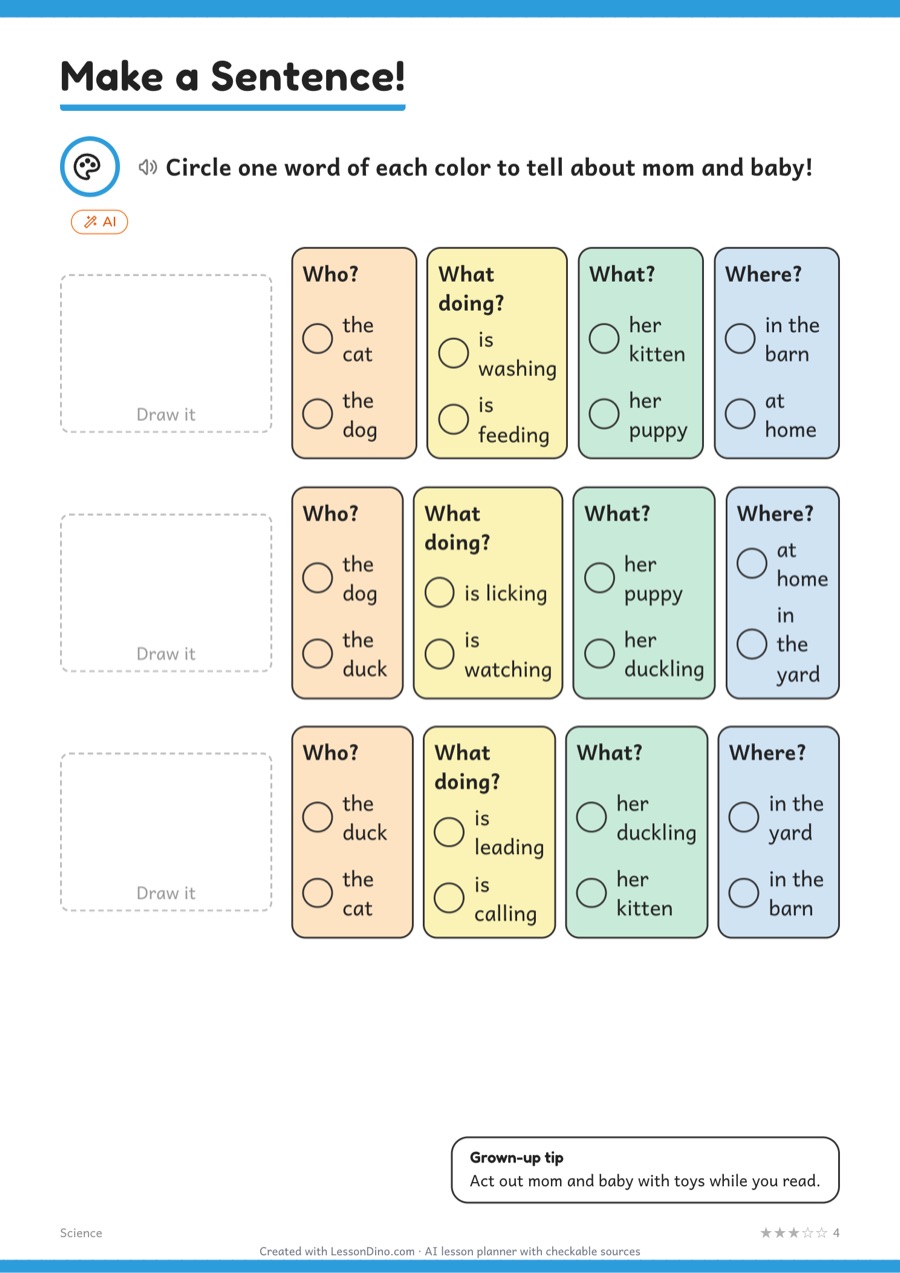
Make a Sentence!
Circle one word of each color to tell about mom and baby!
How Do You Feel?
Circle the face that shows how you feel!
Answers
Show the answers
The answers are on the answer sheet, the last picture above.
Curriculum
Make observations to construct an evidence-based account that young plants and animals are like, but not exactly like, their parents.
Made with Lesson Dino's AI on 17 October 2026. AI can make mistakes, so check the answers and facts against the sources before you teach.