Slides
Lesson plan
Sorting the Four Seasons
Pupils learn how weather, plants and daylight change across the year. They sort months and pictures into spring, summer, autumn and winter hoops.
Objectives
- Students will sort month cards and nature pictures into the four seasons.
- Students will observe and describe weather and daylight changes across the seasons.
- Students will describe how leaves and plants change in each season.
Success criteria
- I can name the four seasons in order starting from spring.
- I can match weather, plants and animals to each season.
- I can put March to February months into the right season hoop.
Key words
| Word | Meaning |
|---|---|
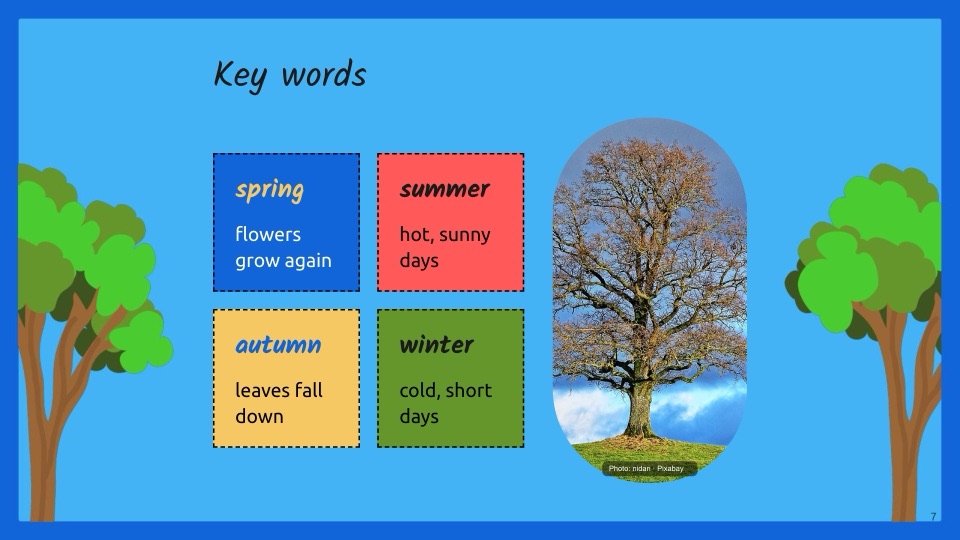
| spring | the March, April and May time when plants start to grow and flower |
| summer | the June, July and August time with the hottest, sunniest days |
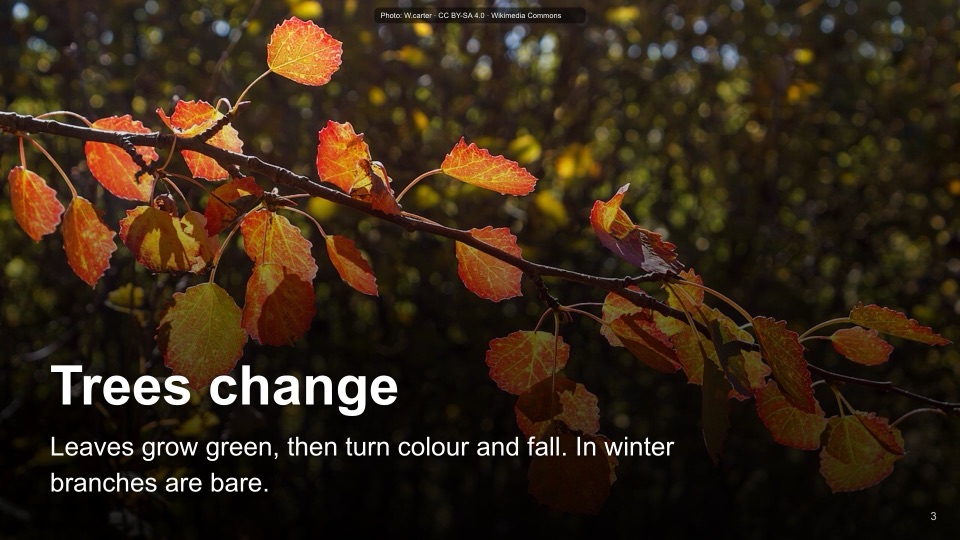
| autumn | the September, October and November time when leaves change colour and fall |
| winter | the December, January and February time that is the coldest with the shortest days |
Timed plan (60 minutes)
| Time | Stage | What happens |
|---|---|---|
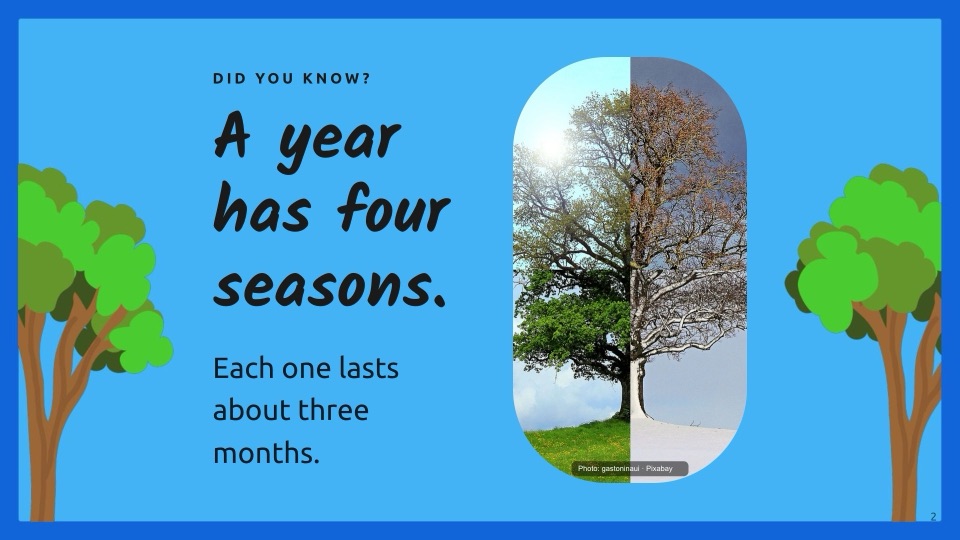
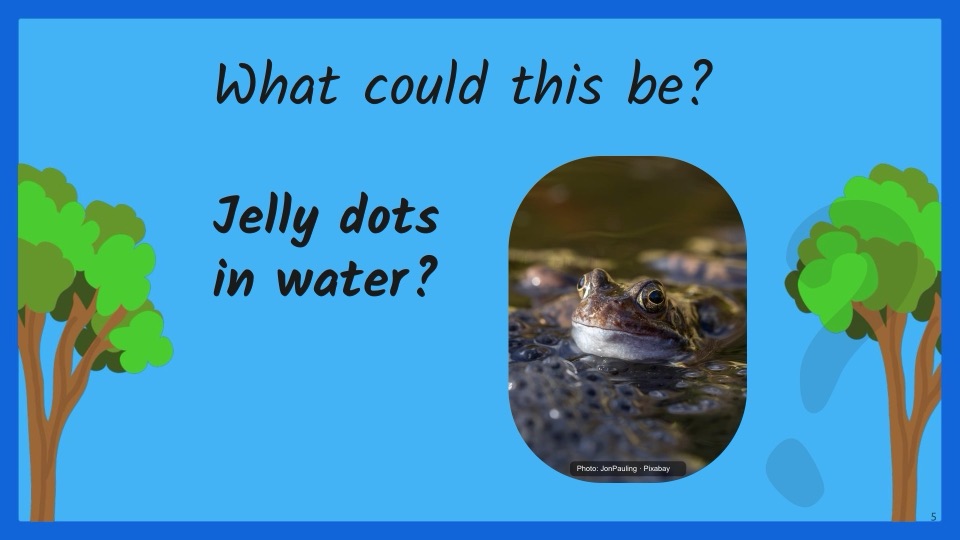
| 10 min | Starter | To recall season names and hook pupils with the mixed-up year problem. Tip a box of month and picture cards on the carpet and say the hook in an worried voice. Show Slide 1 then Slide 2 and read: A year has four seasons. Each one lasts about three months. Hold up March card and model thinking aloud about where it goes. Ask pupils to chant the four seasons in order with actions. |
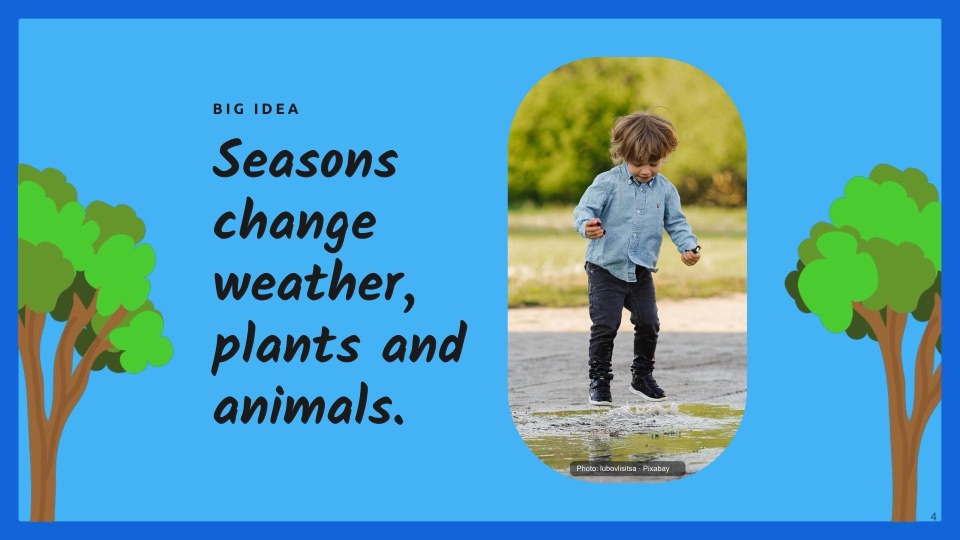
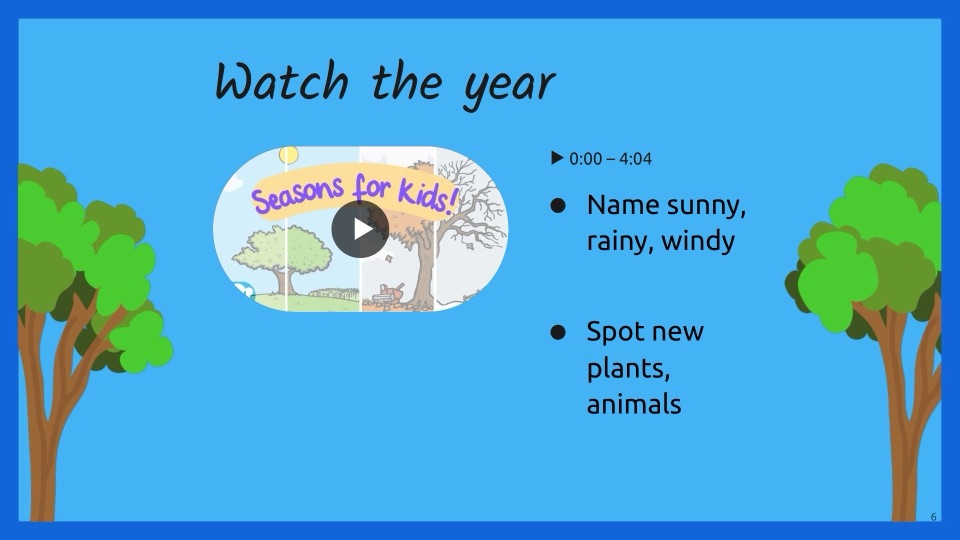
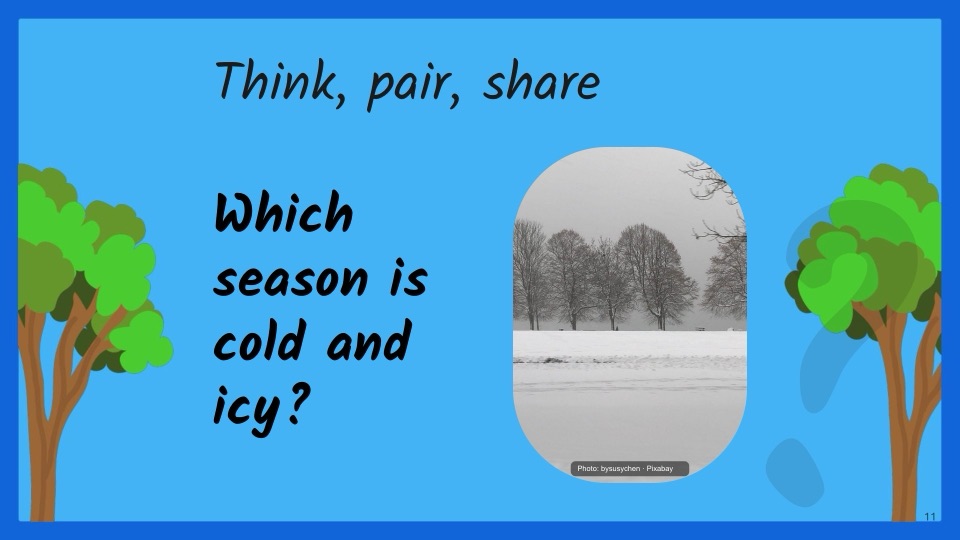
| 15 min | Teaching | To observe how weather, daylight, plants and animals change across the seasons. Show Slides 3-4 and talk through one tree across the year with gestures. Play Slide 6 Video clip 1 (0:00-4:04) and ask pupils to spot sunny, rainy and windy and new plants and animals. Pause and sort two examples together: blossom for spring when birds build nests and bare branches for winter with no leaves. Teach daylight change and sun safety rule. |
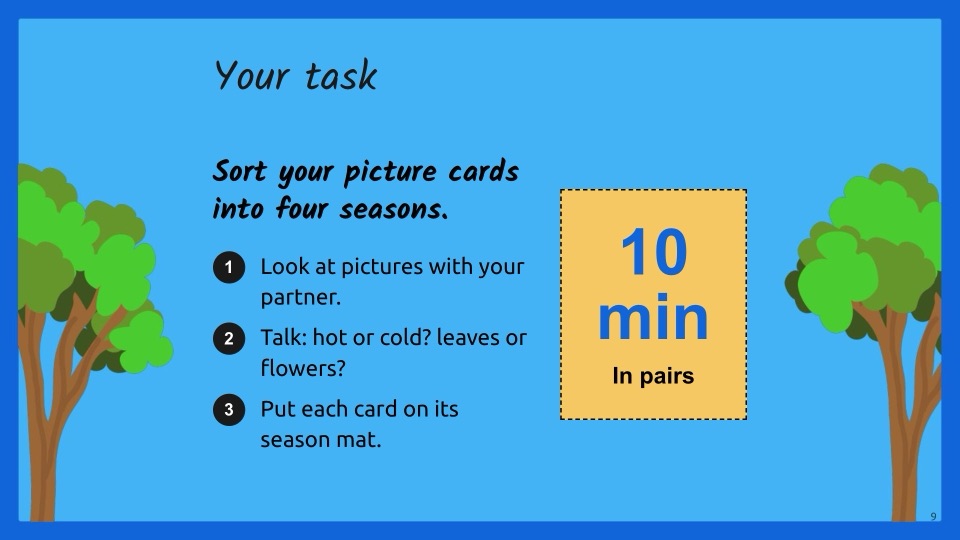
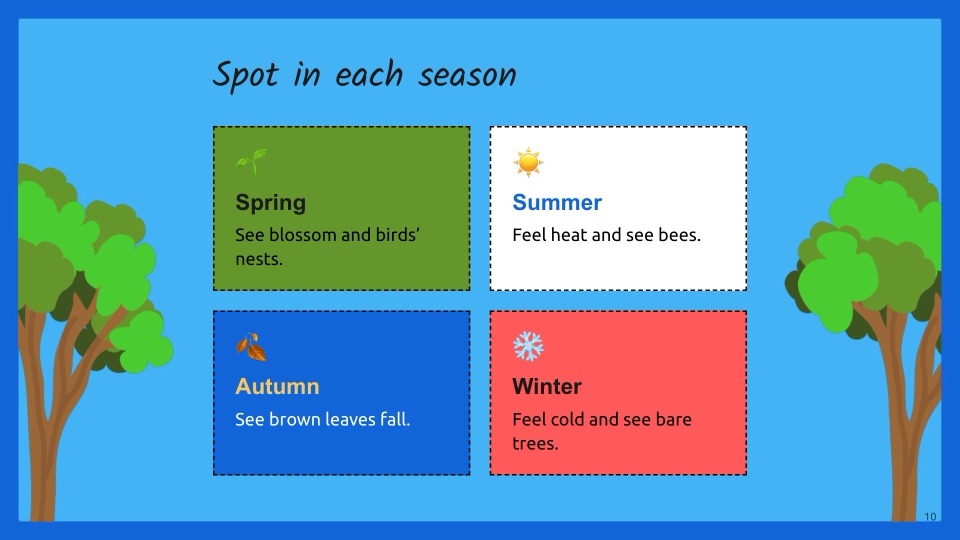
| 20 min | Main activity | To sort month and picture cards into the four season hoops and explain the changes. Lay out four hoops with season labels and show Slide 9 task and Slide 10 clues. Explain spring is March, April and May, summer is June, July and August, autumn is September, October and November, and winter is December, January and February. Model placing one month and one picture, then send groups to sort the rest and talk hot or cold, leaves or flowers. Visit groups, ask for reasons and remind pupils to handle cards gently. |
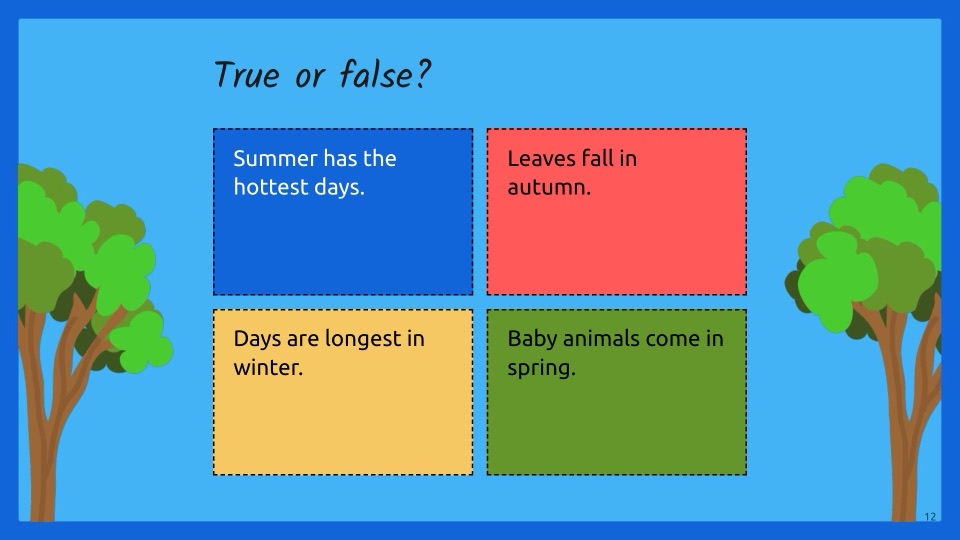
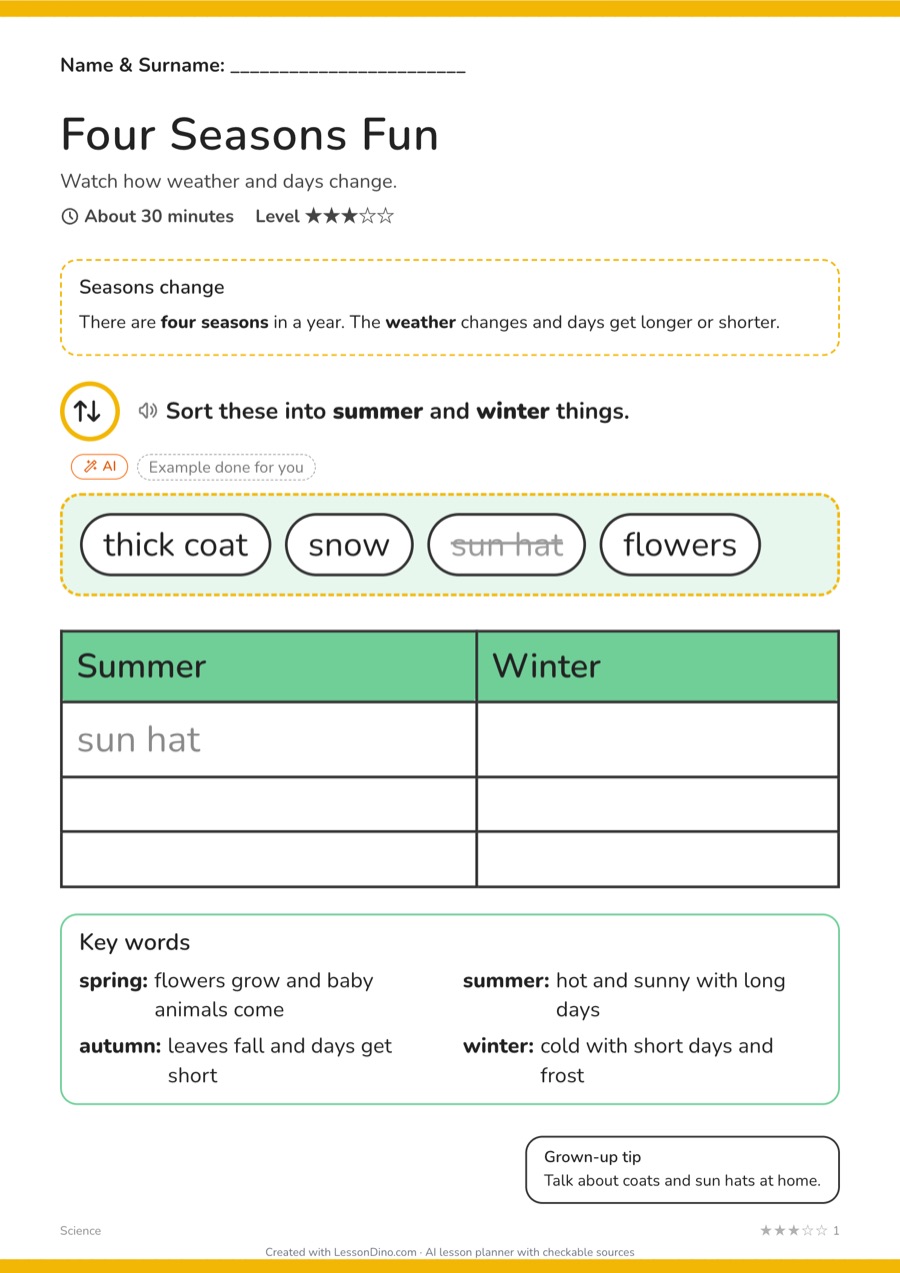
| 15 min | Plenary | To check recall of season signs and correct true or false ideas. Line groups in year order holding season cards to retell the tree story. Show Slide 12 statements one by one and take true or false votes. Give out Worksheet page 3 for pupils to tick true or false on their own. Go through answers together and link back to sorting hoops. |
Common mistakes
- Putting brown falling leaves in winter instead of autumn
How to spot it: Winter hoop has leaf-fall pictures
Remind that most trees drop their leaves in autumn and leaves change colour and fall in autumn; winter has bare branches with no leaves. - Saying days are longest in winter
How to spot it: Pupils vote true for longest in winter
Show sun and moon cards: we get lots of daylight hours in summer and much fewer in winter, so longest in summer. - Mixing up months, e.g. July in spring
How to spot it: Month cards in wrong hoops
Chant spring is March, April and May, summer is June, July and August, autumn is September, October and November, winter is December, January and February.
Support
- Colour-match the cards to the hoop colour and sort only the picture cards first.
- Work with an adult using sentence starters like In spring I see...
Stretch
- Students put the four hoops in calendar order starting from spring.
- Add a weather symbol and daylight idea to each season and explain clothing choice.
Check questions
- Which three months are in spring?
Answer: March, April and May - Which season usually has the hottest, sunniest days?
Answer: Summer - What happens to most trees in autumn and winter?
Answer: They drop leaves in autumn and have bare branches with no leaves in winter
Curriculum
observe changes across the 4 seasons
Video clips
Clips on YouTube, from the start and end times we chose. Check each one before you show it.
-
All about the four seasons from 0:00 to 4:04
Twinkl Educational Publishing: All about the Four Seasons for Kids! | Learn about the Four Seasons
Made for young primary children age 5-6 with clear pictures and simple words ideal for Year 1 observing changes.
-
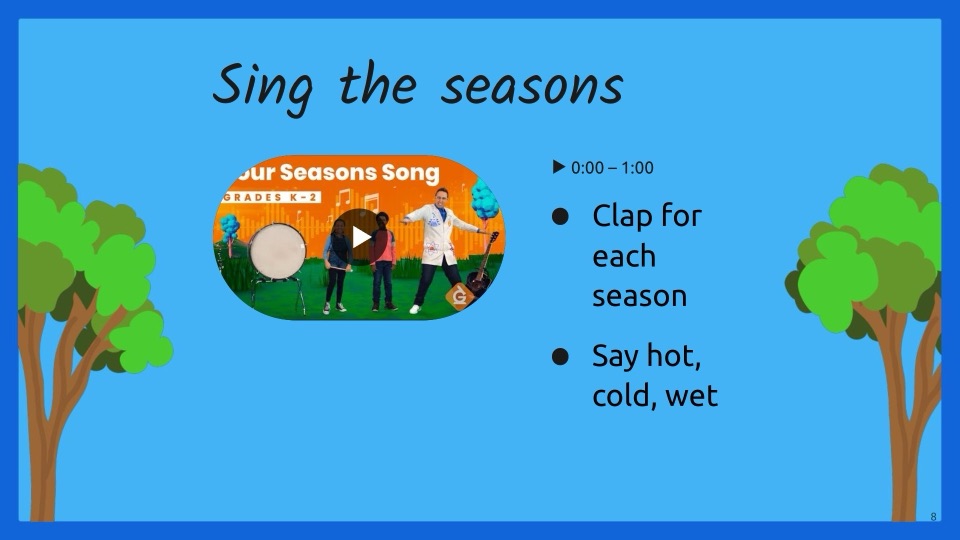
Four seasons song from 0:00 to 1:00
GenerationGenius: The Four Seasons SONG | Science for Kids | Grades K-2
Made for Grades K-2 so right for age 5-6, with a short song to help remember what changes each season.
Worksheet
Sources
- ACBA34023A4569162249836607F53F70 st-christopher.coventry.sch.uk
- National curriculum in England: science programmes of study gov.uk
- The Four Seasons: Netflix has done something truly different ... independent.co.uk
- The Four Seasons cast, plot, trailer and episode guide for ... inews.co.uk
- Proms 2021 Vivaldi's Four Seasons - BBC Proms - BBC bbc.co.uk
- pdf eli10.co.uk
- What are the four seasons? - EYFS - Reception - BBC Bitesize bbc.co.uk
- What are the seasons? – KS1 Science curriculum - BBC Bitesize bbc.co.uk
- Season Facts for Kids kids.kiddle.co
- Kids science: Earth's Seasons - Ducksters ducksters.com
- season - Kids | Britannica Kids | Homework Help kids.britannica.com
- season - Britannica Kids kids.britannica.com
- The Four Seasons Explained for Kids - Kids World Fun kidsworldfun.com
- Four Seasons is building a fleet of luxury yachts that will debu… thepointsguy.com
- What are the seasons? - BBC Bitesize bbc.co.uk
- Understanding the Four Seasons: A Fun Guide for Kids Aged 6 learningcorner.co
- The Seasons | How seasons occur | The Four Seasons for Kids k8schoollessons.com
- Vivaldi / Felix Ayo / I Musici - The Four Seasons LP (United Kingdom - vinyljunkies.net
- Fun Four Seasons Facts for Kids (All You Need to Know!) easyscienceforkids.com
Picture credits
Made with Lesson Dino's AI on 17 October 2026. AI can make mistakes, so check facts against the sources before you teach.