The worksheet
About this worksheet
Pupils learn how weather, plants and daylight change across the year. They sort months and pictures into spring, summer, autumn and winter hoops. This Year 1 Science worksheet gives students (ages 5–6) four pages of practice on the four seasons, part of the seasonal changes unit. It goes with our free The four seasons lesson, which has the slides and a timed lesson plan.
What it covers
By the end, students should be able to:
- Students will sort month cards and nature pictures into the four seasons.
- Students will observe and describe weather and daylight changes across the seasons.
- Students will describe how leaves and plants change in each season.
How to use it
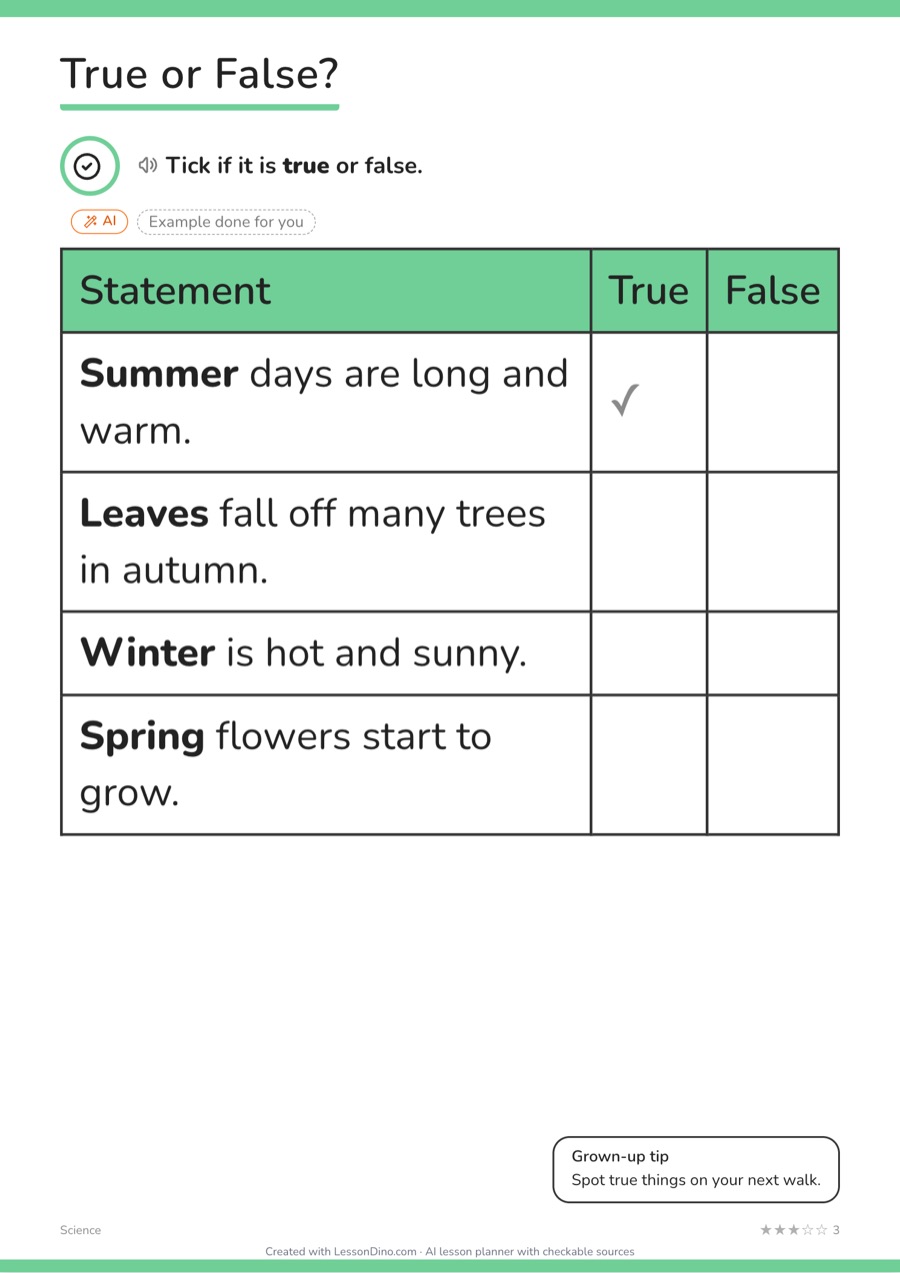
- Plenary (15 minutes): Give out Worksheet page 3 for pupils to tick true or false on their own.
- Support: Colour-match the cards to the hoop colour and sort only the picture cards first.
- Stretch: Students put the four hoops in calendar order starting from spring.
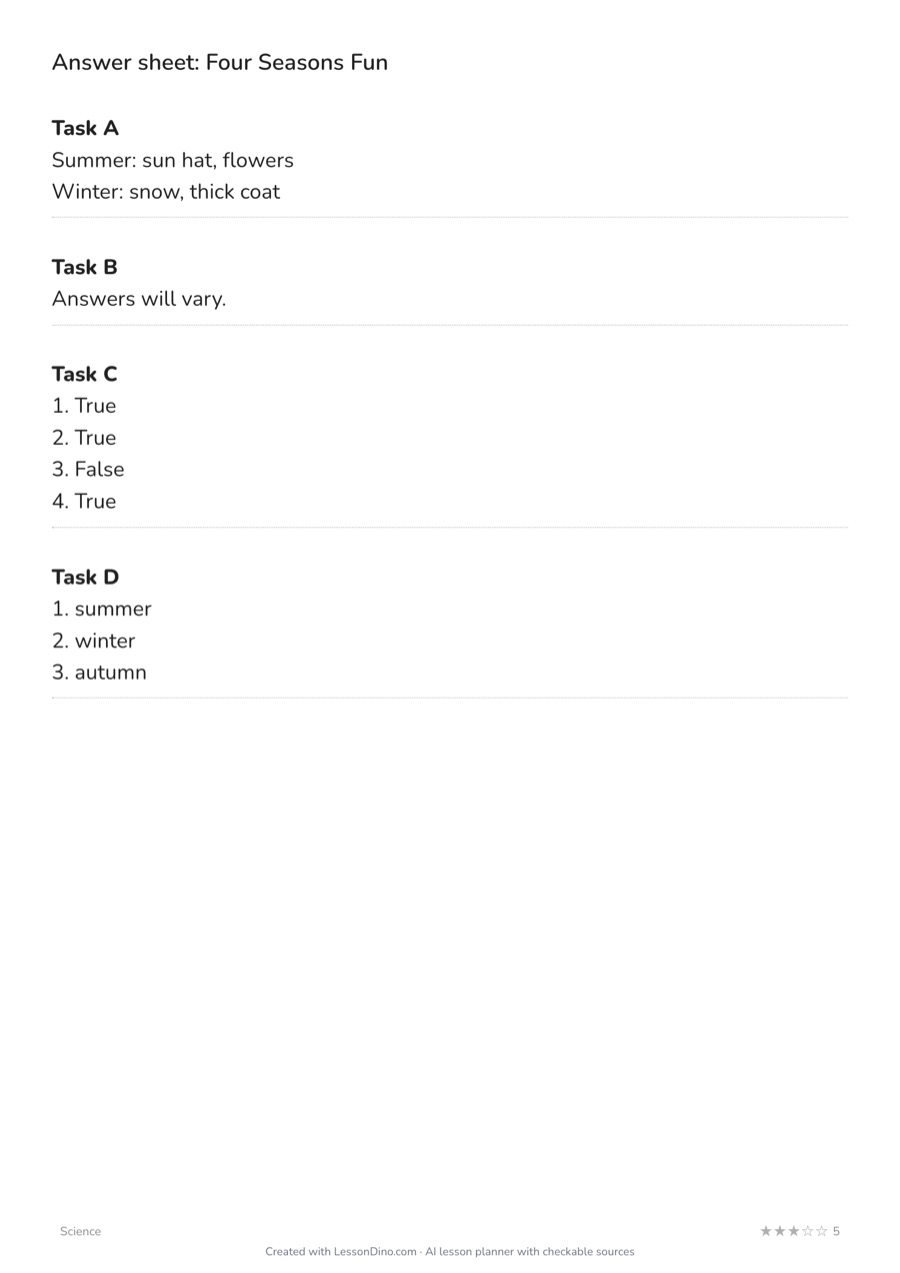
- The answer sheet is the last page, so you can print it on its own or let students check their own work.
Key vocabulary
- spring: the March, April and May time when plants start to grow and flower
- summer: the June, July and August time with the hottest, sunniest days
- autumn: the September, October and November time when leaves change colour and fall
- winter: the December, January and February time that is the coldest with the shortest days
Mistakes to watch for
- Putting brown falling leaves in winter instead of autumn. Remind that most trees drop their leaves in autumn and leaves change colour and fall in autumn; winter has bare branches with no leaves.
- Saying days are longest in winter. Show sun and moon cards: we get lots of daylight hours in summer and much fewer in winter, so longest in summer.
- Mixing up months, e.g. July in spring. Chant spring is March, April and May, summer is June, July and August, autumn is September, October and November, winter is December, January and February.
What's on the worksheet
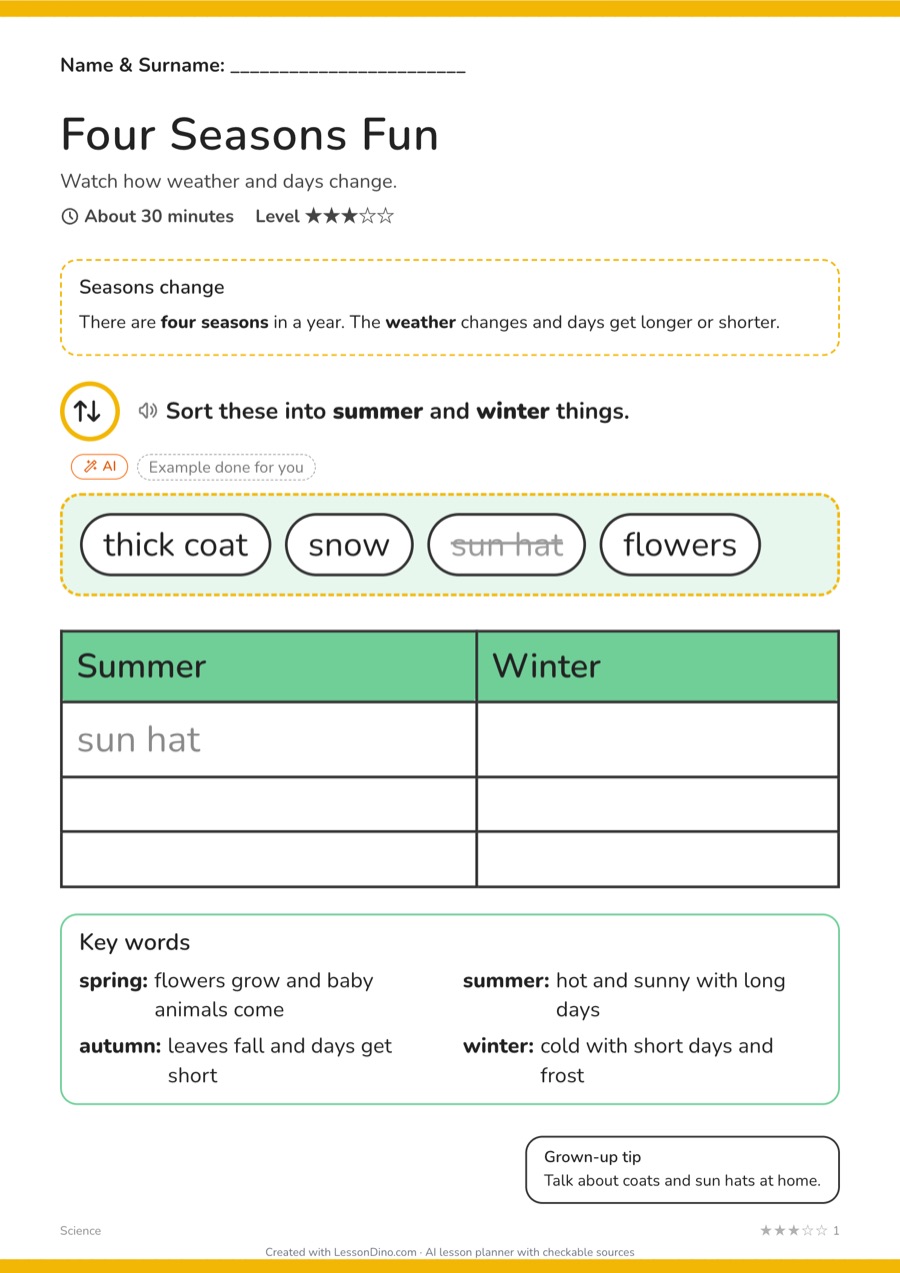
Sort for Seasons!
Seasons change
- There are four seasons in a year. The weather changes and days get longer or shorter.
Sort these into summer and winter things.
| Word | Meaning |
|---|---|
| spring | flowers grow and baby animals come |
| summer | hot and sunny with long days |
| autumn | leaves fall and days get short |
| winter | cold with short days and frost |
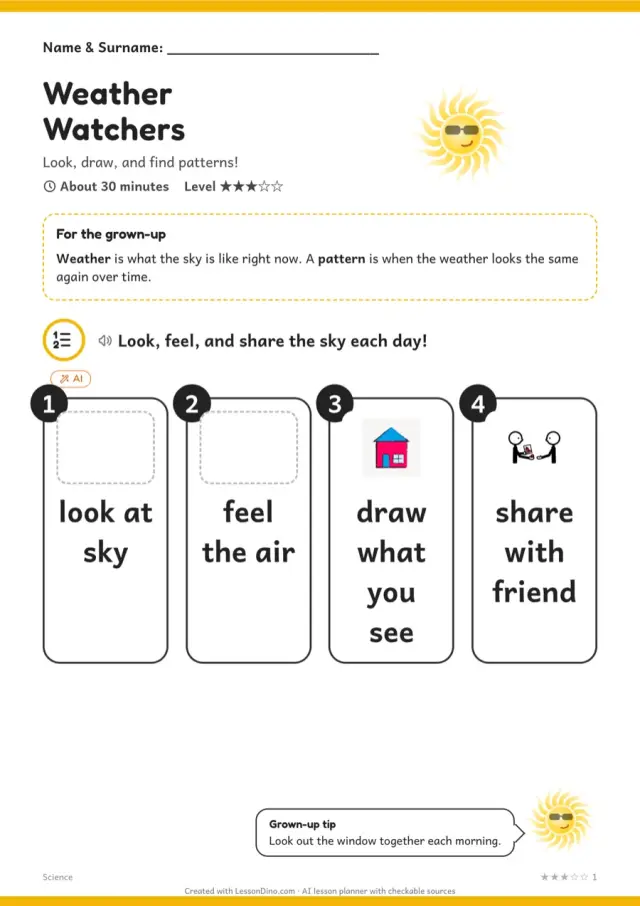
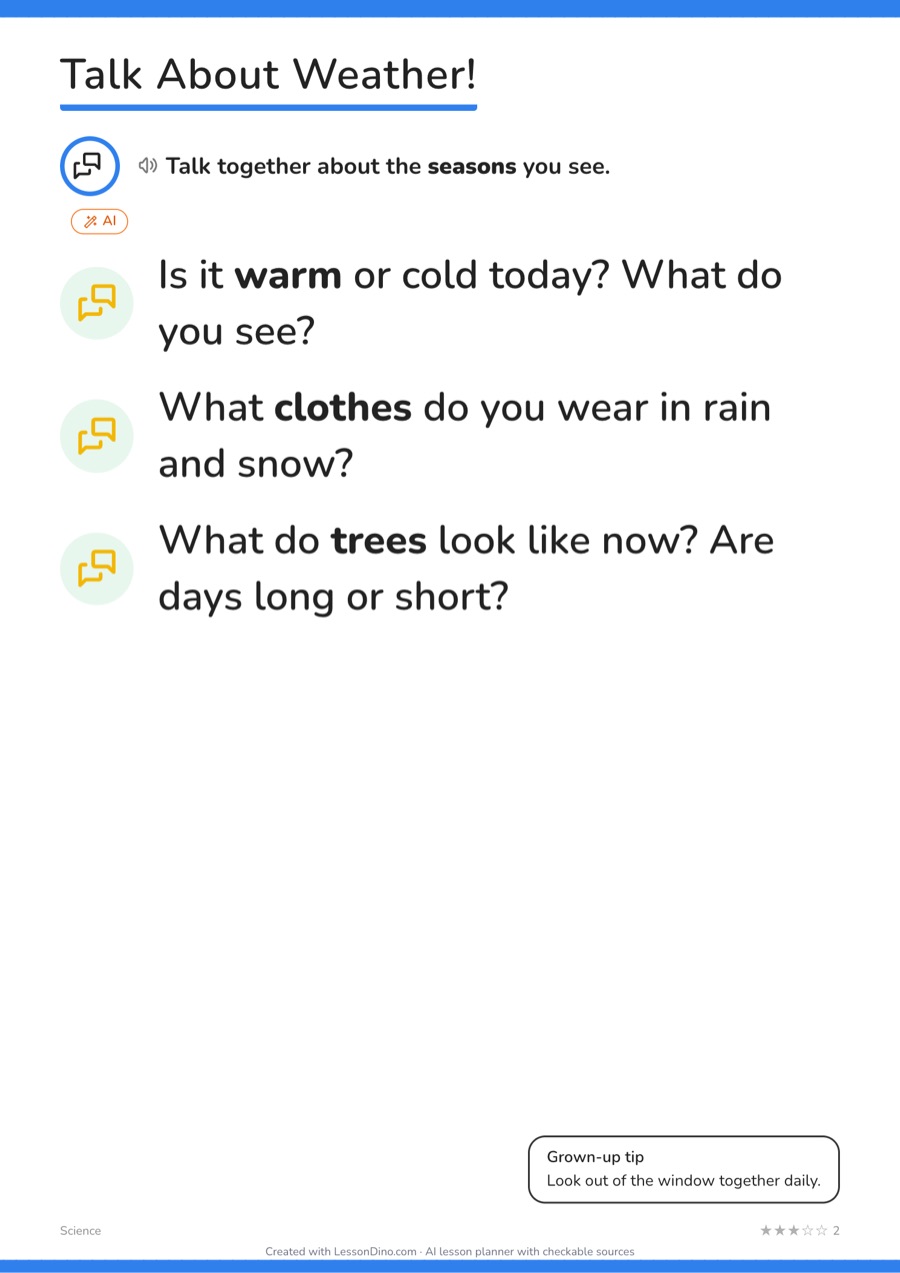
Talk About Weather!
Talk together about the seasons you see.
- Is it warm or cold today? What do you see?
- What clothes do you wear in rain and snow?
- What do trees look like now? Are days long or short?
True or False?
Tick if it is true or false.
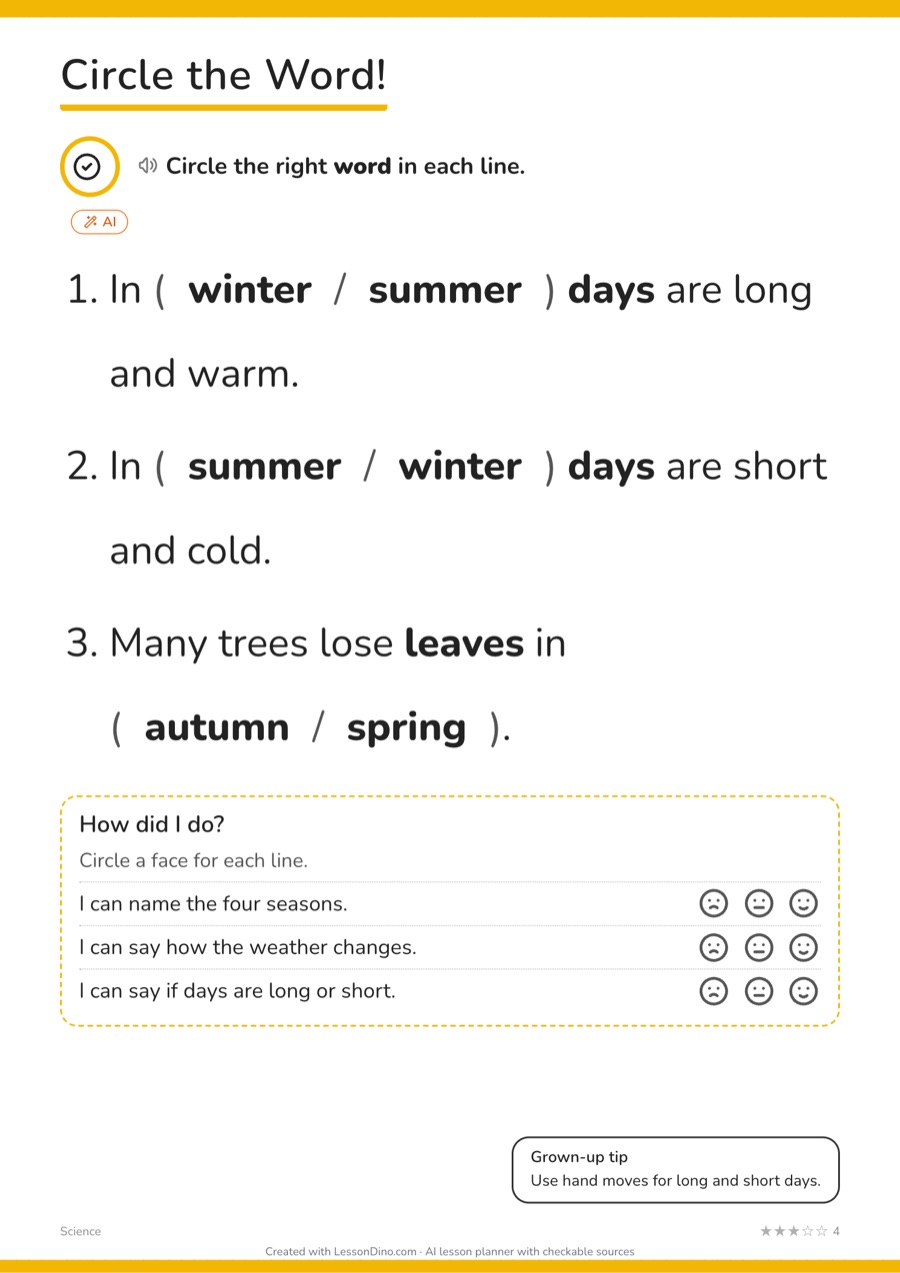
Circle the Word!
Circle the right word in each line.
Answers
Show the answers
The answers are on the answer sheet, the last picture above.
Curriculum
observe changes across the 4 seasons
Made with Lesson Dino's AI on 17 October 2026. AI can make mistakes, so check the answers and facts against the sources before you teach.