The worksheet
About this worksheet
We learn how Earth and the other planets travel round the Sun. We become the solar system and walk each orbit. This Year 5 Science worksheet gives students (ages 9–10) six pages of practice on planets orbiting the Sun, part of the earth and space unit. It goes with our free Planets orbiting the Sun lesson, which has the slides and a timed lesson plan.
What it covers
By the end, students should be able to:
- Students will name the Sun as the centre of the solar system.
- Students will describe how planets orbit the Sun anticlockwise.
- Students will explain why outer planets take longer to orbit.
How to use it
- Plenary (10 minutes): Hand out Worksheet Task D and ask pupils to tick the best answer about orbits on their own.
- Support: Pre-draw circles with arrows and pair each walker with a partner who points direction and reads labels.
- Stretch: Explain what would change if a walker went the wrong way or left the flat shared circle.
- The answer sheet is the last page, so you can print it on its own or let students check their own work.
Key vocabulary
- Sun: bright hot star at the middle of our family of worlds
- planet: large round world of rock or gas that travels round a star
- orbit: path taken round a star, planet or moon
- anticlockwise: going in the opposite direction to the hands on a clock
Mistakes to watch for
- Thinking Earth is in the middle with the Sun going round it. Re-model with Sun marker still: the Sun is a star at the centre while Earth travels round it.
- Thinking all planets take the same time to orbit. Point to strip: times depend on distance from the Sun; Earth takes one year but Neptune takes almost 165 Earth years.
- Thinking planets go different ways or in perfect circles. Practise arrows: all go anticlockwise on paths that are almost circular, like a nearly round oval.
What's on the worksheet
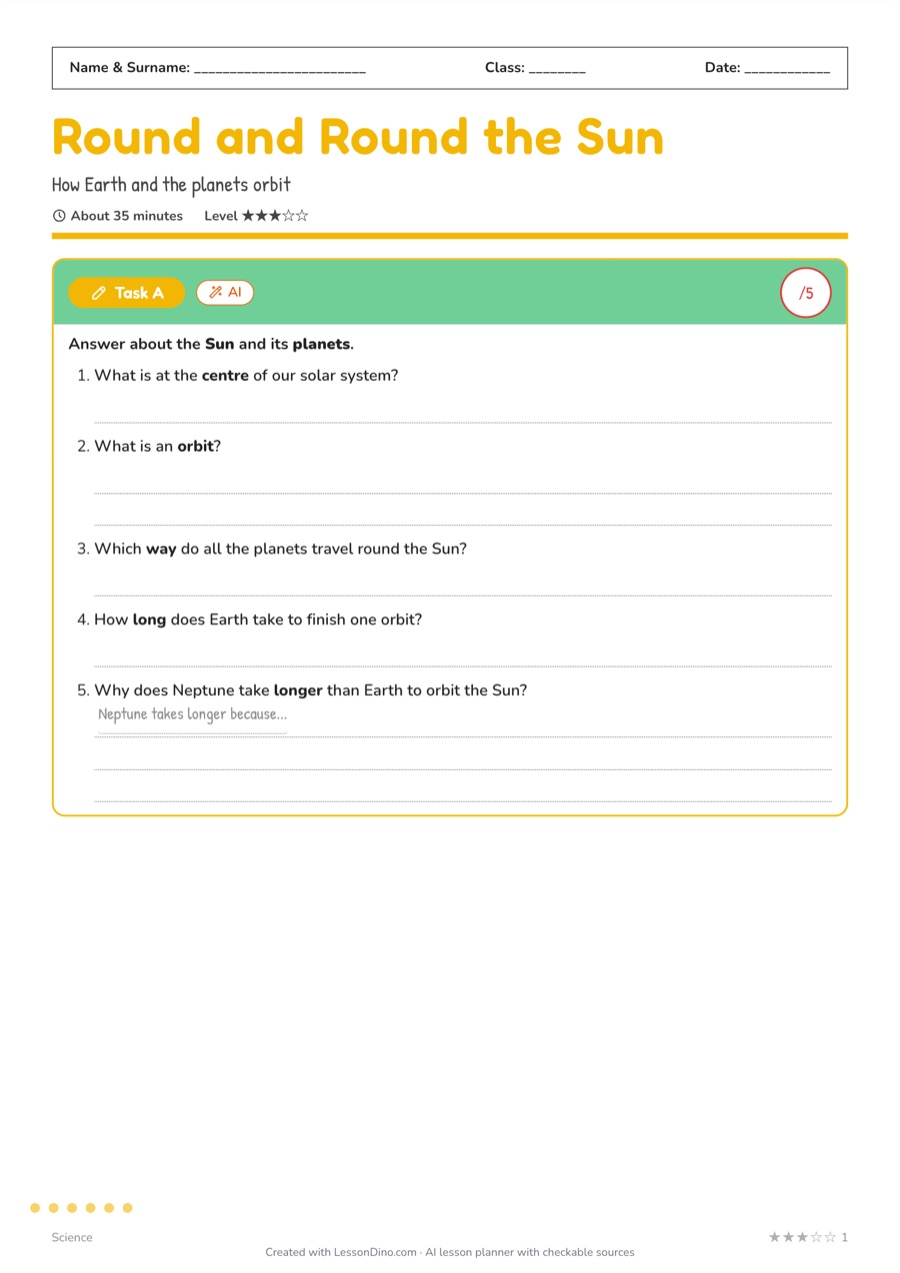
Our Circling Planets
Learn how Earth and the planets move round the Sun.
Answer about the Sun and its planets.
- What is at the centre of our solar system?
- What is an orbit?
- Which way do all the planets travel round the Sun?
- How long does Earth take to finish one orbit?
- Why does Neptune take longer than Earth to orbit the Sun?
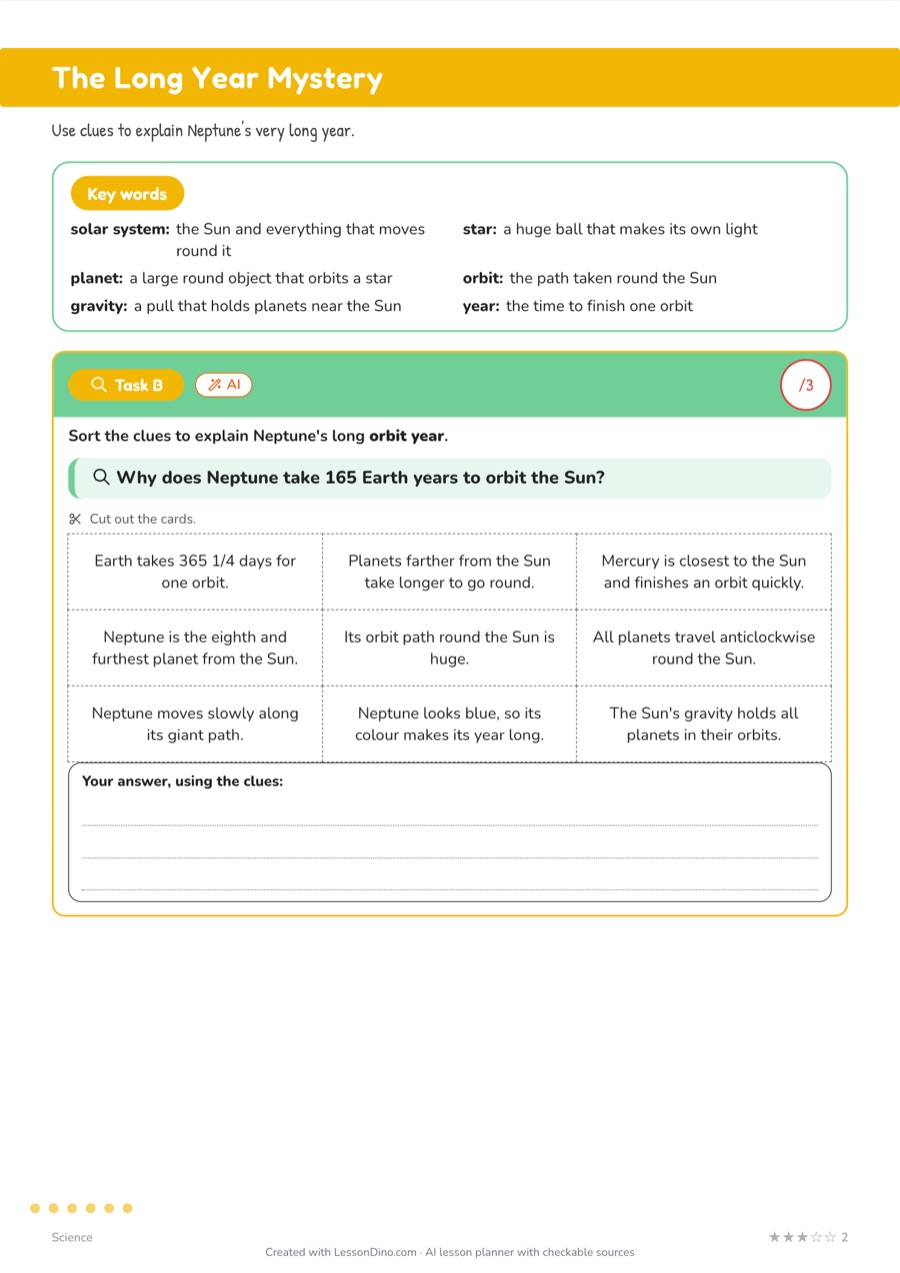
The Long Year Mystery
Use clues to explain Neptune's very long year.
| Word | Meaning |
|---|---|
| solar system | the Sun and everything that moves round it |
| star | a huge ball that makes its own light |
| planet | a large round object that orbits a star |
| orbit | the path taken round the Sun |
| gravity | a pull that holds planets near the Sun |
| year | the time to finish one orbit |
Sort the clues to explain Neptune's long orbit year.
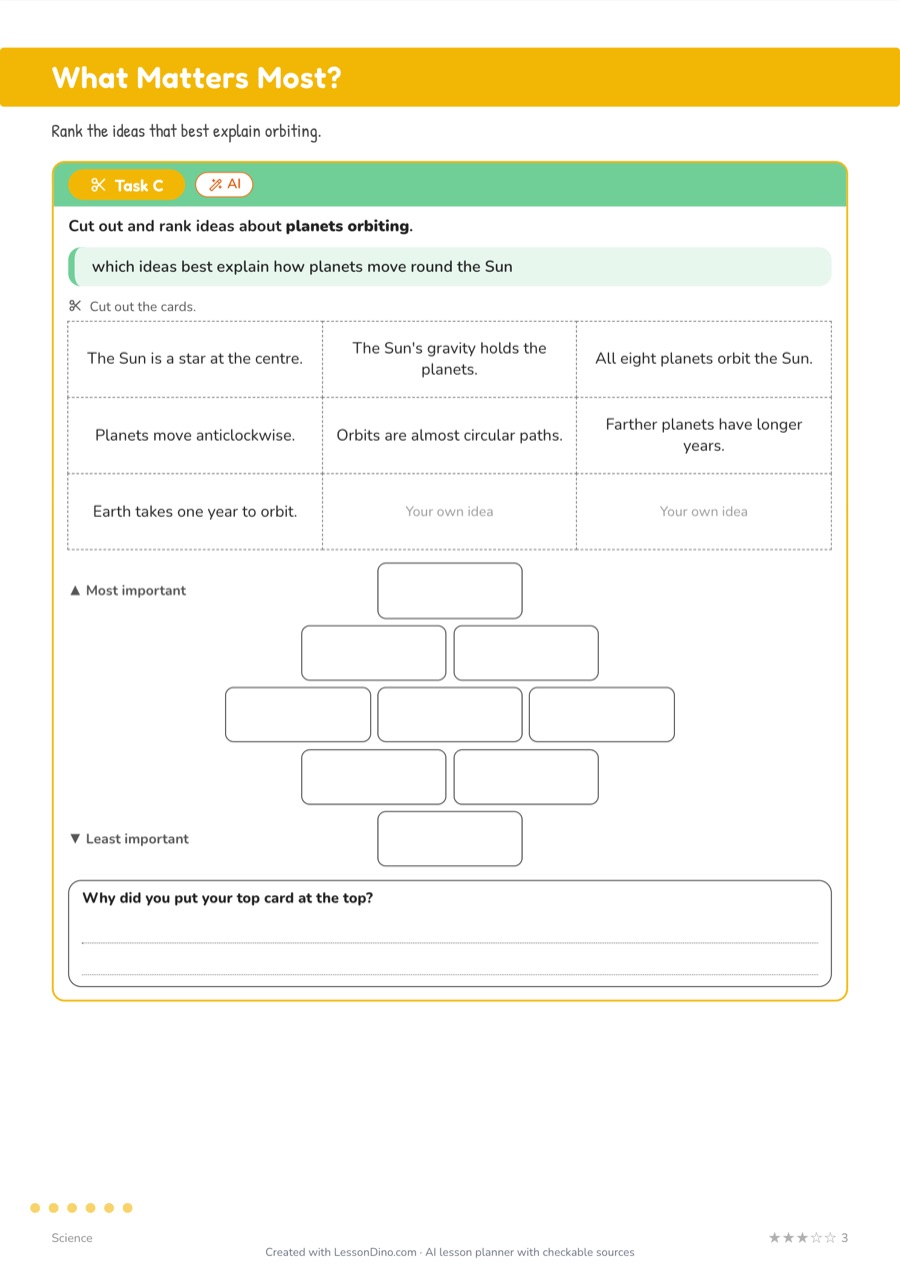
What Matters Most?
Rank the ideas that best explain orbiting.
Cut out and rank ideas about planets orbiting.
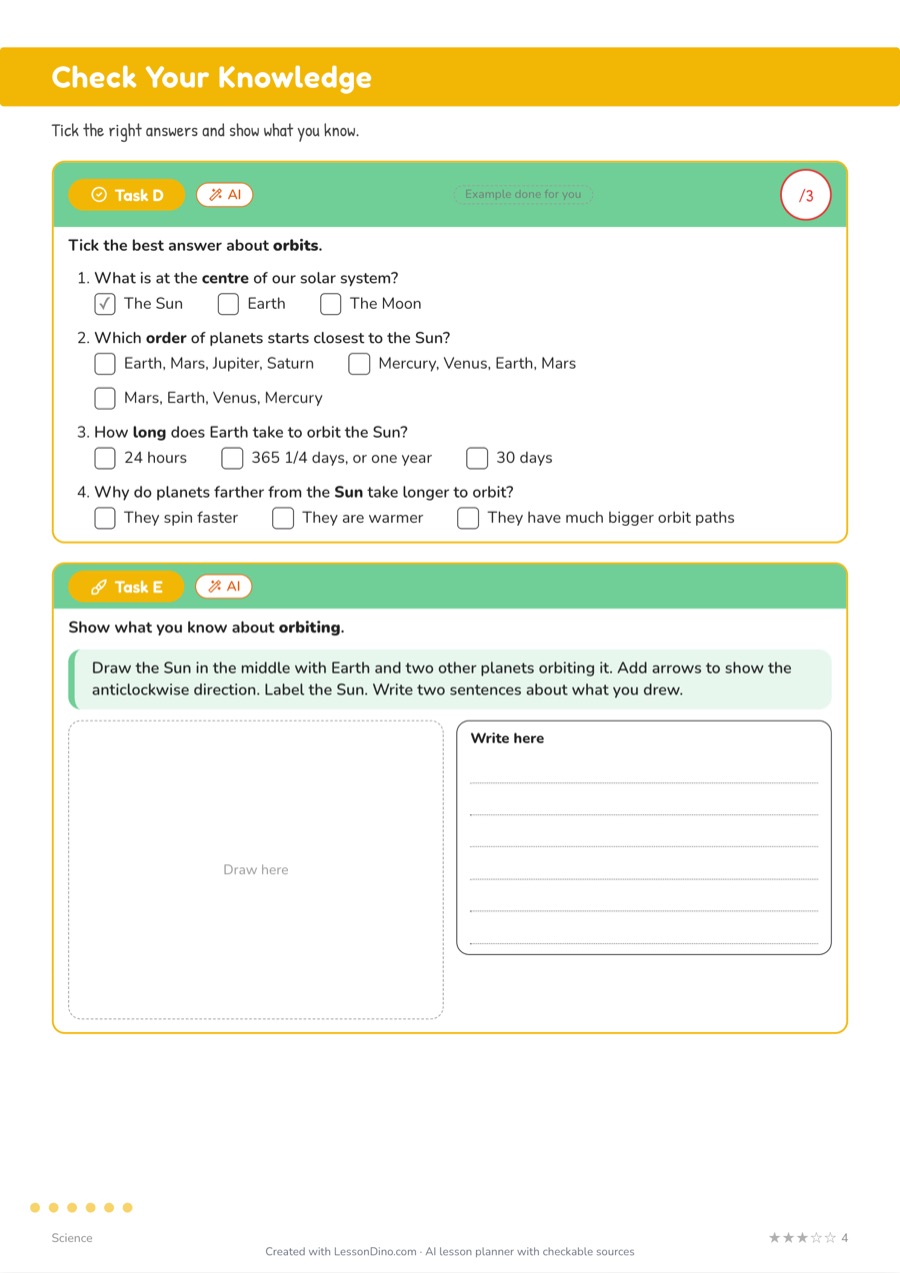
Check Your Knowledge
Tick the right answers and show what you know.
Tick the best answer about orbits.
- What is at the centre of our solar system?
- Which order of planets starts closest to the Sun?
- How long does Earth take to orbit the Sun?
- Why do planets farther from the Sun take longer to orbit?
Show what you know about orbiting.
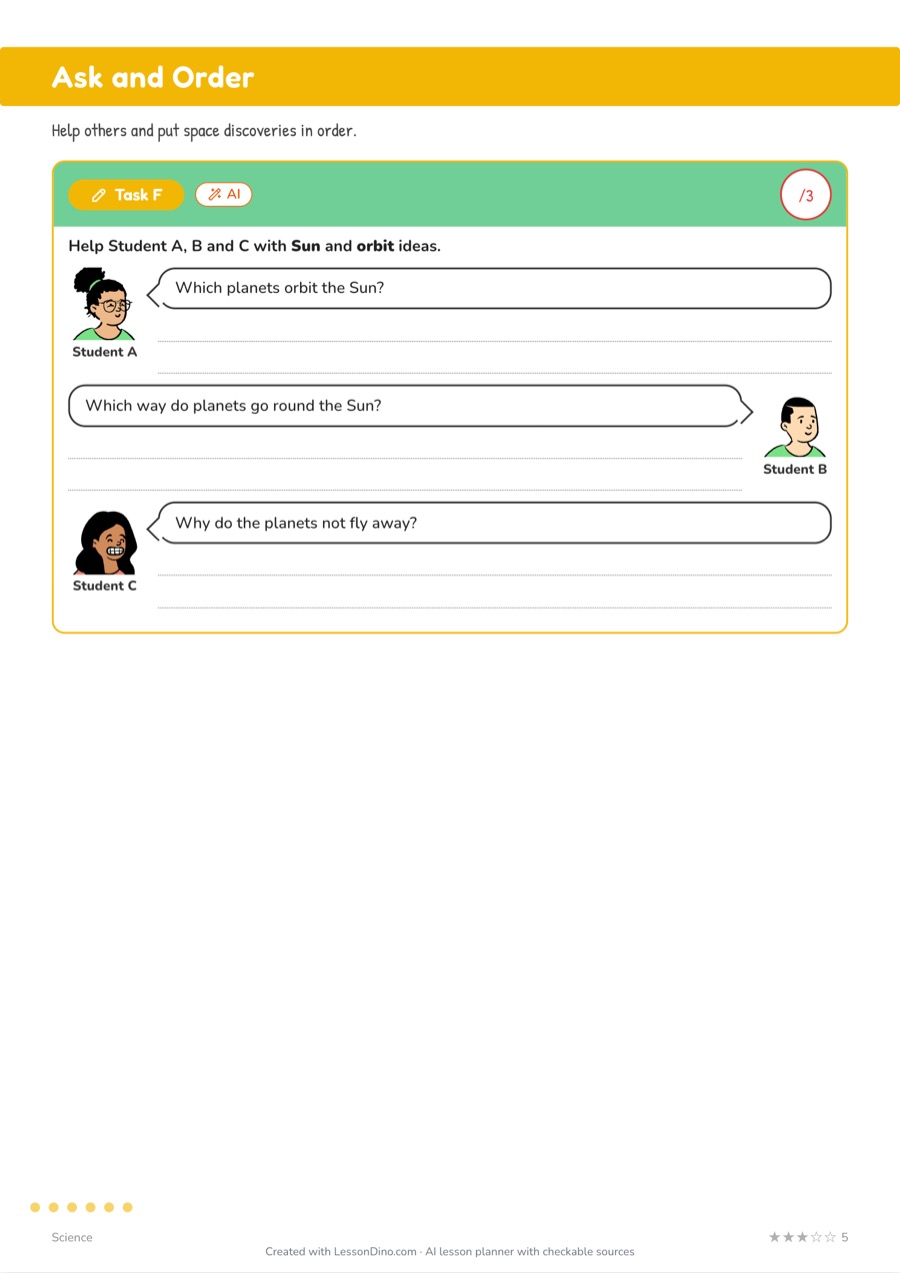
Ask and Order
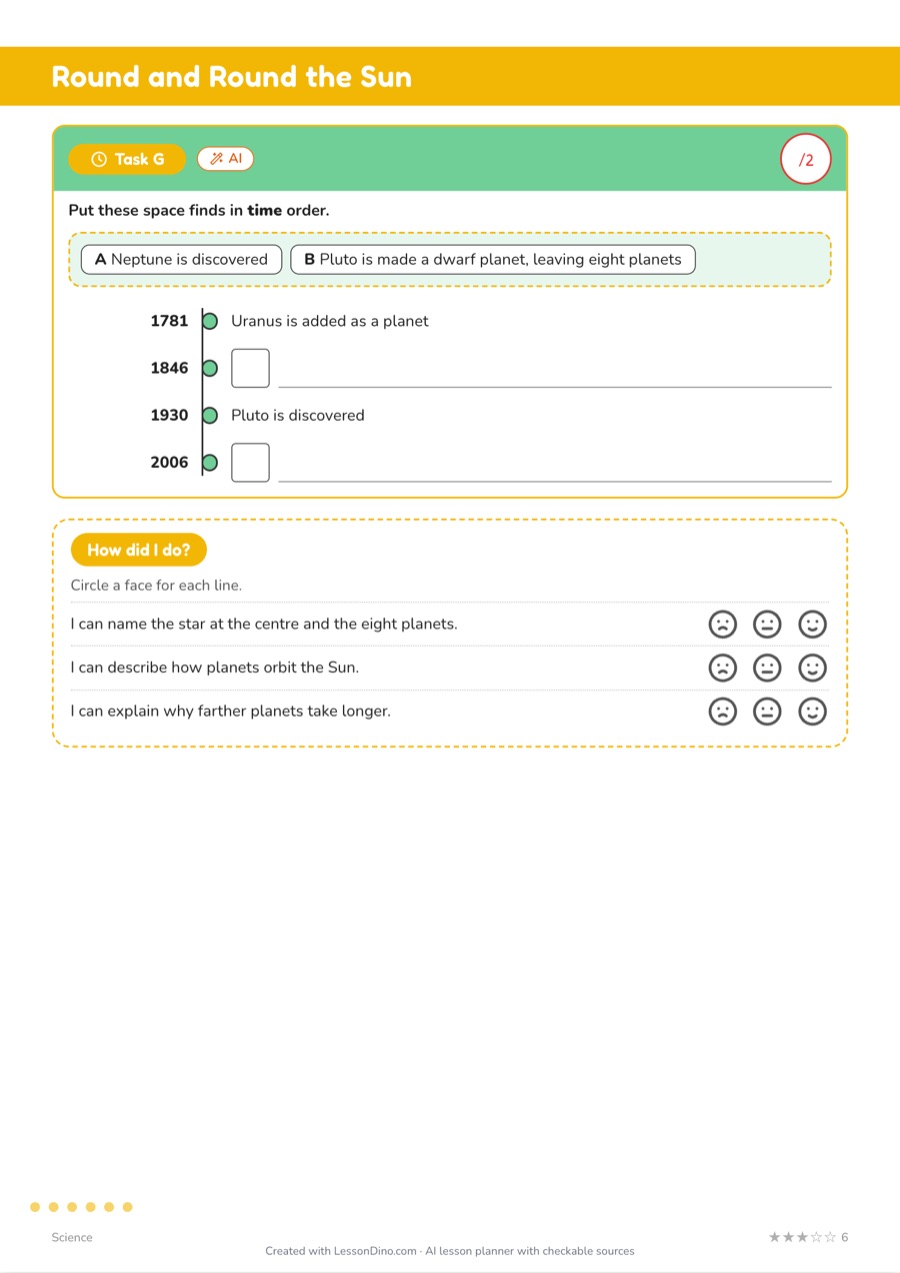
Help others and put space discoveries in order.
Help Student A, B and C with Sun and orbit ideas.
Page 6
Put these space finds in time order.
Answers
Show the answers
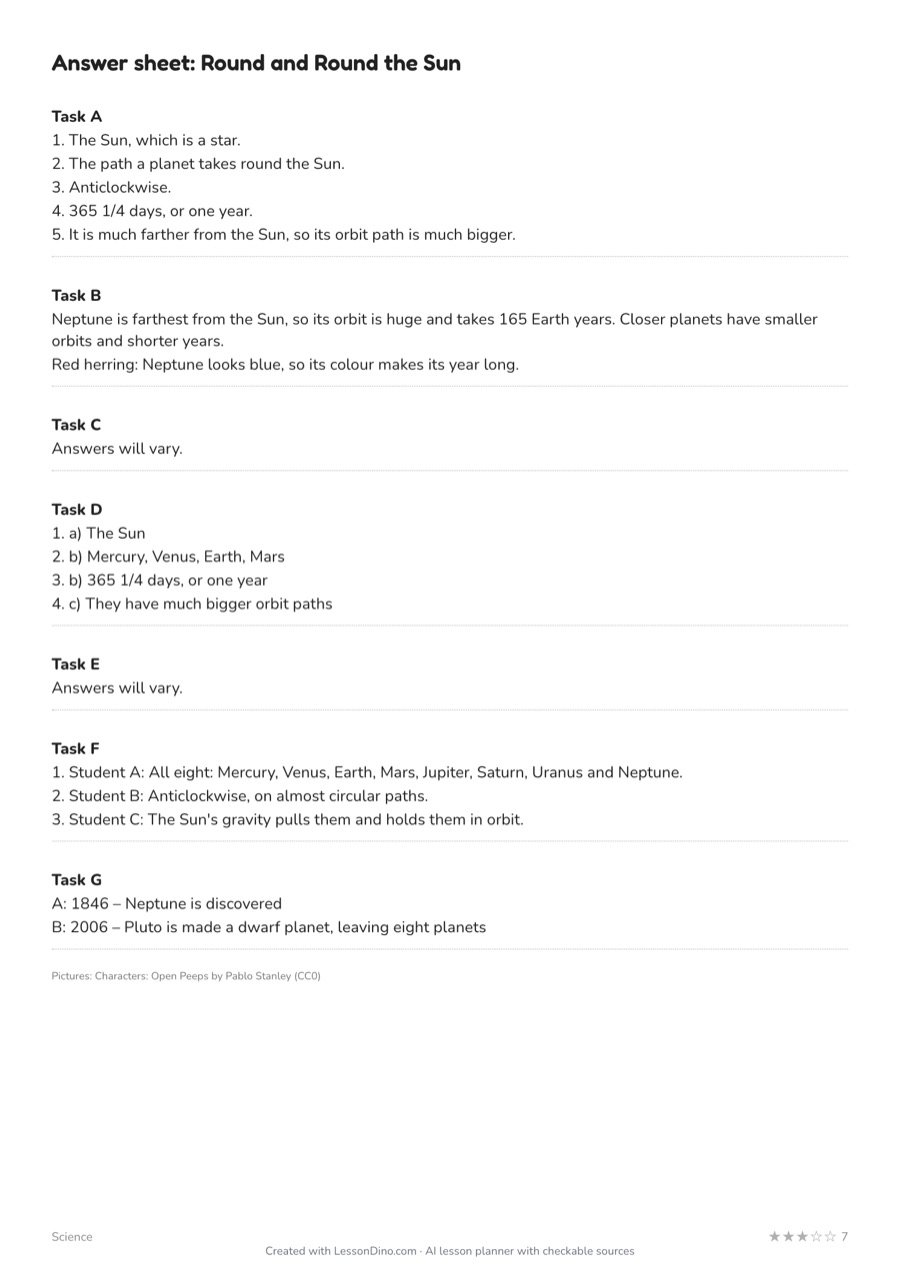
- What is at the centre of our solar system? The Sun, which is a star.
- What is an orbit? The path a planet takes round the Sun.
- Which way do all the planets travel round the Sun? Anticlockwise.
- How long does Earth take to finish one orbit? 365 1/4 days, or one year.
- Why does Neptune take longer than Earth to orbit the Sun? It is much farther from the Sun, so its orbit path is much bigger.
The answer sheet is the last picture above.
Curriculum
describe the movement of the Earth and other planets relative to the sun in the solar system
Made with Lesson Dino's AI on 17 October 2026. AI can make mistakes, so check the answers and facts against the sources before you teach.