Slides
Lesson plan
Who, Where, What Happened?
Students learn to describe characters and settings with key details. They draw a three-box map of who, where, and what happened.
Objectives
- Students will describe story characters using key details about looks, feelings, and actions.
- Students will describe story settings using key details about place, weather, and objects.
- Students will describe a major story event using key details in order.
Success criteria
- I can tell who a character is and how they look or feel.
- I can tell where a story happens with two details.
- I can tell what big thing happened first, next, and last.
Key words
| Word | Meaning |
|---|---|
| character | who is in a story |
| setting | where and when a story happens |
| event | something big that happens in a story |
| detail | a small true clue that tells more about someone or someplace |
Timed plan (60 minutes)
| Time | Stage | What happens |
|---|---|---|
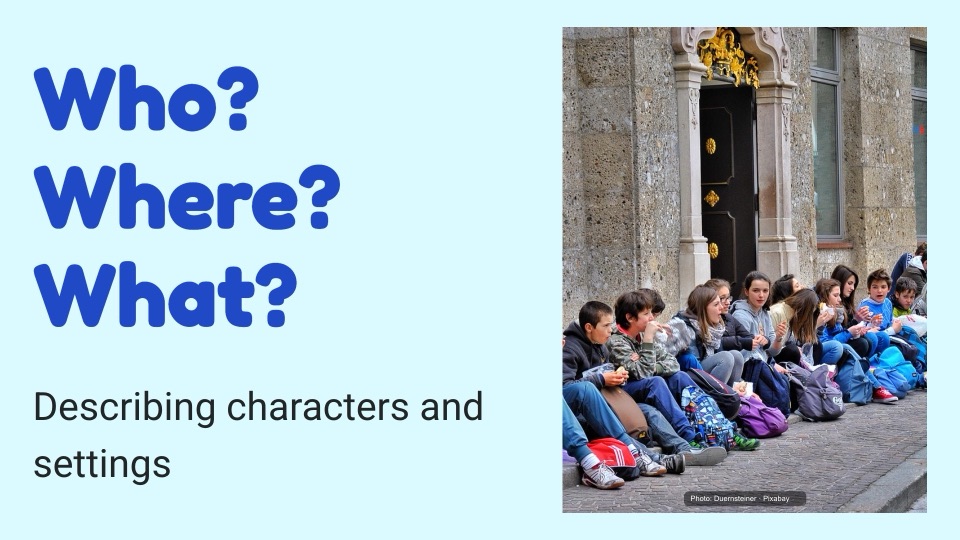
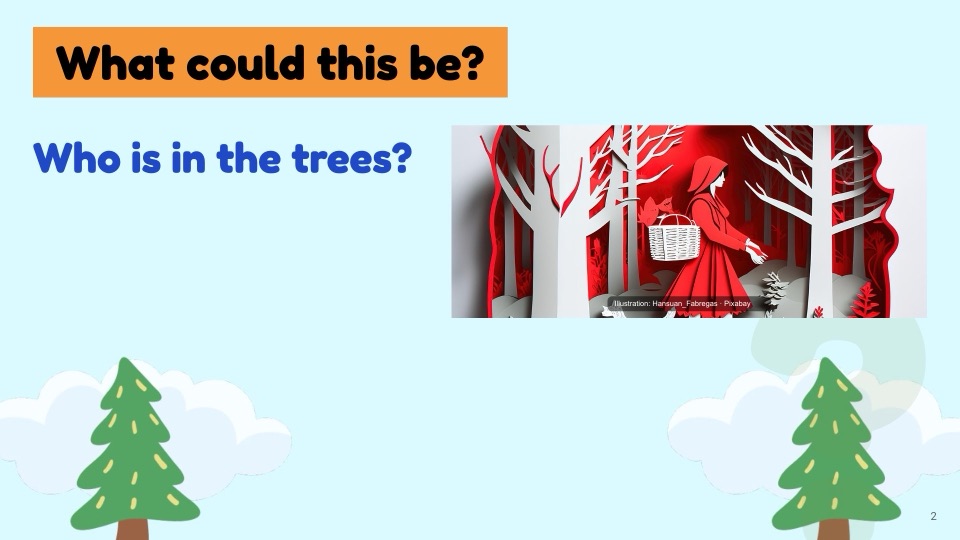
| 5 min | Starter | Hook interest and recall who, where, and what from a picture. Show Slide 1 and read the title together. Show Slide 2 mystery picture and ask who is in the trees. Say the map hook and teach the chant Who? Where? What? Take 3 quick guesses and confirm: a girl in a forest. |
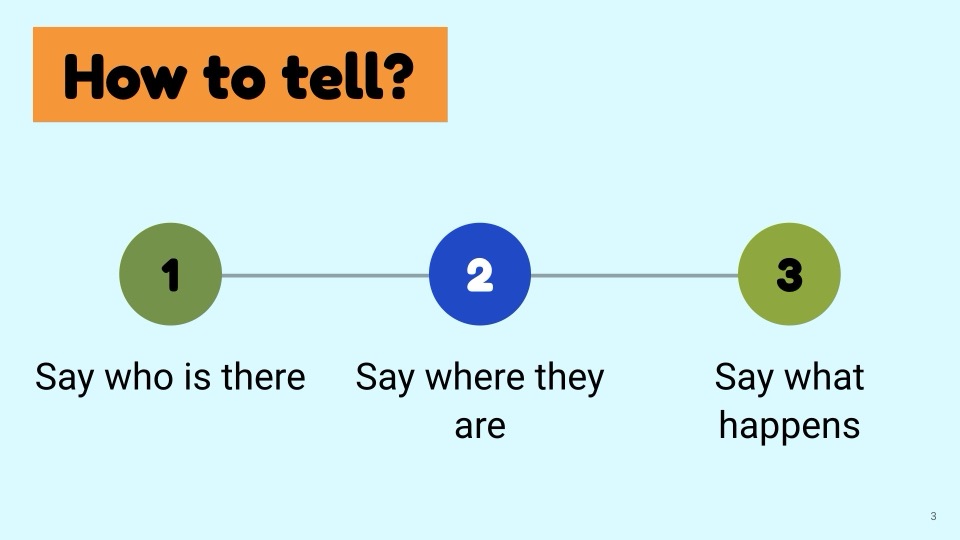
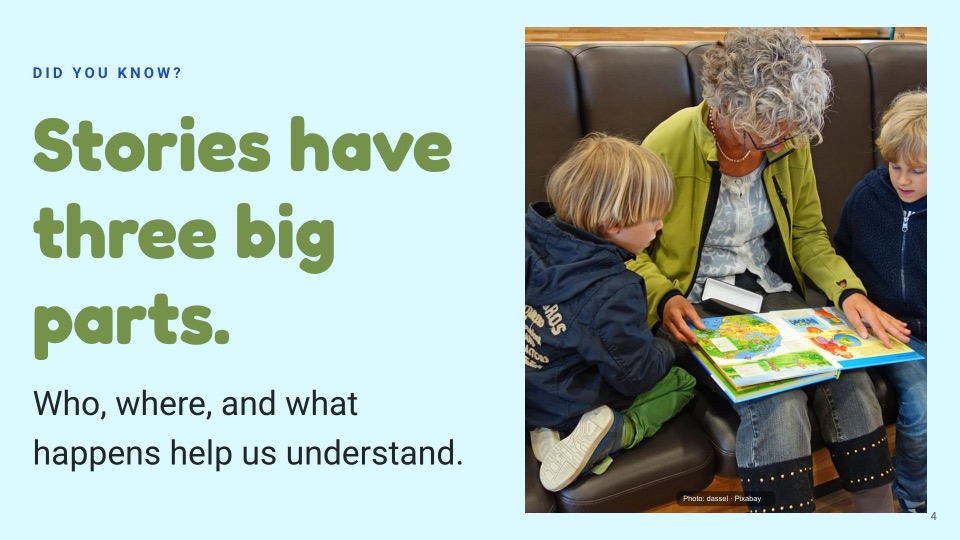
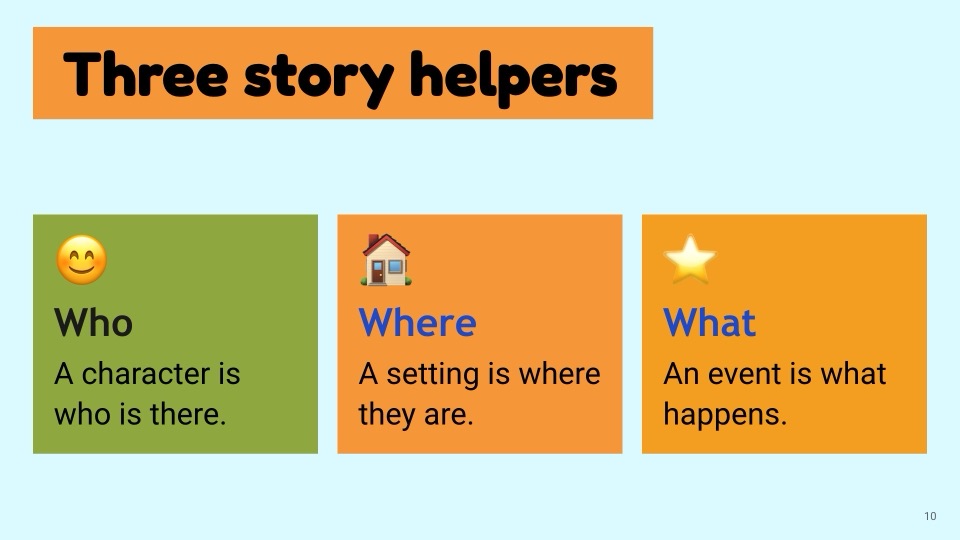
| 10 min | Teaching | Model how to describe a character, a setting, and a major event with key details. Show Slide 3 steps and Slide 4 fact that who, where, and what happens help us understand. Read aloud paragraph 1: A little girl in a yellow hat plays with a red puppy in a big green park. Think aloud and point to Slide 10 helpers to name who, where, and what happens. Draw a quick model of the girl, puppy, and park on the board. |
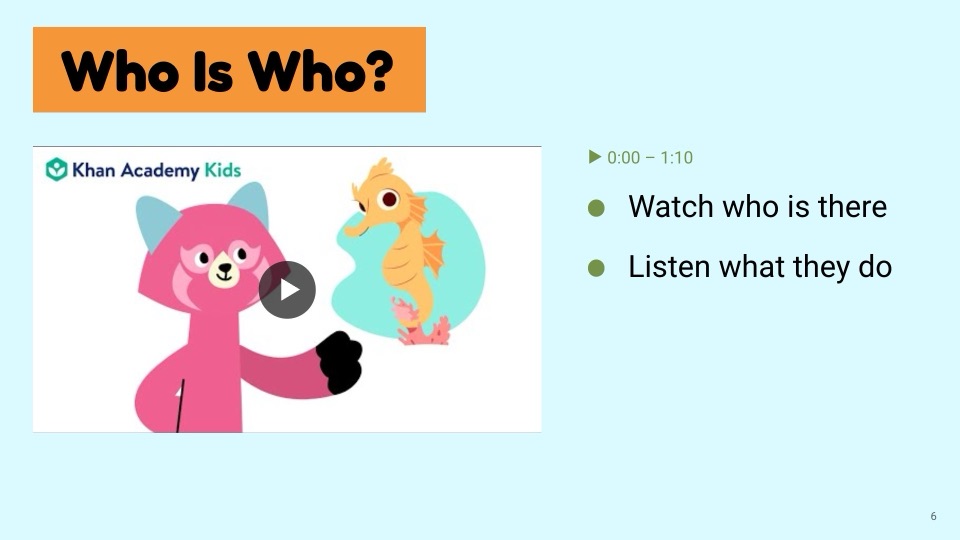
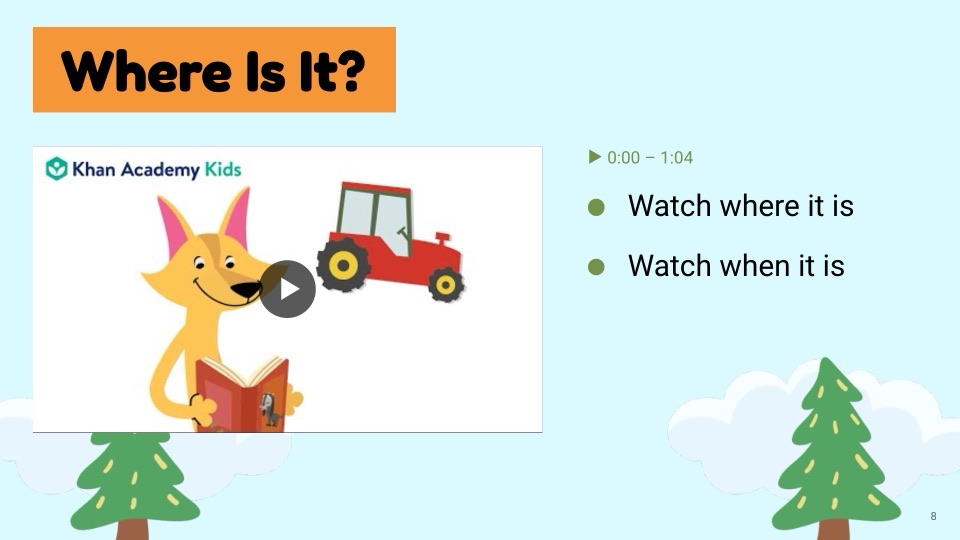
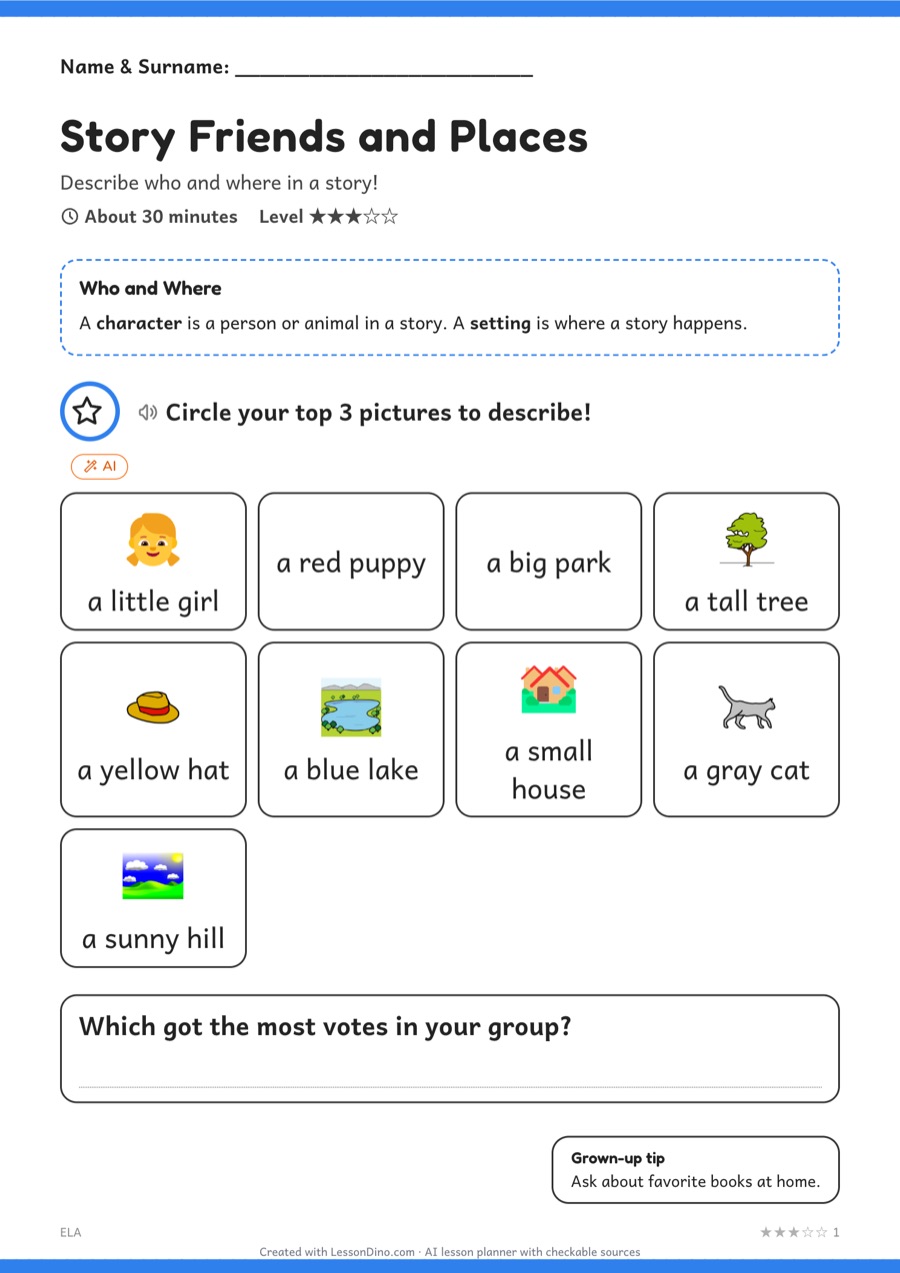
| 15 min | Guided practice | Practice together using pictures and words to find character, setting, and events. Play Slide 6 Video clip 1 (0:00-1:10) and list what characters do. Play Slide 8 Video clip 3 (0:00-1:04) and list where and when details. Show Slide 7 and read paragraphs 2 and 3 aloud while showing pictures, because words and pictures show who and where together. Guide Worksheet page 4 labeling with paragraphs 1 to 3 as a class. |
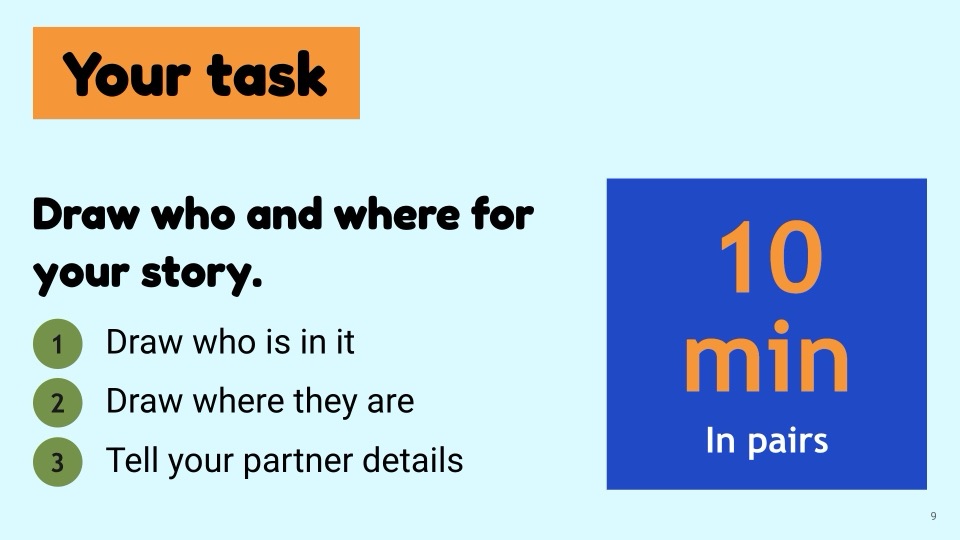
| 20 min | Main activity | Show a character, a setting, and a big event in a three-box story map. Show Slide 9 task and model one box for Who, one for Where, one for What Happened. Model drawing the puppy and girl, the park and tree, and the hug, using key details. Send pairs to draw and label with one or two words. Stop halfway to share one strong example, then let pairs finish and tell details. |
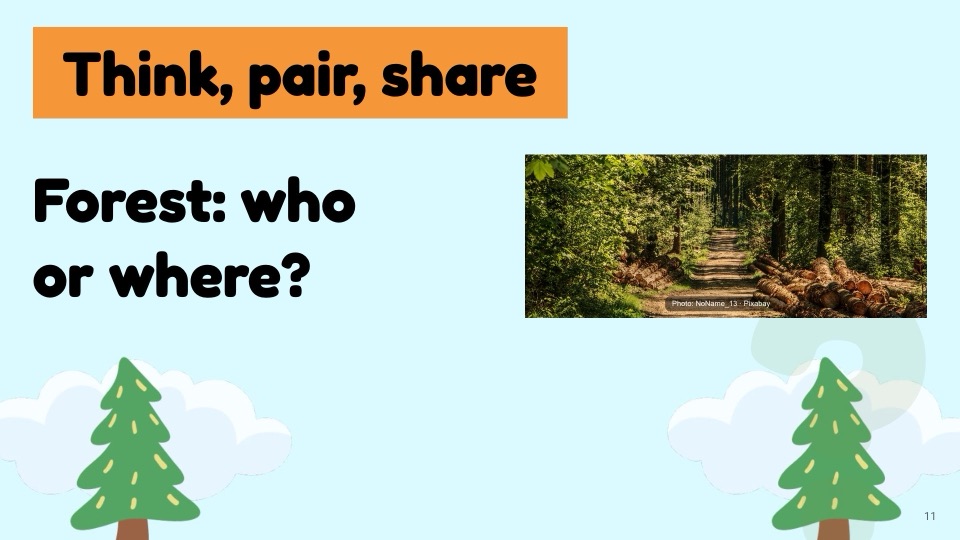
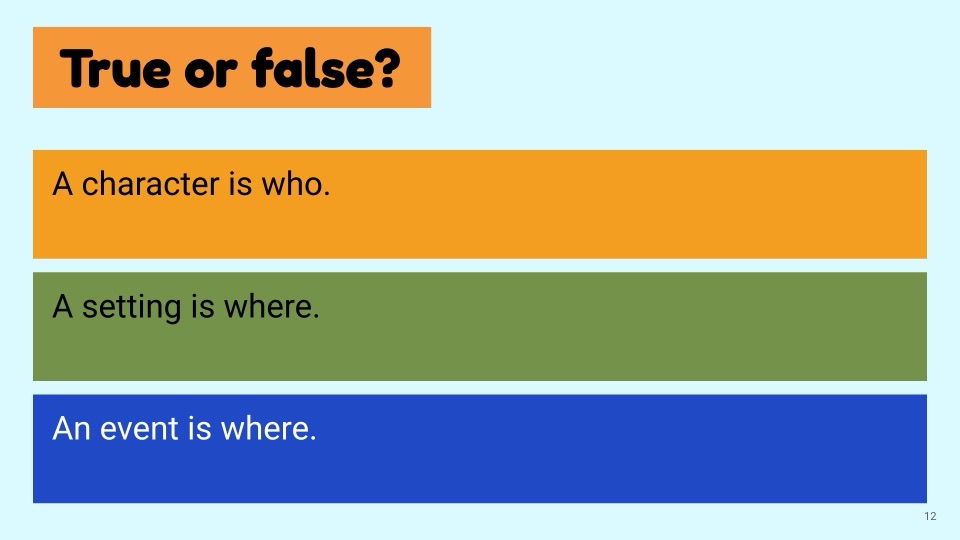
| 10 min | Plenary | Check learning on who, where, and what and link back to success criteria. Show Slide 11 and ask: Forest - who or where? Show Slide 12 true or false and fix: an event is what happens, not where. Ask two students to share maps and name two details. Link to I can lines and give exit ticket. |
Common mistakes
- Mixing up character and setting - saying the forest is who.
How to spot it: Who box shows trees, or student answers forest for who.
Point to Slide 10 helpers: a character is who is there, a setting is where they are. Ask: Can a forest talk and feel? - Giving only one vague detail, like girl or outside.
How to spot it: Map has no color, clothes, weather, or objects.
Model adding two key details: yellow hat, red puppy, green park, tall tree. Ask: What color? What can you see? - Retelling every little action instead of the major event.
How to spot it: What box is crowded or out of order.
Pick the big moment that changes things and propels the story forward. Ask: What big thing happened? Use First, Next, Last.
Support
- Use sentence frames with pictures: They look ___. They feel ___ because ___.
- Provide half-drawn park background so students add only two details.
Stretch
- Add what the character says or thinks in a speech bubble.
- Retell the three events from memory using First, Next, Last.
Check questions
- Who are the characters in Park Fun?
Answer: A little girl in a yellow hat and a red puppy. - Where is the setting with two details?
Answer: In a big green park by a tall tree. - What big thing happened last?
Answer: They sit under the tree and hug and laugh.
Curriculum
Describe characters, settings, and major events in a story, using key details.
Video clips
Clips on YouTube, from the start and end times we chose. Check each one before you show it.
-
All About Characters from 0:00 to 1:10
Khan Academy Kids: All About Characters | Reading Comprehension | Khan Academy Kids
Made by Khan Academy Kids with very simple language about who characters are, ideal pace and vocabulary for ages 6-7.
-
Identifying the Setting from 0:00 to 1:04
Khan Academy Kids: Identifying the Setting of a Story | Reading Comprehension | Khan Academy Kids
Made by Khan Academy Kids that explains where and when a story happens in very simple terms for ages 6-7.
Worksheet
Sources
- PA Core Standards ELA PreK-5 pa.gov
- English Language Arts Learning Standards - New York State ... nysed.gov
- Describing Characters, Settings, and Major Events in a Story kidsacademy.mobi
- Speaker for the Dead Wikipedia
- Italo Calvino Wikipedia
- Ajith Kumar Wikipedia
Picture credits
- Photo: Duernsteiner · Pixabay
- Illustration: Hansuan_Fabregas · Pixabay
- Photo: dassel · Pixabay
- Illustration: Tilixia-Summer · Pixabay
- Photo: NoName_13 · Pixabay
- Microsoft Fluent Emoji (MIT)
- Pictograms: Sergio Palao, ARASAAC (arasaac.org) · CC BY-NC-SA
- Illustration: OpenClipart-Vectors · Pixabay
- Illustration: CreativeCanvasDesign · Pixabay
- Illustration: Yol-MansDart · Pixabay
- Illustration: GraphicMama-team · Pixabay
- Illustration: nnnhi · Pixabay
- Illustration: Haninabz · Pixabay
- Illustration: ArtTower · Pixabay
Made with Lesson Dino's AI on 17 October 2026. AI can make mistakes, so check facts against the sources before you teach.